


Clinical, gut microbial and neural effects of a probiotic add-on therapy in depressed patients: a randomized controlled trial
- PMID: 35654766
- PMCID: PMC9163095
- DOI: 10.1038/s41398-022-01977-z
Clinical, gut microbial and neural effects of a probiotic add-on therapy in depressed patients: a randomized controlled trial
Abstract
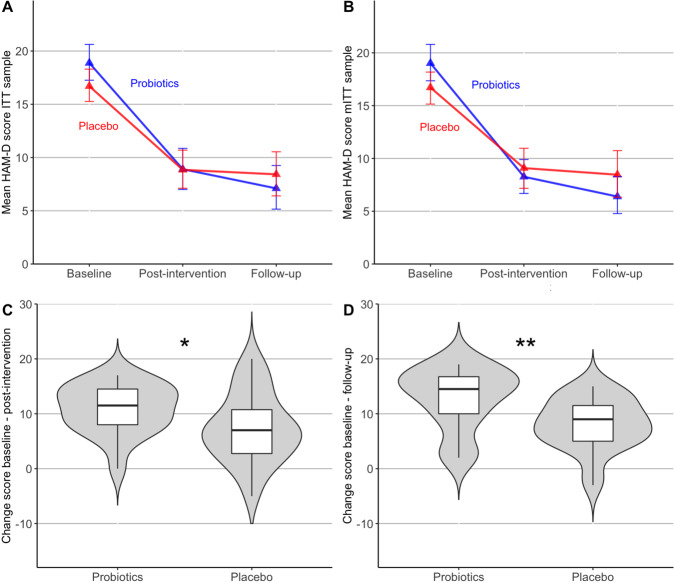
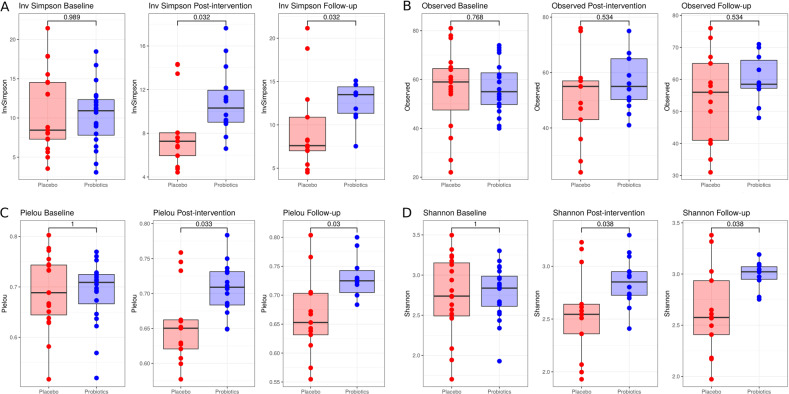
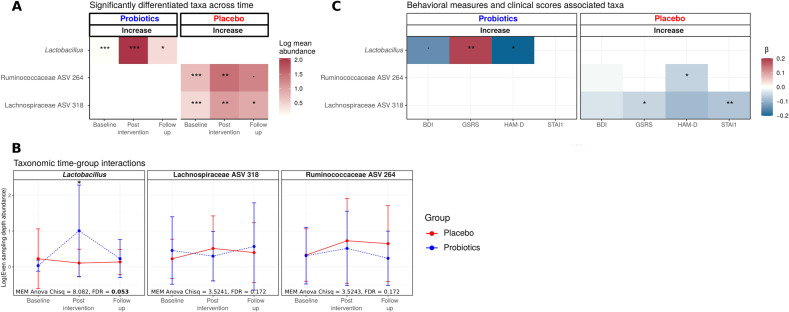
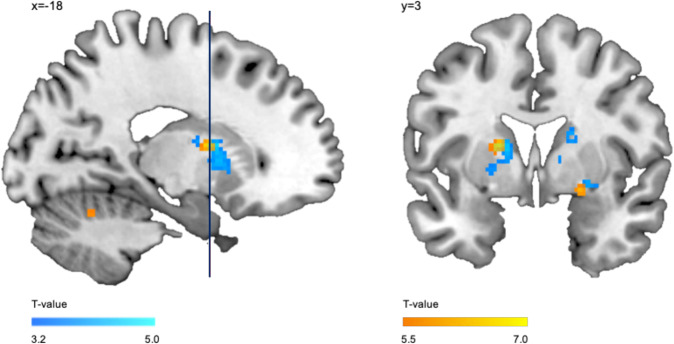
A promising new treatment approach for major depressive disorder (MDD) targets the microbiota-gut-brain (MGB) axis, which is linked to physiological and behavioral functions affected in MDD. This is the first randomized controlled trial to determine whether short-term, high-dose probiotic supplementation reduces depressive symptoms along with gut microbial and neural changes in depressed patients. Patients with current depressive episodes took either a multi-strain probiotic supplement or placebo over 31 days additionally to treatment-as-usual. Assessments took place before, immediately after and again four weeks after the intervention. The Hamilton Depression Rating Sale (HAM-D) was assessed as primary outcome. Quantitative microbiome profiling and neuroimaging was used to detect changes along the MGB axis. In the sample that completed the intervention (probiotics N = 21, placebo N = 26), HAM-D scores decreased over time and interactions between time and group indicated a stronger decrease in the probiotics relative to the placebo group. Probiotics maintained microbial diversity and increased the abundance of the genus Lactobacillus, indicating the effectivity of the probiotics to increase specific taxa. The increase of the Lactobacillus was associated with decreased depressive symptoms in the probiotics group. Finally, putamen activation in response to neutral faces was significantly decreased after the probiotic intervention. Our data imply that an add-on probiotic treatment ameliorates depressive symptoms (HAM-D) along with changes in the gut microbiota and brain, which highlights the role of the MGB axis in MDD and emphasizes the potential of microbiota-related treatment approaches as accessible, pragmatic, and non-stigmatizing therapies in MDD. Trial Registration: www.clinicaltrials.gov , identifier: NCT02957591.
© 2022. The Author(s).
Conflict of interest statement
The authors declare no competing interests.
Figures
References
-
- Whiteford HA, Degenhardt L, Rehm J, Baxter AJ, Ferrari AJ, Erskine HE, et al. Global burden of disease attributable to mental and substance use disorders: findings from the Global Burden of Disease Study 2010. Lancet. 2013;382:1575–86. - PubMed
-
- Rush AJ, Trivedi MH, Wisniewski SR, Nierenberg AA, Stewart JW, Warden D, et al. Acute and longer-term outcomes in depressed outpatients requiring one or several treatment steps: a STAR*D report. Am J Psychiatry. 2006;163:1905–17. - PubMed
-
- Cryan JF, Dinan TG. Mind-altering microorganisms: the impact of the gut microbiota on brain and behaviour. Nat Rev Neurosci. 2012;13:701–12. - PubMed
-
- Foster JA, Neufeld KAM. Gut-brain: how the microbiome influences anxiety and depression. Trends Neurosci. 2013;36:305–12. - PubMed
Publication types
MeSH terms
Associated data
LinkOut - more resources
Full Text Sources
Medical
