NAD+ and Vascular Dysfunction: From Mechanisms to Therapeutic Opportunities
- PMID: 35656147
- PMCID: PMC9133775
- DOI: 10.12997/jla.2022.11.2.111
NAD+ and Vascular Dysfunction: From Mechanisms to Therapeutic Opportunities
Abstract
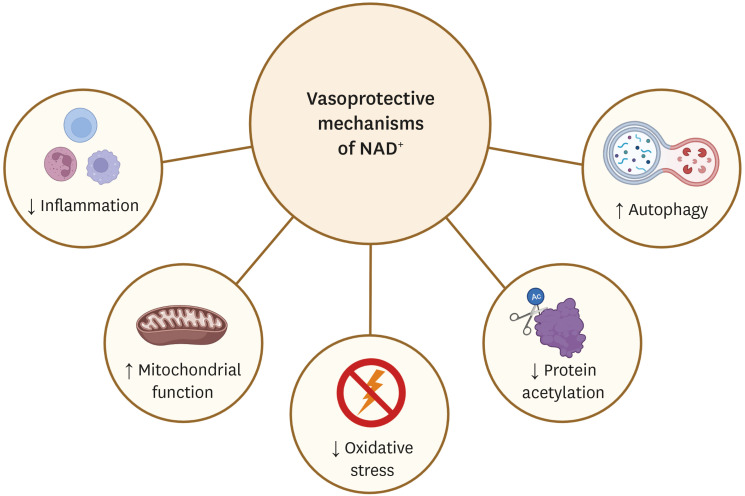
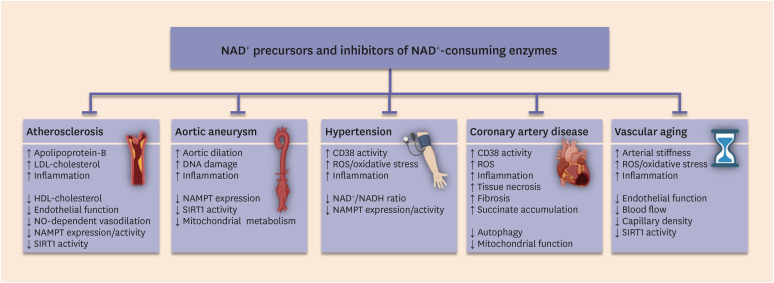
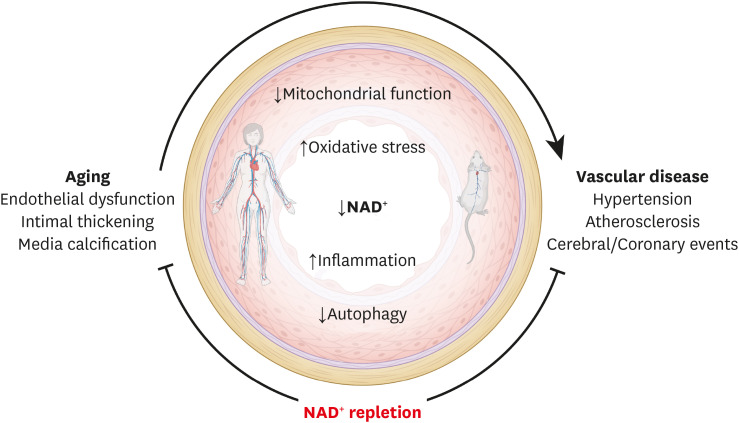
Nicotinamide adenine dinucleotide (NAD+) is an essential and pleiotropic coenzyme involved not only in cellular energy metabolism, but also in cell signaling, epigenetic regulation, and post-translational protein modifications. Vascular disease risk factors are associated with aberrant NAD+ metabolism. Conversely, the therapeutic increase of NAD+ levels through the administration of NAD+ precursors or inhibitors of NAD+-consuming enzymes reduces chronic low-grade inflammation, reactivates autophagy and mitochondrial biogenesis, and enhances oxidative metabolism in vascular cells of humans and rodents with vascular pathologies. As such, NAD+ has emerged as a potential target for combatting age-related cardiovascular and cerebrovascular disorders. This review discusses NAD+-regulated mechanisms critical for vascular health and summarizes new advances in NAD+ research directly related to vascular aging and disease, including hypertension, atherosclerosis, coronary artery disease, and aortic aneurysms. Finally, we enumerate challenges and opportunities for NAD+ repletion therapy while anticipating the future of this exciting research field, which will have a major impact on vascular medicine.
Keywords: Aging; Autophagy; Hypertension; Inflammation; Mitochondria; Nicotinamide adenine dinucleotide; Vascular disease.
Copyright © 2022 The Korean Society of Lipid and Atherosclerosis.
Conflict of interest statement
Conflict of Interest: Drs. Abdellatif and Sedej are involved in a patent application related to the cardiometabolic effects of caloric restriction mimetics, including nicotinamide. G.K. has held research contracts with Daiichi Sankyo, Eleor, Kaleido, Lytix Pharma, PharmaMar, Samsara, Sanofi, Sotio, Vascage, and Vasculox/Tioma. G.K. is on the Board of Directors of the Bristol Myers Squibb Foundation France. G.K. is a scientific co-founder of everImmune, Samsara Therapeutics, and Therafast Bio. G.K. is the inventor of patents covering therapeutic targeting of aging, cancer, cystic fibrosis and metabolic disorders. H.B. reports no conflicts. H.B. is an editor of Journal of Lipid and Atherosclerosis; however, he was not involved in the peer reviewer selection, evaluation, or decision process of this article. No other potential conflicts of interest relevant to this article were reported.
Figures
References
-
- López-Otín C, Kroemer G. Hallmarks of health. Cell. 2021;184:33–63. - PubMed
-
- Verdin E. NAD+ in aging, metabolism, and neurodegeneration. Science. 2015;350:1208–1213. - PubMed
-
- Abdellatif M, Sedej S, Kroemer G. NAD+ metabolism in cardiac health, aging, and disease. Circulation. 2021;144:1795–1817. - PubMed
Publication types
Grants and funding
LinkOut - more resources
Full Text Sources
Research Materials