


Low Dose Betahistine in Combination With Selegiline Increases Cochlear Blood Flow in Guinea Pigs
- PMID: 35656811
- PMCID: PMC10108341
- DOI: 10.1177/00034894221098803
Low Dose Betahistine in Combination With Selegiline Increases Cochlear Blood Flow in Guinea Pigs
Abstract
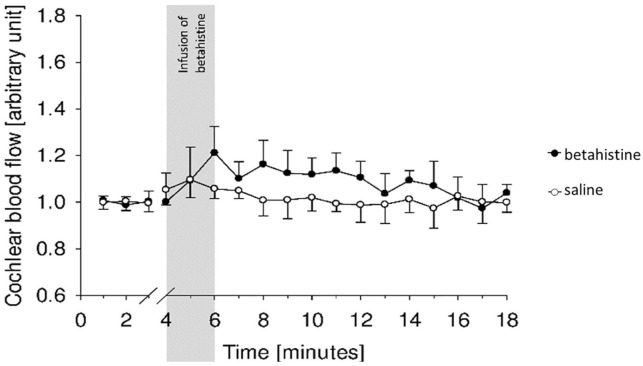
Objective: Betahistine is frequently used in the pharmacotherapy for Menière's Disease (MD). Little is known about its mode of action and prescribed dosages vary. While betahistine had an increasing effect on cochlear microcirculation in earlier studies, low dose betahistine of 0.01 mg/kg bw or less was not able to effect this. Selegiline inhibits monoaminooxidase B and therefore potentially the breakdown of betahistine. The goal of this study was to examine whether the addition of selegiline to low dose betahistine leads to increased cochlear blood flow.
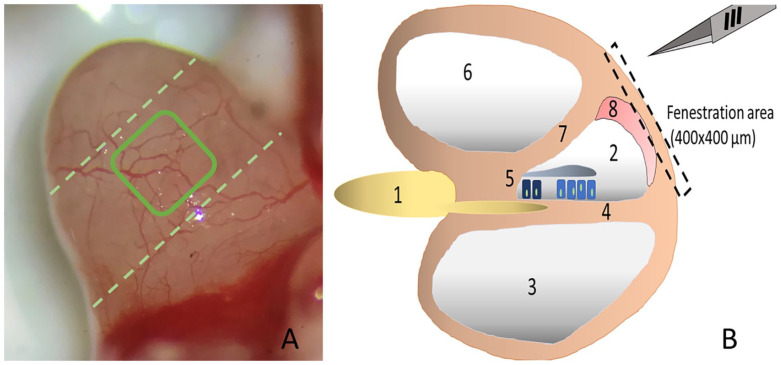
Methods: Twelve Dunkin-Hartley guinea pigs were anesthetized, the cochlea was exposed and a window opened to the stria vascularis. Blood plasma was visualized by injecting fluoresceinisothiocyanate-dextrane and vessel diameter and erythrocyte velocity were evaluated over 20 minutes. One group received low dose betahistine (0.01 mg/kg bw) and selegiline (1 mg/kg bw) i.v. while the other group received only selegiline (1 mg/kg bw) and saline (0.9% NaCl) as placebo i.v.
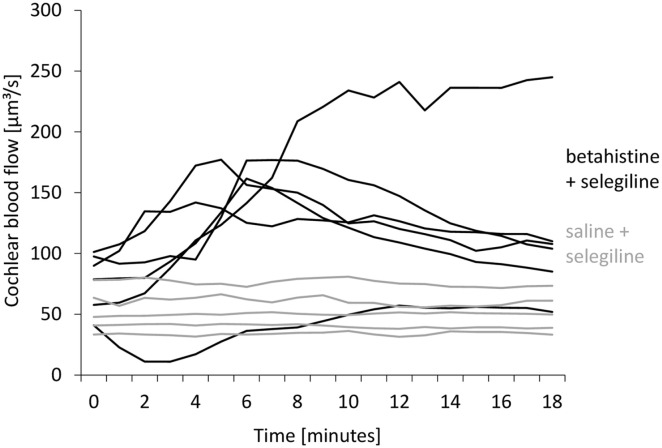
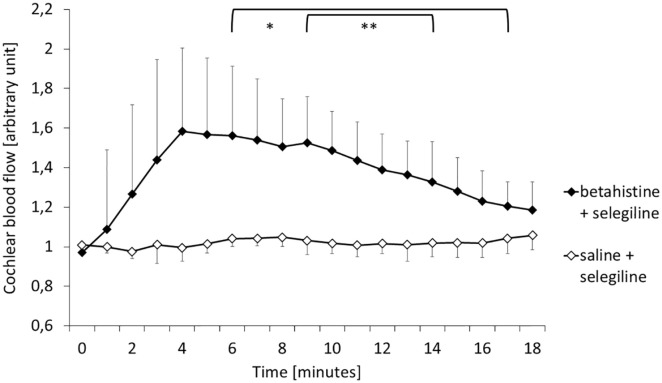
Results: Cochlear microcirculation increased significantly (P < .001) in guinea pigs treated with low dose betahistine combined with selegiline by up to 58.3 ± 38.7% above baseline over a period of up to 11 minutes. In one guinea pig, the increase was 104.6%. Treatment with Selegiline alone did not affect microcirculation significantly.
Conclusions: Low dose betahistine increased cochlear microcirculation significantly when combined with selegiline. This should be investigated in further studies regarding dose-effect relation in comparison to betahistine alone. Side effects, in particular regarding circulation, should be considered carefully in view of the clinical applicability of a combination therapy in patients with MD.
Keywords: Menière’s disease; betahistine; cochlea; guinea pig; microcirculation; selegiline.
Conflict of interest statement
The author(s) declared the following potential conflicts of interest with respect to the research, authorship, and/or publication of this article: JS received travel expenses and congress fees from MED EL GmbH, Innsbruck, Austria. The other authors declare that there is no conflict of interest.
Figures
References
-
- Ferrara S, Dispenza F. Cause, pathogenesis, clinical manifestations and treatment of meniere’s disease and endolymphatic hydrops. In: Dispenza MF. (ed.) Sensorineural Hearing Loss: Pathophysiology, Diagnosis and Treatment. Nova Science Publishers, Inc; 2019; 217–231.
-
- Perez-Carpena P, Lopez-Escamez JA. Current understanding and clinical management of Meniere’s disease: a systematic review. Semin Neurol. 2020;40:138-150. - PubMed
Publication types
MeSH terms
Substances
LinkOut - more resources
Full Text Sources
Medical
