


Oral symptom assessment tools in patients with advanced cancer: a scoping review
- PMID: 35657401
- PMCID: PMC9385820
- DOI: 10.1007/s00520-022-07169-1
Oral symptom assessment tools in patients with advanced cancer: a scoping review
Abstract
Purpose: Oral symptoms are common in patients with advanced cancer. The aim of this scoping review was to identify oral symptom assessment tools that have been specifically utilised in patients with "advanced cancer".
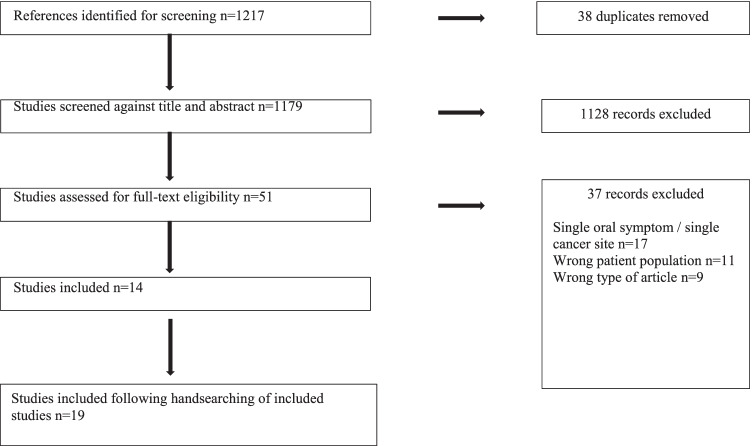
Methods: The review was conducted/reported according to international guidelines for undertaking scoping reviews. PubMed, Embase, and CINAHL were searched for articles involving adult patients with advanced cancer, which involved assessment of ≥ 2 oral symptoms, and which involved patients with > 1 type of cancer.
Results: The review identified four validated symptom assessment scales, including one cancer-specific quality of life scale (EORTC QLQ OH-15), one generic tool for assessing the "social impact" of specific oral problems (OHIP), one cancer-specific generic symptom assessment scale (MSAS), and one cancer-specific oral symptom assessment scale (OSAS).
Conclusion: Symptom assessment tools can facilitate good symptom control in clinical practice, and are an integral component of clinical research. The review identified four validated symptom assessment scales that could be utilised to assess oral symptoms in patients with advanced cancer.
Keywords: Neoplasms; Oral care; Oral health; Palliative care; Symptom assessment.
© 2022. The Author(s).
Conflict of interest statement
The authors declare no competing interests.
References
Publication types
MeSH terms
LinkOut - more resources
Full Text Sources
Medical
