


Delivery fidelity of the REACT (REtirement in ACTion) physical activity and behaviour maintenance intervention for community dwelling older people with mobility limitations
- PMID: 35658857
- PMCID: PMC9166457
- DOI: 10.1186/s12889-022-13496-z
Delivery fidelity of the REACT (REtirement in ACTion) physical activity and behaviour maintenance intervention for community dwelling older people with mobility limitations
Abstract
Background: Fidelity assessment of behaviour change interventions is vital to understanding trial outcomes. This study assesses the delivery fidelity of behaviour change techniques used in the Retirement in ACTion (REACT) randomised controlled trial. REACT is a community-based physical activity (PA) and behaviour maintenance intervention to prevent decline of physical functioning in older adults (≥ 65 years) at high risk of mobility-related disability in the UK.
Methods: The delivery fidelity of intervention behaviour change techniques and delivery processes were assessed using multi-observer coding of purposively sampled in-vivo audio recordings (n = 25) of health behaviour maintenance sessions over 12-months. Delivery fidelity was scored using a modified Dreyfus scale (scores 0-5) to assess competence and completeness of delivery for each technique and delivery process. "Competent delivery" was defined as a score of 3 points or more for each item. Examples of competent intervention delivery were identified to inform recommendations for future programme delivery and training.
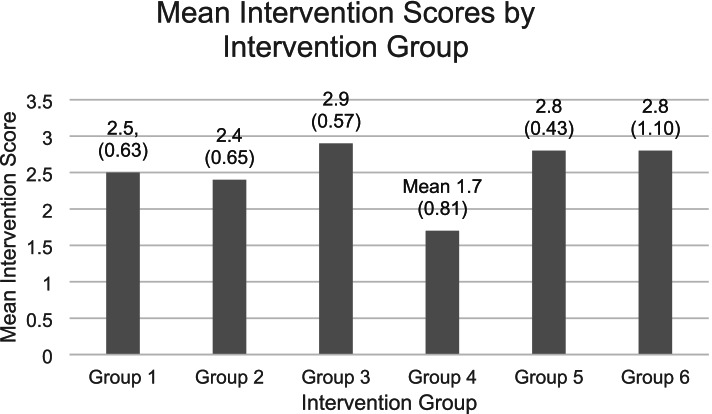
Results: The mean intervention fidelity score was 2.5 (SD 0.45) with delivery fidelity varying between techniques/processes and intervention groups. Person-centred delivery, Facilitating Enjoyment and Promoting Autonomy were delivered competently (scoring 3.0 or more). There was scope for improvement (score 2.0-2.9) in Monitoring Progress (Acknowledging and Reviewing), Self-Monitoring, Monitoring Progress (Eliciting Benefits of Physical Activity), Goal Setting and Action Planning, Modelling, Supporting Self-Efficacy for Physical Activity and Supporting Relatedness. Managing Setbacks and Problem Solving was delivered with low fidelity. Numerous examples of both good and sub-optimal practice were identified.
Conclusions: This study highlights successes and improvements needed to enhance delivery fidelity in future implementation of the behavioural maintenance programme of the REACT intervention. Future training of REACT session leaders and assessment of delivery fidelity needs to focus on the delivery of Goal setting and Action Planning, Modelling, Supporting Relatedness, Supporting Self-Efficacy for Physical Activity, and Managing Setbacks/ Problem Solving.
Keywords: Behaviour change; Behaviour change techniques; Behavioural intervention; Older adults; Physical activity; Process evaluation; Randomised controlled trial.
© 2022. The Author(s).
Conflict of interest statement
The authors declare that they have no competing interests.
Figures

References
-
- Greaves CJ, Sheppard K, Abraham C, Hardeman W, Roden M, Evans P, et al. Systematic review of reviews of intervention components associated with increased effectiveness in dietary and physical activity interventions. BMC Public Health. 2011;11(1):119–130. doi: 10.1186/1471-2458-11-119. - DOI - PMC - PubMed
-
- Murray JM, Brennan SF, French DP, Patterson CC, Kee F, Hunter RF. Effectiveness of physical activity interventions in achieving behaviour change maintenance in young and middle aged adults: A systematic review and meta-analysis. Soc Sci Med. 2017;192:125–133. doi: 10.1016/j.socscimed.2017.09.021. - DOI - PubMed
Publication types
MeSH terms
Grants and funding
LinkOut - more resources
Full Text Sources
