


Effectiveness of registered nurses on patient outcomes in primary care: a systematic review
- PMID: 35659215
- PMCID: PMC9166606
- DOI: 10.1186/s12913-022-07866-x
Effectiveness of registered nurses on patient outcomes in primary care: a systematic review
Erratum in
-
Correction: Effectiveness of registered nurses on patient outcomes in primary care: a systematic review.BMC Health Serv Res. 2022 Jun 22;22(1):810. doi: 10.1186/s12913-022-08204-x. BMC Health Serv Res. 2022. PMID: 35733195 Free PMC article. No abstract available.
Abstract
Background: Globally, registered nurses (RNs) are increasingly working in primary care interdisciplinary teams. Although existing literature provides some information about the contributions of RNs towards outcomes of care, further evidence on RN workforce contributions, specifically towards patient-level outcomes, is needed. This study synthesized evidence regarding the effectiveness of RNs on patient outcomes in primary care.
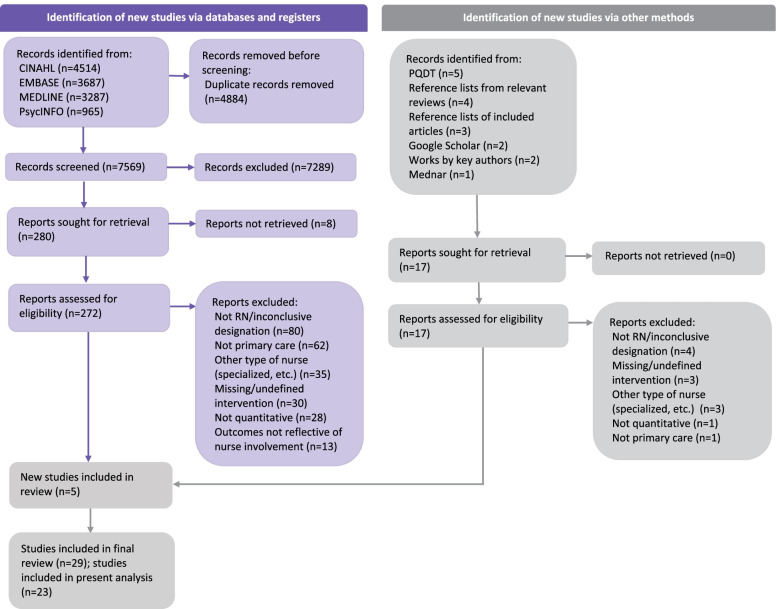
Methods: A systematic review was conducted in accordance with Joanna Briggs Institute methodology. A comprehensive search of databases (CINAHL, MEDLINE Complete, PsycINFO, Embase) was performed using applicable subject headings and keywords. Additional literature was identified through grey literature searches (ProQuest Dissertations and Theses, MedNar, Google Scholar, websites, reference lists of included articles). Quantitative studies measuring the effectiveness of a RN-led intervention (i.e., any care/activity performed by a primary care RN) that reported related outcomes were included. Articles were screened independently by two researchers and assessed for bias using the Integrated Quality Criteria for Review of Multiple Study Designs tool. A narrative synthesis was undertaken due to the heterogeneity in study designs, RN-led interventions, and outcome measures across included studies.
Results: Forty-six patient outcomes were identified across 23 studies. Outcomes were categorized in accordance with the PaRIS Conceptual Framework (patient-reported experience measures, patient-reported outcome measures, health behaviours) and an additional category added by the research team (biomarkers). Primary care RN-led interventions resulted in improvements within each outcome category, specifically with respect to weight loss, pelvic floor muscle strength and endurance, blood pressure and glycemic control, exercise self-efficacy, social activity, improved diet and physical activity levels, and reduced tobacco use. Patients reported high levels of satisfaction with RN-led care.
Conclusions: This review provides evidence regarding the effectiveness of RNs on patient outcomes in primary care, specifically with respect to satisfaction, enablement, quality of life, self-efficacy, and improvements in health behaviours. Ongoing evaluation that accounts for primary care RNs' unique scope of practice and emphasizes the patient experience is necessary to optimize the delivery of patient-centered primary care.
Protocol registration id: PROSPERO: International Prospective Register of Systematic Reviews. 2018. ID=CRD42 018090767 .
Keywords: Effectiveness; Outcomes; Patient measures; Primary care nursing; Primary healthcare; Registered nurse; Systematic review.
© 2022. The Author(s).
Conflict of interest statement
The authors declare that they have no competing interests.
Figures
References
-
- National Academies of Sciences, Engineering, and Medicine. Implementing high-quality primary care: rebuilding the foundation of health care. The National Academies Press. 2021. https://www.nap.edu/read/25983. Accessed 08 Nov 2021. - PubMed
Publication types
MeSH terms
LinkOut - more resources
Full Text Sources
