


Orally active epoxyeicosatrienoic acid analogs in hypertension and renal injury
- PMID: 35659375
- PMCID: PMC10105514
- DOI: 10.1016/bs.apha.2022.02.004
Orally active epoxyeicosatrienoic acid analogs in hypertension and renal injury
Abstract
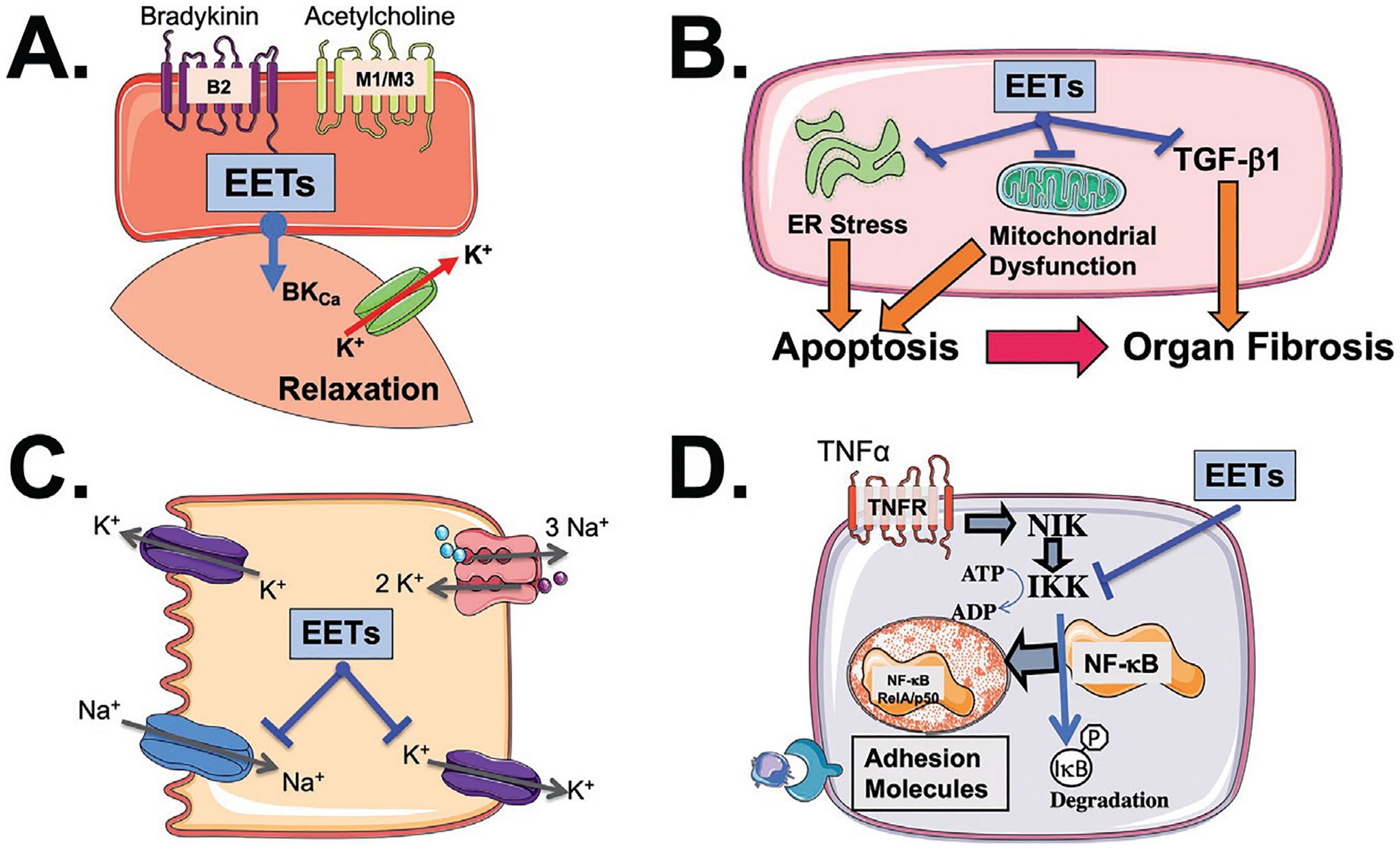
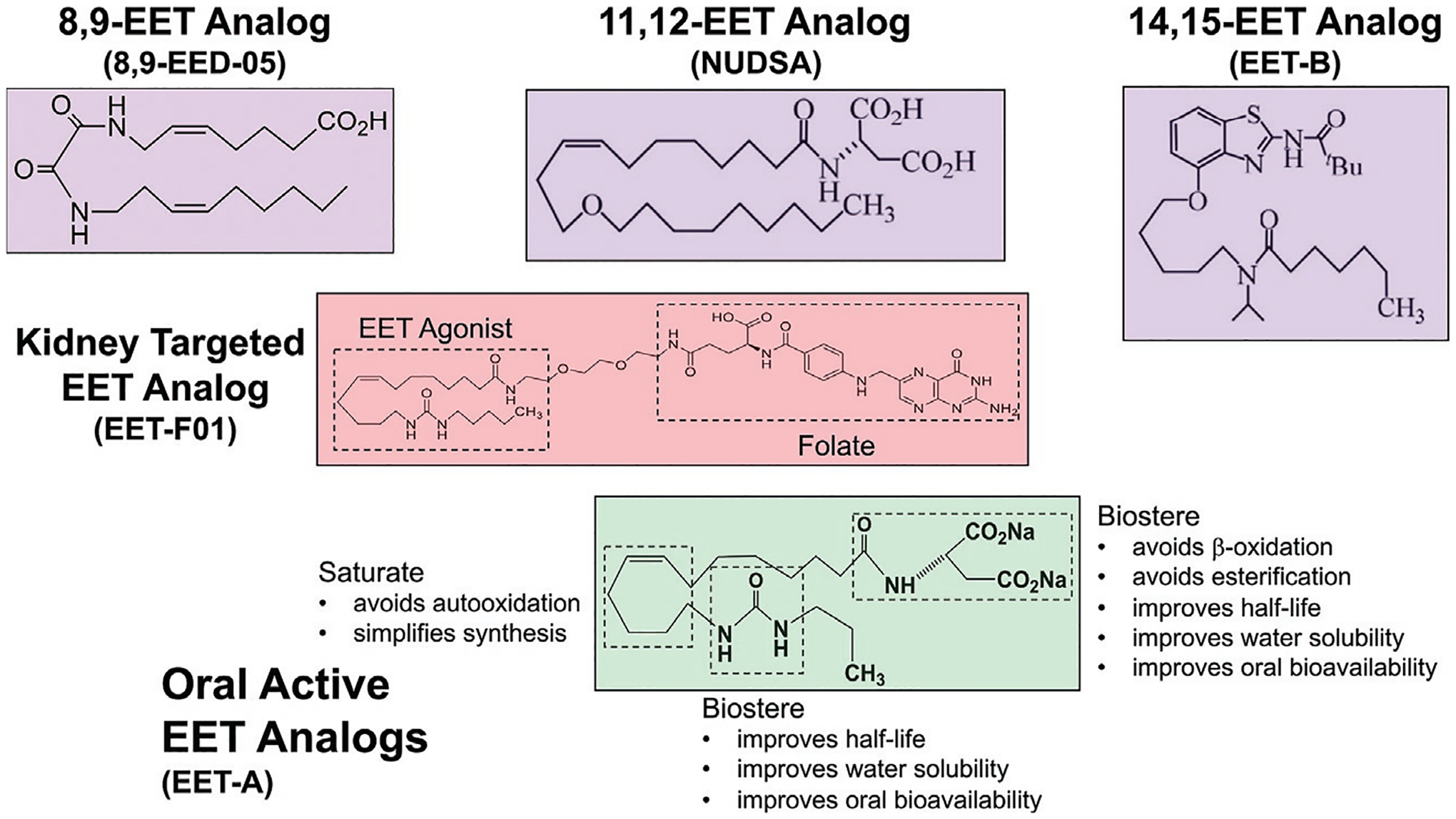
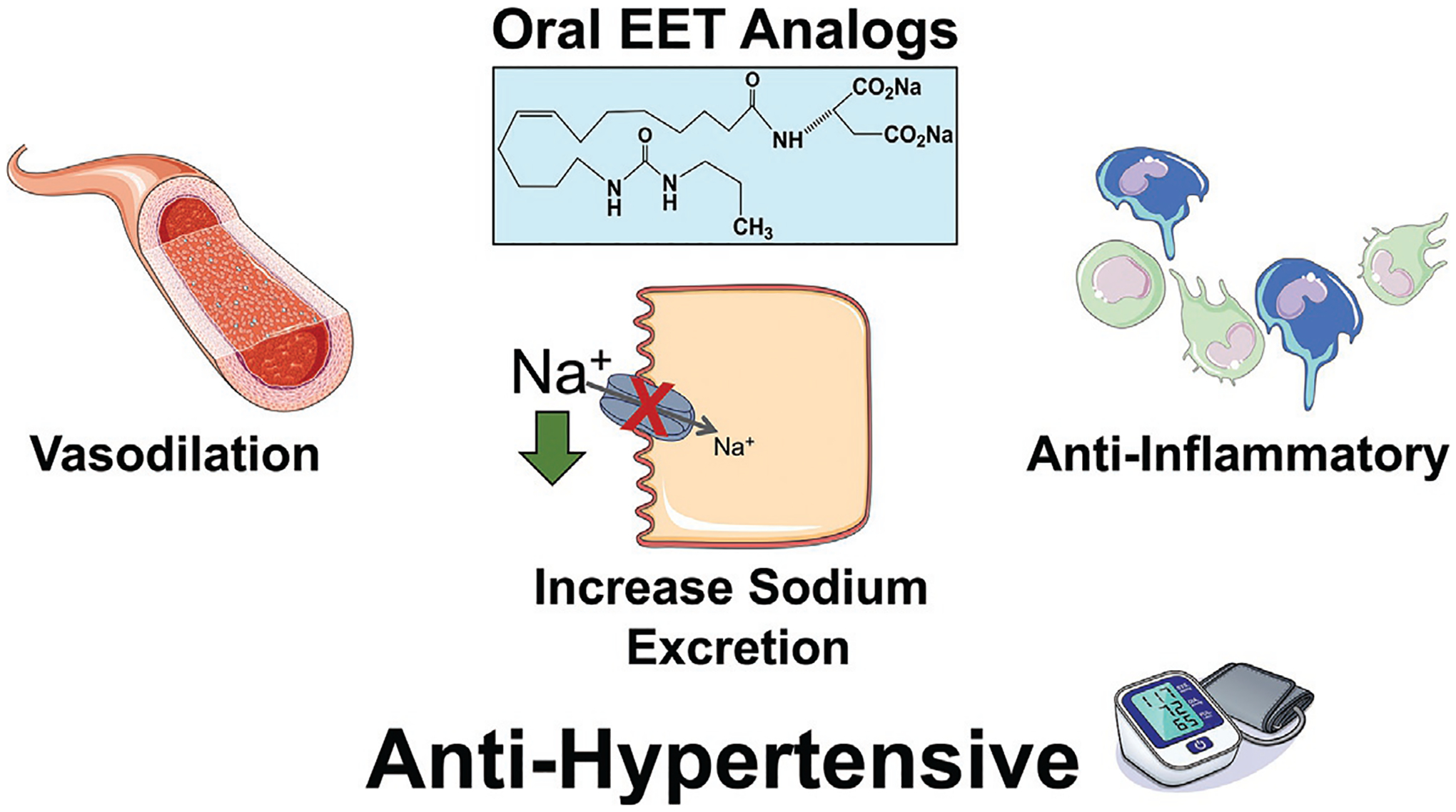
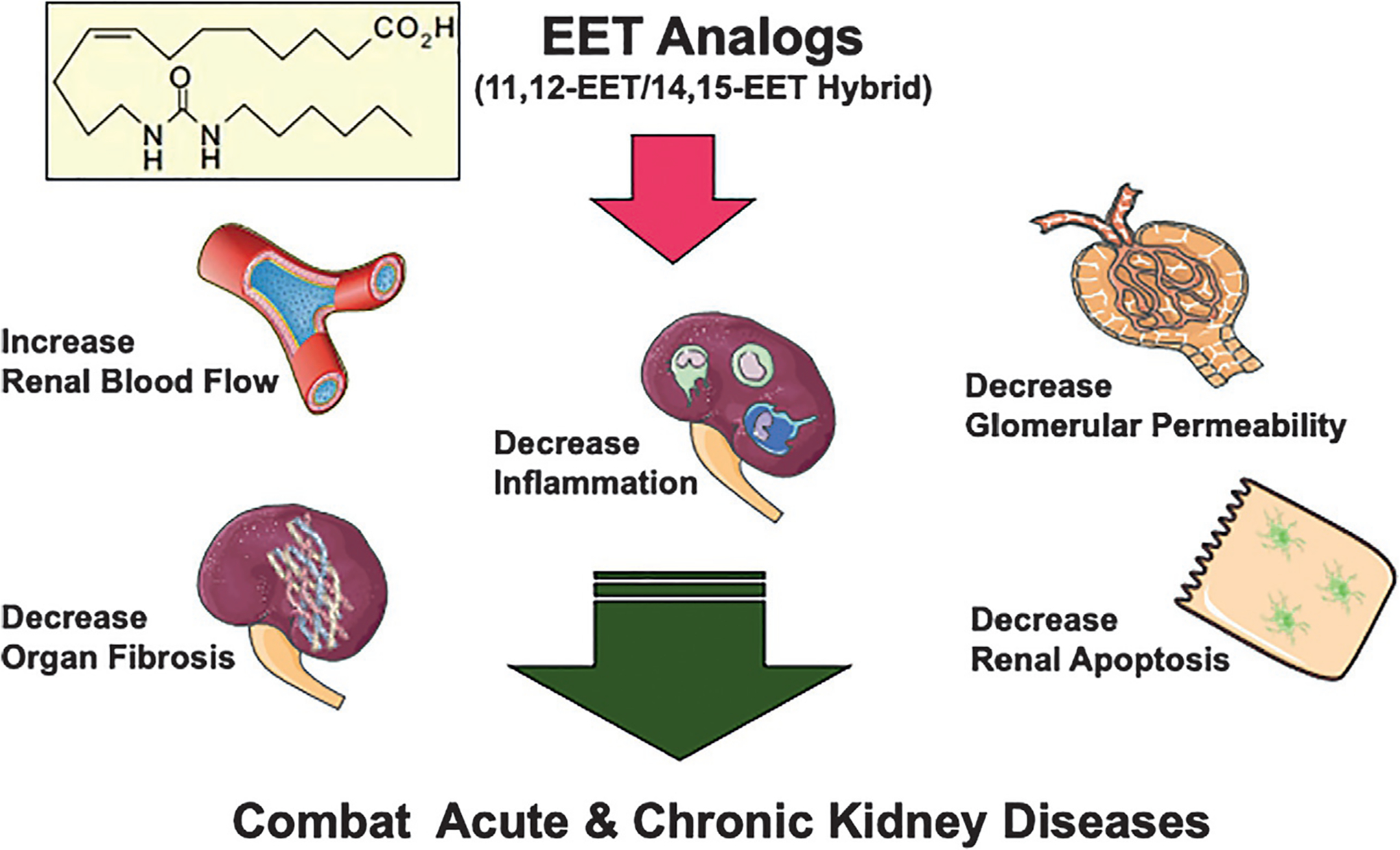
Epoxyeicosatrienoic acids (EETs) are arachidonic acid metabolites synthesized by cytochrome P450 epoxygenases. Biological activities for EETs include vasodilation, decreasing inflammation, opposing apoptosis, and inhibiting renal sodium reabsorption. These actions are beneficial in lowering blood pressure and slowing kidney disease progression. Furthermore, evidence in human and experimental animal studies have found that decreased EET levels contribute to hypertension and kidney diseases. Consequently, EET mimics/analogs have been developed as a potential therapeutic for hypertension and acute and chronic kidney diseases. Their development has resulted in EET analogs that are orally active with favorable pharmacological profiles. Analogs for 8,9-EET, 11,12-EET, and 14,15-EET have been tested in several hypertension and kidney disease animal models. More recently, kidney targeted EET analogs have been synthesized and tested against drug-induced nephrotoxicity. Experimental evidence has demonstrated compelling therapeutic potential for EET analogs to oppose cardiovascular and kidney diseases. These EET analogs lower blood pressure, decrease kidney inflammation, improve vascular endothelial function, and decrease kidney fibrosis and apoptosis. Overall, these preclinical studies support the likelihood that EET analogs will advance to clinical trials for hypertension and associated comorbidities or acute and chronic kidney diseases.
Keywords: Chronic kidney disease; Cytochrome P450; Endothelium; Epoxyeicosatrienoic acids; Hypertension; Inflammation; Sodium transport.
Copyright © 2022 Elsevier Inc. All rights reserved.
Conflict of interest statement
Conflict of interest statement Dr. Imig has patents that cover the composition of matter for EET analogs. There are no other conflicts of interest, financial or otherwise, as declared by the author.
Figures

References
-
- Archer SL, Gragasin FS, Wu X, Wang S, McMurtry S, Kim DH, et al. (2003). Endothelium-derived hyperpolarizing factor in human internal mammary artery is 11,12-epoxyeicosatrienoic acid and causes relaxation by activating smooth muscle BK(ca) channels. Circulation, 107, 769–776. - PubMed
-
- Bellien J, Iacob M, Gutierrez L, Isabelle M, Lahary A, Thuillez C, et al. (2006). Crucial role of NO and endothelium-derived hyperpolarizing factor in human sustained conduit artery flow-mediated dilatation. Hypertension, 48, 1088–1094. - PubMed
-
- Bellien J, Iacob M, Remy-Jouet I, Lucas D, Monteil C, Gutierrez L, et al. (2012). Epoxyeicosatrienoic acids contribute with altered nitric oxide and endothelin-1 pathways to conduit artery endothelial dysfunction in essential hypertension. Circulation, 125, 1266–1275. - PubMed
-
- Bellien J, & Joannides R (2013). Epoxyeicosatrienoic acid pathway in human health and diseases. Journal of Cardiovascular Pharmacology, 61, 188–196. - PubMed
Further reading
-
- Fu M, Yu J, Chen Z, Tang Y, Dong R, Yang Y, et al. (2021). Epoxyeicosatrienoic acids improve glucose homeostasis by preventing NF-κB-mediated transcription of SGLT2 in renal tubular epithelial cells. Molecular and Cellular Endocrinology, 523, 111149. - PubMed
-
- Wang Q, Liang Y, Qiao Y, Zhao X, Yang Y, Yang S, et al. (2018). Expression of soluble epoxide hydrolase in renal tubular epithelial cells regulates macrophage infiltration and polarization in IgA nephropathy. American Journal of Physiology. Renal Physiology, 315, F915–F926. - PubMed
Publication types
MeSH terms
Substances
Grants and funding
LinkOut - more resources
Full Text Sources
Medical
