


Postoperative Symptom Burden in Patients Undergoing Lung Cancer Surgery
- PMID: 35659636
- PMCID: PMC10744975
- DOI: 10.1016/j.jpainsymman.2022.05.016
Postoperative Symptom Burden in Patients Undergoing Lung Cancer Surgery
Abstract
Context: Previous studies on quality of life (QOL) after lung cancer surgery have identified a long duration of symptoms postoperatively. We first performed a systematic review of QOL in patients undergoing surgery for lung cancer. A subgroup analysis was conducted focusing on symptom burden and its relationship with QOL.
Objective: To perform a qualitative review of articles addressing symptom burden in patients undergoing surgical resection for lung cancer.
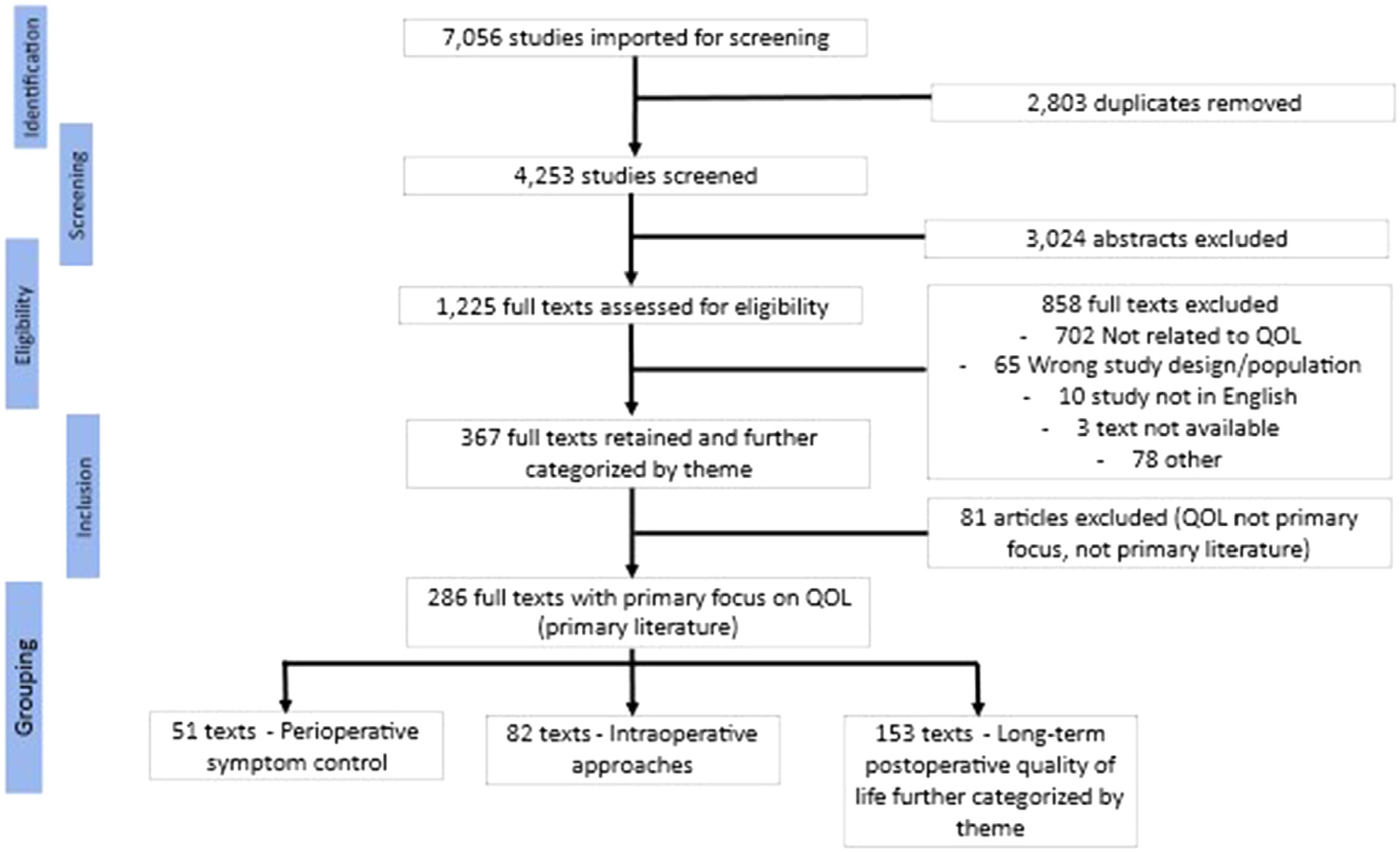
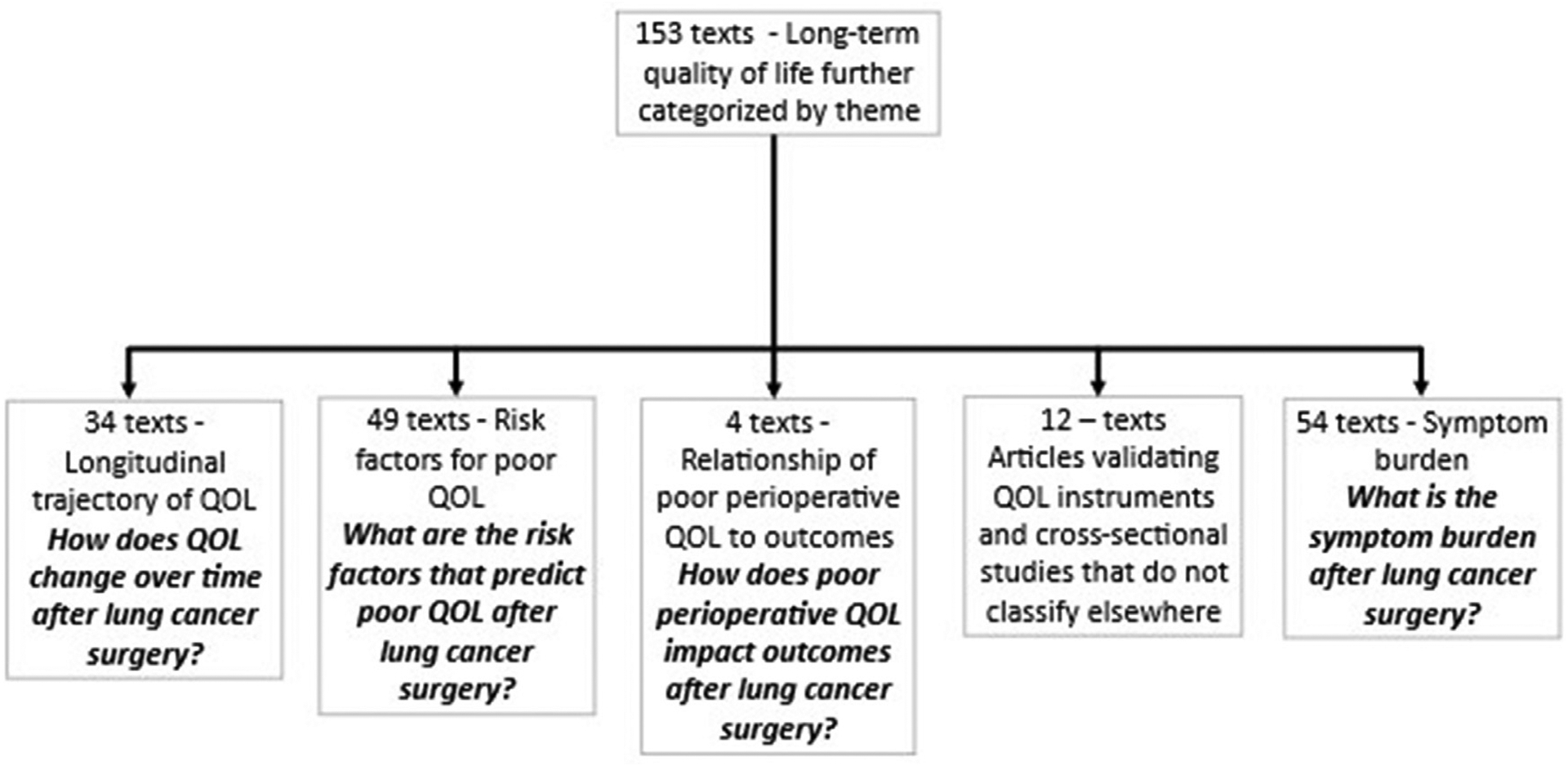
Methods: The parent systematic review utilized search terms for symptoms, functional status, and well-being as well as instruments commonly used to evaluate global QOL and symptom experiences after lung cancer surgery. The articles examining symptom burden (n = 54) were analyzed through thematic analysis of their findings and graded according to the Oxford Centre for Evidence-based Medicine rating scale.
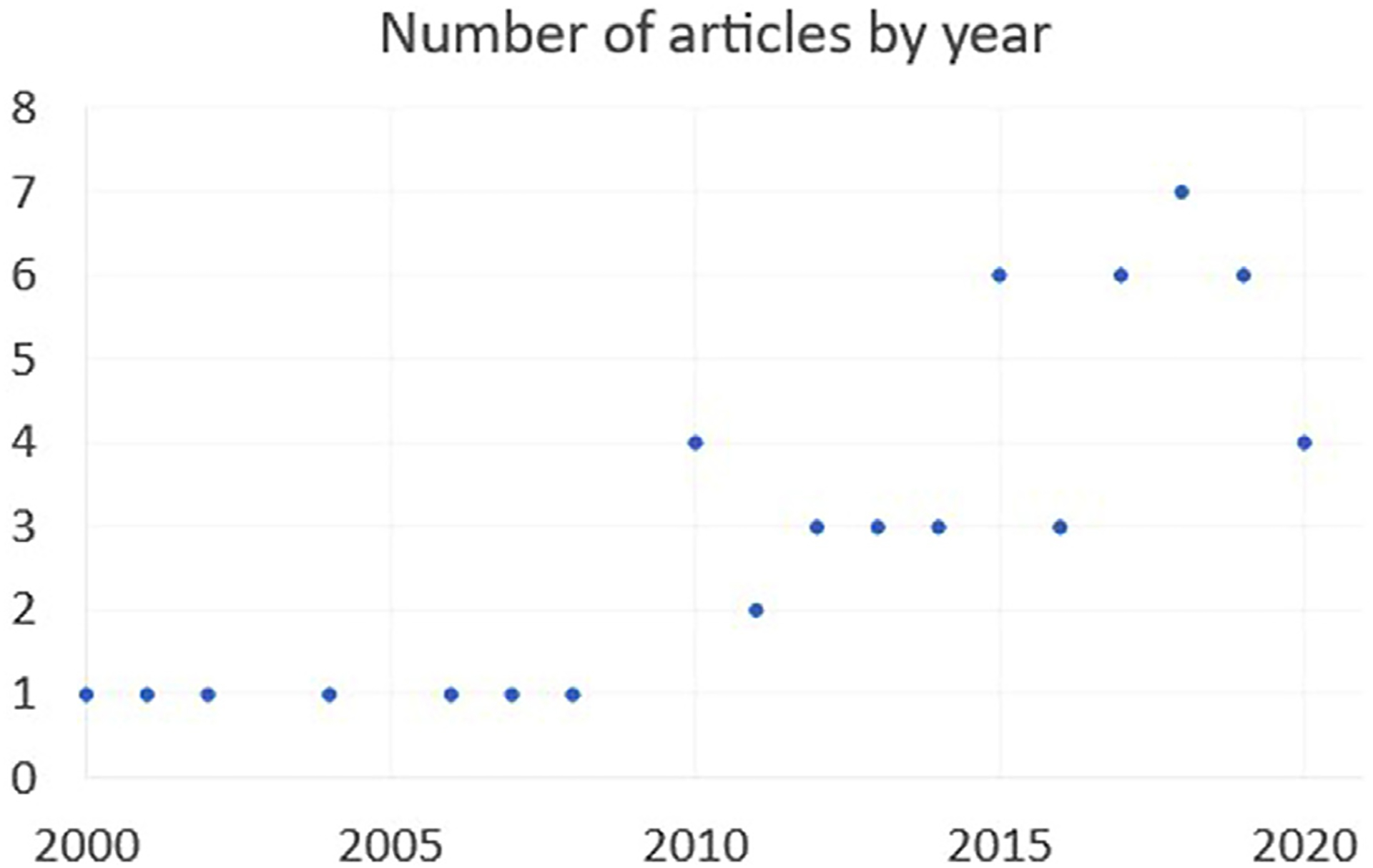
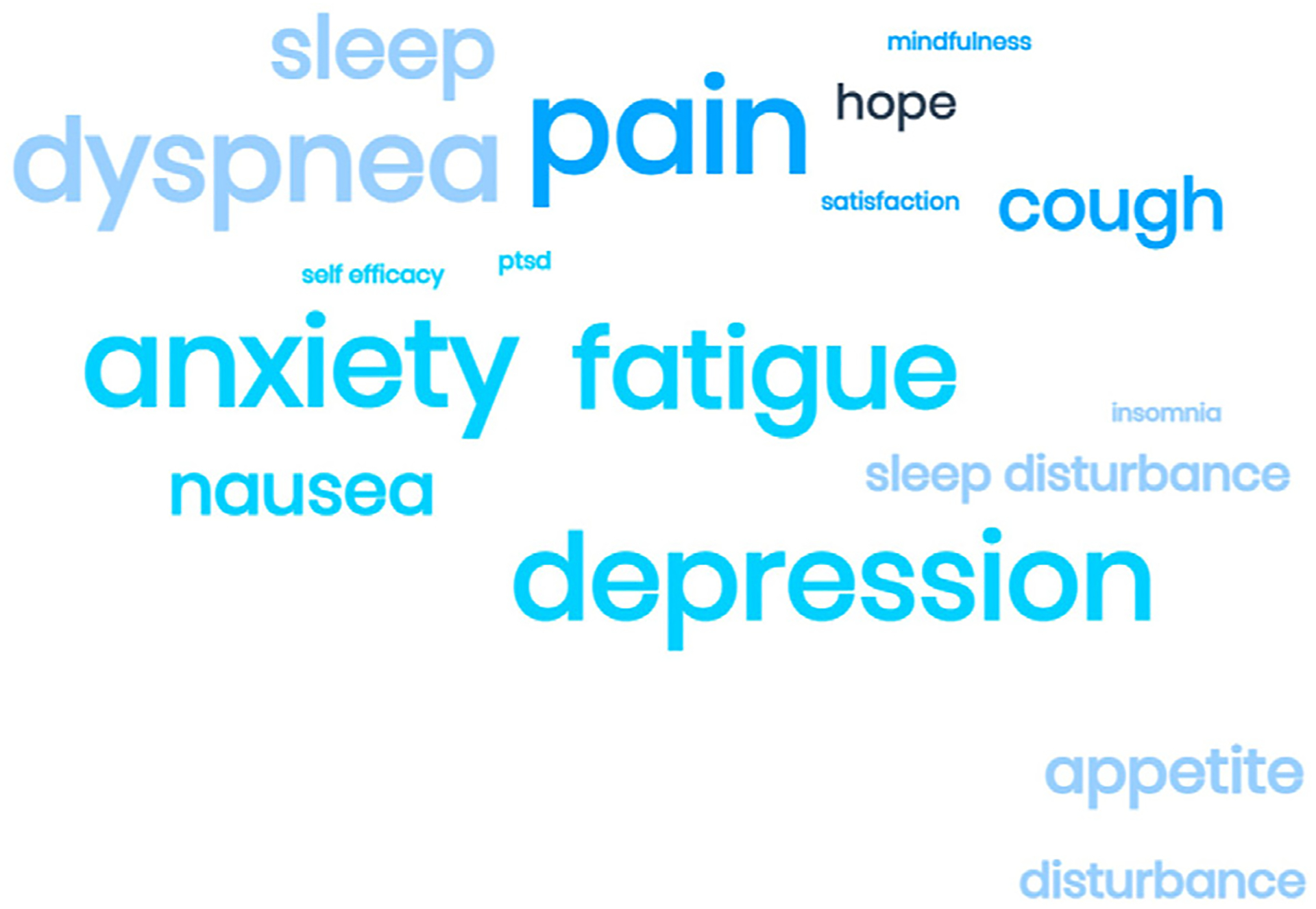
Results: The publication rate of studies assessing symptom burden in patients undergoing surgery for lung cancer have increased over time. The level of evidence quality was 2 or 3 for 14 articles (cohort study or case control) and level of 4 in the remaining 40 articles (case series). The most common QOL instruments used were the Short Form 36 and 12, the European Organisation for Research and Treatment of Cancer Quality of Life Questionnaire, and the Hospital Anxiety and Depression Score. Thematic analysis revealed several key findings: 1) lung cancer surgery patients have a high symptom burden both before and after surgery; 2) pain, dyspnea, cough, fatigue, depression, and anxiety are the most commonly studied symptoms; 3) the presence of symptoms prior to surgery is an important risk factor for higher acuity of symptoms and persistence after surgery; and 4) symptom burden is a predictor of postoperative QOL.
Conclusion: Lung cancer patients undergoing surgery carry a high symptom burden which impacts their QOL. Measurement approaches use myriad and heterogenous instruments. More research is needed to standardize symptom burden measurement and management, with the goal to improve patient experience and overall outcomes.
Keywords: Symptoms; lung cancer; pulmonary resection; quality of life; surgery.
Copyright © 2022 American Academy of Hospice and Palliative Medicine. Published by Elsevier Inc. All rights reserved.
Figures
References
-
- Global Burden of Disease Cancer CollaborationFitzmaurice C, Allen C, et al. Global, regional, and national cancer incidence, mortality, years of life lost, years lived with disability, and disability-adjusted life-years for 32 cancer groups, 1990 to 2015: a systematic analysis for the global burden of disease study. JAMA Oncol 2017;3:524–548. - PMC - PubMed
-
- Moller A, Sartipy U. Long-term health-related quality of life following surgery for lung cancer. Eur J Cardiothorac Surg 2012;41:362–367. - PubMed
-
- Poghosyan H, Sheldon LK, Leveille SG, Cooley ME. Health-related quality of life after surgical treatment in patients with non-small cell lung cancer: a systematic review. Lung Cancer 2013;81:11–26. - PubMed
-
- Paul S, Altorki NK, Sheng S, et al. Thoracoscopic lobectomy is associated with lower morbidity than open lobectomy: a propensity-matched analysis from the STS database. J Thorac Cardiovasc Surg 2010;139:366–378. - PubMed
Publication types
MeSH terms
Grants and funding
LinkOut - more resources
Full Text Sources
Medical
