


Improving Zinc and Iron Biofortification in Wheat through Genomics Approaches
- PMID: 35661970
- PMCID: PMC9165711
- DOI: 10.1007/s11033-022-07326-z
Improving Zinc and Iron Biofortification in Wheat through Genomics Approaches
Abstract
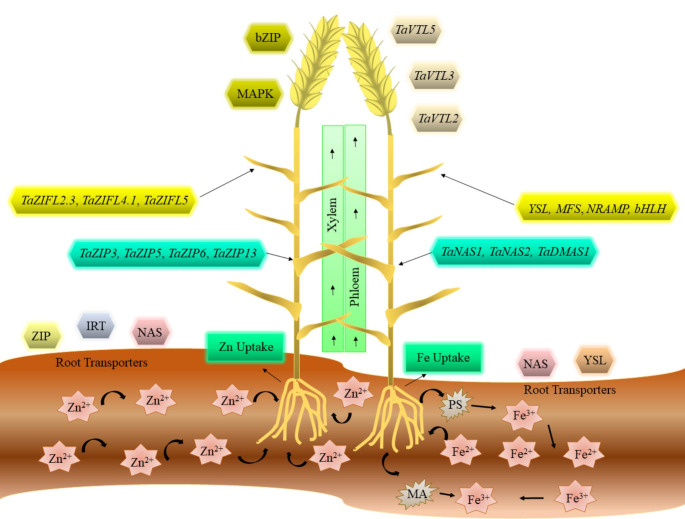
Globally, about 20% of calories (energy) come from wheat. In some countries, it is more than 70%. More than 2 billion people are at risk for zinc deficiency and even more, people are at risk of iron deficiency, nearly a quarter of all children underage group of 5 are physically and cognitively stunted, and lack of dietary zinc is a major contributing factor. Biofortified wheat with elevated levels of zinc and iron has several potential advantages as a delivery vehicle for micronutrients in the diets of resource-poor consumers who depend on cereal-based diets. The conventional breeding strategies have been successful in the introduction of novel alleles for grain Zn and Fe that led to the release of competitive Zn enriched wheat varieties in South Asia. The major challenge over the next few decades will be to maintain the rates of genetic gains for grain yield along with increased grain Zn/Fe concentration to meet the food and nutritional security challenges. Therefore, to remain competitive, the performance of Zn-enhanced lines/varieties must be equal or superior to that of current non-biofortified elite lines/varieties. Since both yield and Zn content are invisible and quantitatively inherited traits except few intermediate effect QTL regions identified for grain Zn, increased breeding efforts and new approaches are required to combine them at high frequency, ensuring that Zn levels are steadily increased to the required levels across the breeding pipelines. The current review article provides a comprehensive list of genomic regions for enhancing grain Zn and Fe concentrations in wheat including key candidate gene families such NAS, ZIP, VLT, ZIFL, and YSL. Implementing forward breeding by taking advantage of the rapid cycling trait pipeline approaches would simultaneously introgress high Zn and Fe QTL into the high Zn and normal elite lines, further increasing Zn and Fe concentrations.
Keywords: Gene mapping; Genomics; Wheat; Zinc; iron.
© 2022. The Author(s), under exclusive licence to Springer Nature B.V.
Conflict of interest statement
No competing interests.
Figures
References
-
- Rehman A, Farooq M, Ozturk L, Asif M, Siddique KHM. Zinc nutrition in wheat-based cropping systems. Plant Soil. 2018;422:283–315. doi: 10.1007/s11104-017-3507-3. - DOI
Publication types
MeSH terms
Substances
Grants and funding
LinkOut - more resources
Full Text Sources
