


Nutrition, Epigenetics, and Major Depressive Disorder: Understanding the Connection
- PMID: 35662945
- PMCID: PMC9158469
- DOI: 10.3389/fnut.2022.867150
Nutrition, Epigenetics, and Major Depressive Disorder: Understanding the Connection
Abstract
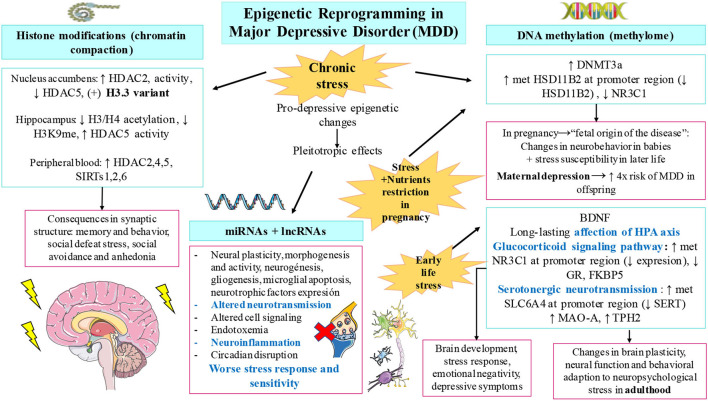
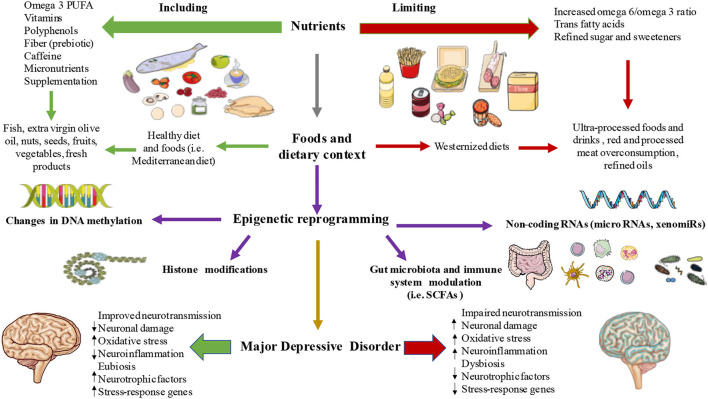
Major depressive disorder (MDD) is a complex, multifactorial disorder of rising prevalence and incidence worldwide. Nearly, 280 million of people suffer from this leading cause of disability in the world. Moreover, patients with this condition are frequently co-affected by essential nutrient deficiency. The typical scene with stress and hustle in developed countries tends to be accompanied by eating disorders implying overnutrition from high-carbohydrates and high-fat diets with low micronutrients intake. In fact, currently, coronavirus disease 2019 (COVID-19) pandemic has drawn more attention to this underdiagnosed condition, besides the importance of the nutritional status in shaping immunomodulation, in which minerals, vitamins, or omega 3 polyunsaturated fatty acids (ω-3 PUFA) play an important role. The awareness of nutritional assessment is greater and greater in the patients with depression since antidepressant treatments have such a significant probability of failing. As diet is considered a crucial environmental factor, underlying epigenetic mechanisms that experience an adaptation or consequence on their signaling and expression mechanisms are reviewed. In this study, we included metabolic changes derived from an impairment in cellular processes due to lacking some essential nutrients in diet and therefore in the organism. Finally, aspects related to nutritional interventions and recommendations are also addressed.
Keywords: S-adenosylmethionine; epigenetics; major depressive disorder; malnutrition; micronutrients; mineral deficiency; omega 3 polyunsaturated fatty acids; pre/probiotics.
Copyright © 2022 Ortega, Fraile-Martínez, García-Montero, Alvarez-Mon, Lahera, Monserrat, Llavero-Valero, Mora, Rodríguez-Jiménez, Fernandez-Rojo, Quintero and Alvarez De Mon.
Conflict of interest statement
The authors declare that the research was conducted in the absence of any commercial or financial relationships that could be construed as a potential conflict of interest.
Figures
References
-
- Santomauro DF, Mantilla Herrera AM, Shadid J, Zheng P, Ashbaugh C, Pigott DM, et al. . Global prevalence and burden of depressive and anxiety disorders in 204 countries and territories in 2020 due to the COVID-19 pandemic. Lancet. (2021) 398:1700–12. 10.1016/S0140-6736(21)02143-7 - DOI - PMC - PubMed
Publication types
LinkOut - more resources
Full Text Sources
Research Materials
