


Non-invasive Brain Stimulation for Central Neuropathic Pain
- PMID: 35663263
- PMCID: PMC9162797
- DOI: 10.3389/fnmol.2022.879909
Non-invasive Brain Stimulation for Central Neuropathic Pain
Abstract
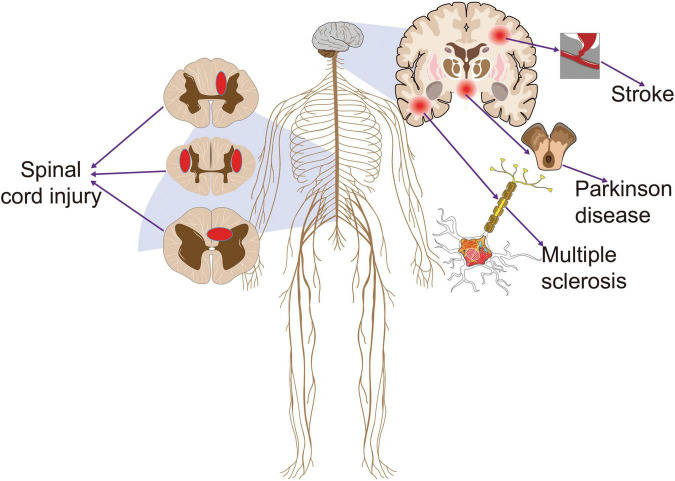
The research and clinical application of the noninvasive brain stimulation (NIBS) technique in the treatment of neuropathic pain (NP) are increasing. In this review article, we outline the effectiveness and limitations of the NIBS approach in treating common central neuropathic pain (CNP). This article summarizes the research progress of NIBS in the treatment of different CNPs and describes the effects and mechanisms of these methods on different CNPs. Repetitive transcranial magnetic stimulation (rTMS) analgesic research has been relatively mature and applied to a variety of CNP treatments. But the optimal stimulation targets, stimulation intensity, and stimulation time of transcranial direct current stimulation (tDCS) for each type of CNP are still difficult to identify. The analgesic mechanism of rTMS is similar to that of tDCS, both of which change cortical excitability and synaptic plasticity, regulate the release of related neurotransmitters and affect the structural and functional connections of brain regions associated with pain processing and regulation. Some deficiencies are found in current NIBS relevant studies, such as small sample size, difficulty to avoid placebo effect, and insufficient research on analgesia mechanism. Future research should gradually carry out large-scale, multicenter studies to test the stability and reliability of the analgesic effects of NIBS.
Keywords: analgesic effects; analgesic mechanism; central neuropathic pain; rTMS; tDCS.
Copyright © 2022 Yang, Zhang, Du, Wang, Fang and Wang.
Conflict of interest statement
The authors declare that the research was conducted in the absence of any commercial or financial relationships that could be construed as a potential conflict of interest.
Figures


References
-
- Andrade P., Visser-Vandewalle V., Hoffmann C., Steinbusch H. W., Daemen M. A., Hoogland G. (2011). Role of TNF-alpha during central sensitization in preclinical studies. Neurol. Sci. offi. J. Ital. Neurol. Soc. Ital. Soc. Clin. Neurophysiol. 32 757–771. 10.1007/s10072-011-0599-z - DOI - PMC - PubMed
-
- Andrade S. M., Batista L. M., Nogueira L. L. R. F., de Oliveira E. A., de Carvalho A. G. C., Lima S. S., et al. (2017). Constraint-induced movement therapy combined with transcranial direct current stimulation over premotor cortex improves motor function in severe stroke: a pilot randomized controlled trial. Rehabili. Res. Pract. 2017:6842549. 10.1155/2017/6842549 - DOI - PMC - PubMed
-
- Antonenko D., Schubert F., Bohm F., Ittermann B., Aydin S., Hayek D., et al. (2017). tDCS-induced modulation of GABA Levels and Resting-State Functional Connectivity in Older Adults. The Journal of neuroscience : the official journal of the Society for Neuroscience 37 4065–4073. 10.1523/JNEUROSCI.0079-17.2017 - DOI - PMC - PubMed
-
- Attal N., Ayache S. S., Ciampi De Andrade D., Mhalla A., Baudic S., Jazat F., et al. (2016). Repetitive transcranial magnetic stimulation and transcranial direct-current stimulation in neuropathic pain due to radiculopathy: a randomized sham-controlled comparative study. Pain 157 1224–1231. 10.1097/j.pain.0000000000000510 - DOI - PubMed
Publication types
LinkOut - more resources
Full Text Sources
Medical
Miscellaneous
