


Genome-wide association studies for Alzheimer's disease: bigger is not always better
- PMID: 35663382
- PMCID: PMC9155614
- DOI: 10.1093/braincomms/fcac125
Genome-wide association studies for Alzheimer's disease: bigger is not always better
Abstract
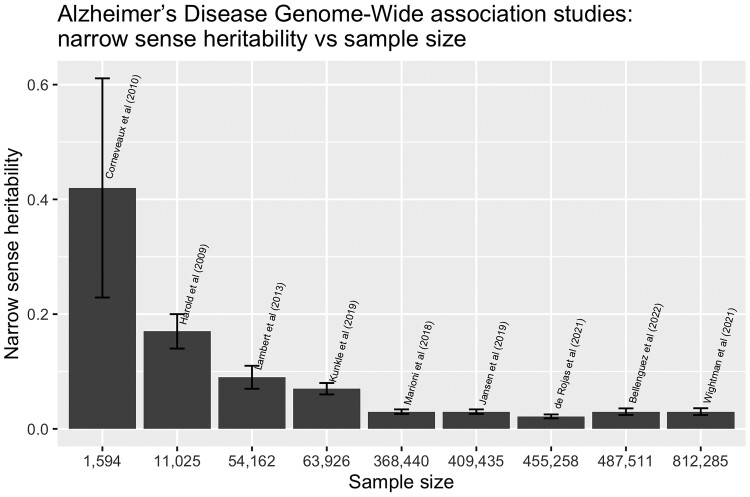
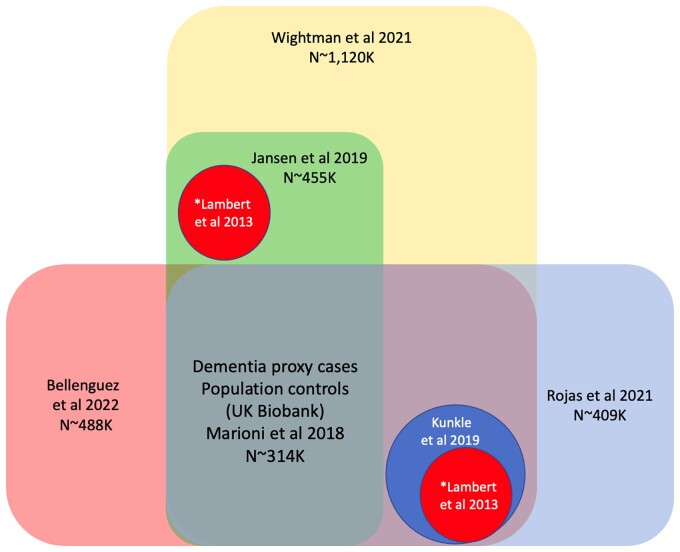
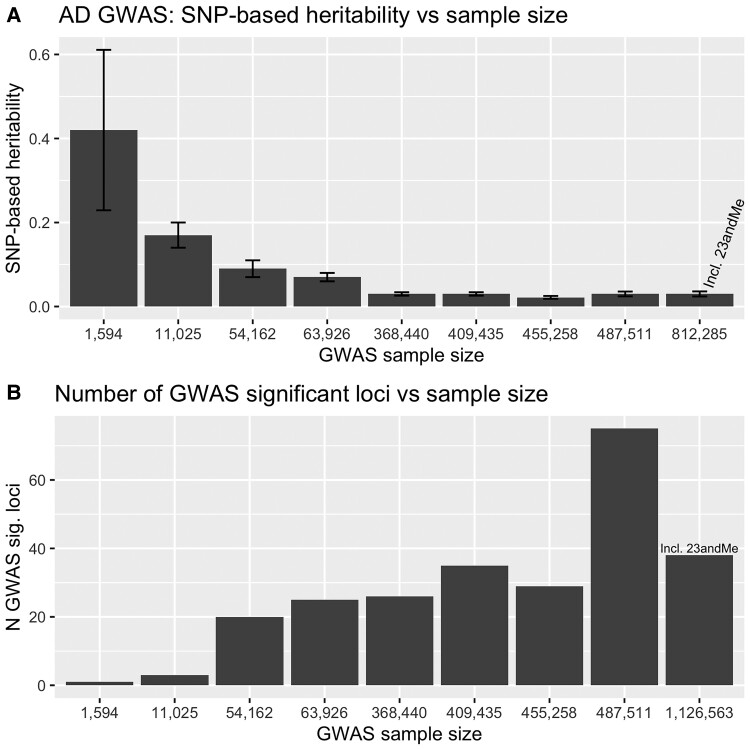
As the size of genome-wide association studies increase, the number of associated trait loci identified inevitably increase. One welcomes this if it allows the better delineation of the pathways to disease and increases the accuracy of genetic prediction of disease risk through polygenic risk score analysis. However, there are several problems in the continuing increase in the genome-wide analysis of 'Alzheimer's disease'. In this review, we have systematically assessed the history of Alzheimer's disease genome-wide association studies, including their sample sizes, age and selection/assessment criteria of cases and controls and heritability explained by these disease genome-wide association studies. We observe that nearly all earlier disease genome-wide association studies are now part of all current disease genome-wide association studies. In addition, the latest disease genome-wide association studies include (i) only a small fraction (∼10%) of clinically screened controls, substituting for them population-based samples which are systematically younger than cases, and (ii) around 50% of Alzheimer's disease cases are in fact 'proxy dementia cases'. As a consequence, the more genes the field finds, the less the heritability they explain. We highlight potential caveats this situation creates and discuss some of the consequences occurring when translating the newest Alzheimer's disease genome-wide association study results into basic research and/or clinical practice.
Keywords: Alzheimer’s disease; genome-wide association study; heritability.
© The Author(s) 2022. Published by Oxford University Press on behalf of the Guarantors of Brain.
Figures
References
-
- Escott-Price V, Baker E, Shoai M, et al. Genetic analysis suggests high misassignment rates in clinical Alzheimer’s cases and controls. Neurobiol Aging. 2019;77:178–182. - PubMed
-
- Schachter F, Fauredelanef L, Guenot F, et al. Genetic associations with human longevity at the APOE and ACE loci. Nat Genet. 1994;6:29–32. - PubMed
Publication types
Grants and funding
LinkOut - more resources
Full Text Sources
Research Materials