


A Challenging Knowledge Gap: Estimating Modes of HIV Acquisition Among Adolescents Entering HIV Care During Adolescence
- PMID: 35664047
- PMCID: PMC9160889
- DOI: 10.1177/2333794X221101768
A Challenging Knowledge Gap: Estimating Modes of HIV Acquisition Among Adolescents Entering HIV Care During Adolescence
Abstract
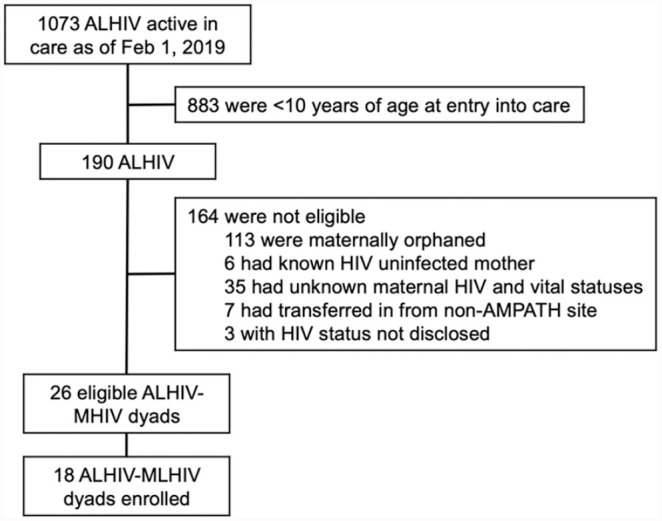
Characterizing HIV acquisition modes among adolescents with HIV (AHIV) enrolling in care during adolescence is a challenging gap that impacts differential interventions. We explored whether primary data collection with targeted questionnaires may address this gap and improve understanding of risk factors and perceptions about adolescents' HIV acquisition, in Kenyan AHIV entering care at ≥10 years, and their mothers with HIV (MHIV). Clinical data were derived through chart review. Among 1073 AHIV in care, only 26 (2%) met eligibility criteria of being ≥10 years at care enrollment, disclosed to, and with living MHIV. Among 18/26 AHIV-MHIV dyads enrolled (median age of AHIV 14 years), none had documented HIV acquisition modes. Data suggested perinatal infection in 17/18 AHIV, with 1 reported non-perinatal acquisition risk factor, and some discordance between adolescent-mother perceptions of HIV acquisition. In this difficult-to-enroll, vulnerable population of AHIV-MHIV dyads, primary data collection can enhance understanding of AHIV acquisition modes.
Keywords: HIV; HIV transmission mode; adolescent; late care entry; mother-to-child transmission.
© The Author(s) 2022.
Conflict of interest statement
Declaration of Conflicting Interests: The author(s) declared no potential conflicts of interest with respect to the research, authorship, and/or publication of this article.
Figures
References
Grants and funding
LinkOut - more resources
Full Text Sources
Miscellaneous
