


Using an Intersectional Lens on Vulnerability and Resilience in Minority and/or Marginalized Groups During the COVID-19 Pandemic: A Narrative Review
- PMID: 35664166
- PMCID: PMC9158486
- DOI: 10.3389/fpsyg.2022.894103
Using an Intersectional Lens on Vulnerability and Resilience in Minority and/or Marginalized Groups During the COVID-19 Pandemic: A Narrative Review
Abstract
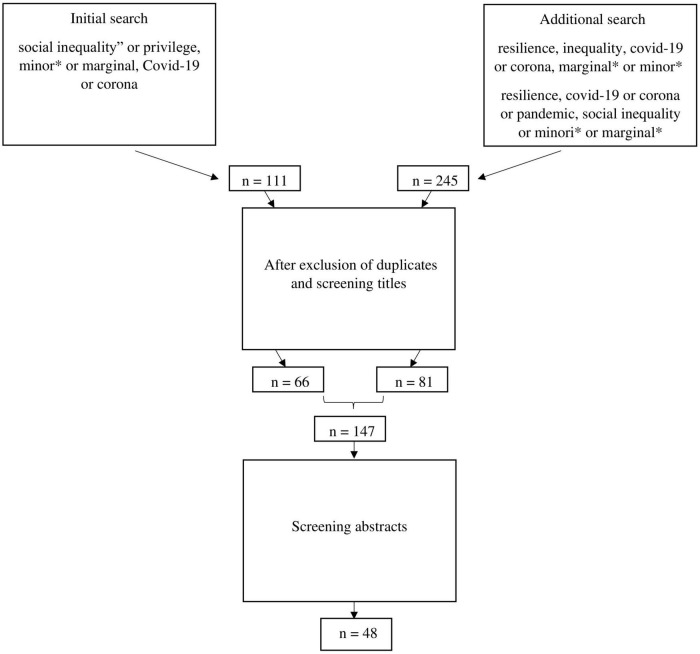
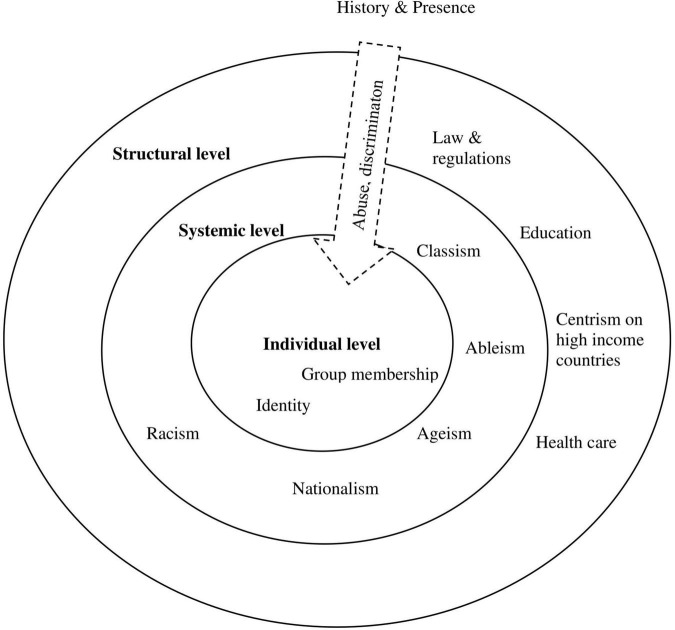
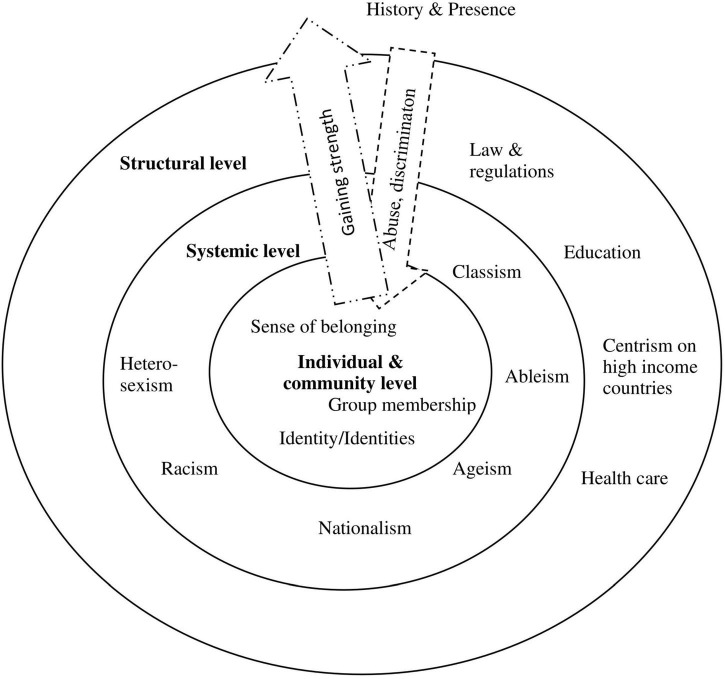
Throughout the pandemic, the media and scholars have widely discussed increasing social inequality and thereby publicly pointed to often hidden and neglected forms of inequality. However, the "newly" arisen awareness has not yet been put into action to reduce this inequality. Dealing with social inequality implies exploring and confronting social privileges, which are often seen as the other side of inequality. These social constructs, inequality and privilege, are often discussed in light of vulnerability and resilience. This is particularly important in the context of the worldwide coronavirus disease 2019 (COVID-19) pandemic and efforts to end the pandemic, as both constructs are discussed regarding access to healthcare, vaccination, and education and knowledge, misinformation, social resources, economic resources, and so forth. Minority and/or marginalized groups may be particularly vulnerable to the impact of the COVID-19 pandemic. However, resilience factors in these groups may be neglected and underreported. This narrative review aims at illustrating the specific and intertwined aspects of resilience and vulnerability in minority and/or marginalized groups during the COVID-19 pandemic. To achieve this, we use an intersectional lens based on recommendations made by Moradi and Grzanka. A total of 48 articles were included in the narrative review. Most of them were commentaries focusing on social inequality, vulnerability, and/or resilience. Based on the dissection of articles at structural, systemic, and individual levels, we propose three hypothesis on vulnerability and resilience in minority and marginalized individuals and groups: (1) social inequality must be considered at a global level; inequality at a global level translates into a vulnerable context for an individual; (2) vulnerability is historically situated: vulnerability (experienced during the pandemic) is maintained and reinforced by history; (3) strength through collective (historical) hardship: vulnerability is not the opposite of resilience but may serve as an aspect of resilience. The conclusions drawn from this review show that we need to include diverse voices to advance concepts, such as vulnerability and resilience, in minority and marginalized groups. Additionally, these concepts are not necessarily in opposition to each other, but vulnerability should be understood as an integral part of resilience.
Keywords: COVID-19 pandemic; intersectionality; narrative review; resilience; social inequality; vulnerability.
Copyright © 2022 Siller and Aydin.
Conflict of interest statement
The authors declare that the research was conducted in the absence of any commercial or financial relationships that could be construed as a potential conflict of interest.
Figures
References
-
- Abreu R. L., Gonzalez K. A., Arora S., Sostre J. P., Lockett G. M., Mosley D. (2021). “Coming together after tragedy reaffirms the strong sense of community and pride we have:” LGBTQ people find strength in community and cultural values during the COVID-19 pandemic. Psychol. Sex. Orient. Gender Divers. 10.1037/sgd0000516 [Epub ahead of print]. - DOI
-
- Ahmed A., Jackson J. (2021). Race, risk, and personal responsibility in the response to Covid-19. Columbia Law Rev. 121 47–70.
-
- Andia T., Chorev N. (2021). Inequalities and social resilience in times of COVID-19. Rev. Estudios Soc. 78 2–13. 10.7440/res78.2021.01 - DOI
-
- Aung T. S., Fischer T. B., Wang Y. H. (2021). Conceptualization of health and social vulnerability of marginalized populations during Covid-19 using quantitative scoring approach. J. Immigr. Refugee Stud. 20 1–6. 10.1080/15562948.2021.1882023 - DOI
Publication types
LinkOut - more resources
Full Text Sources
