


Hospice Improves Care Quality For Older Adults With Dementia In Their Last Month Of Life
- PMID: 35666964
- PMCID: PMC9662595
- DOI: 10.1377/hlthaff.2021.01985
Hospice Improves Care Quality For Older Adults With Dementia In Their Last Month Of Life
Abstract
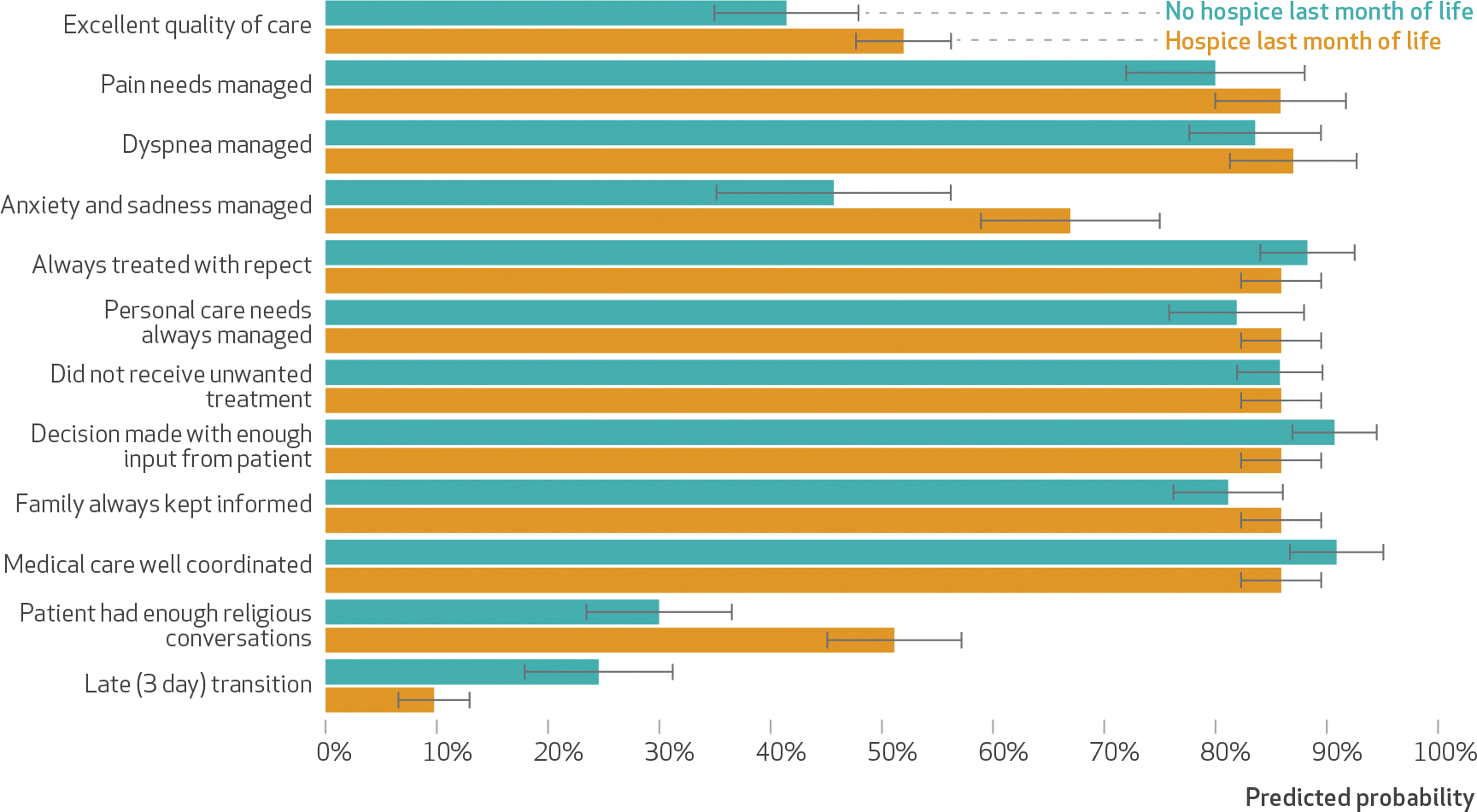
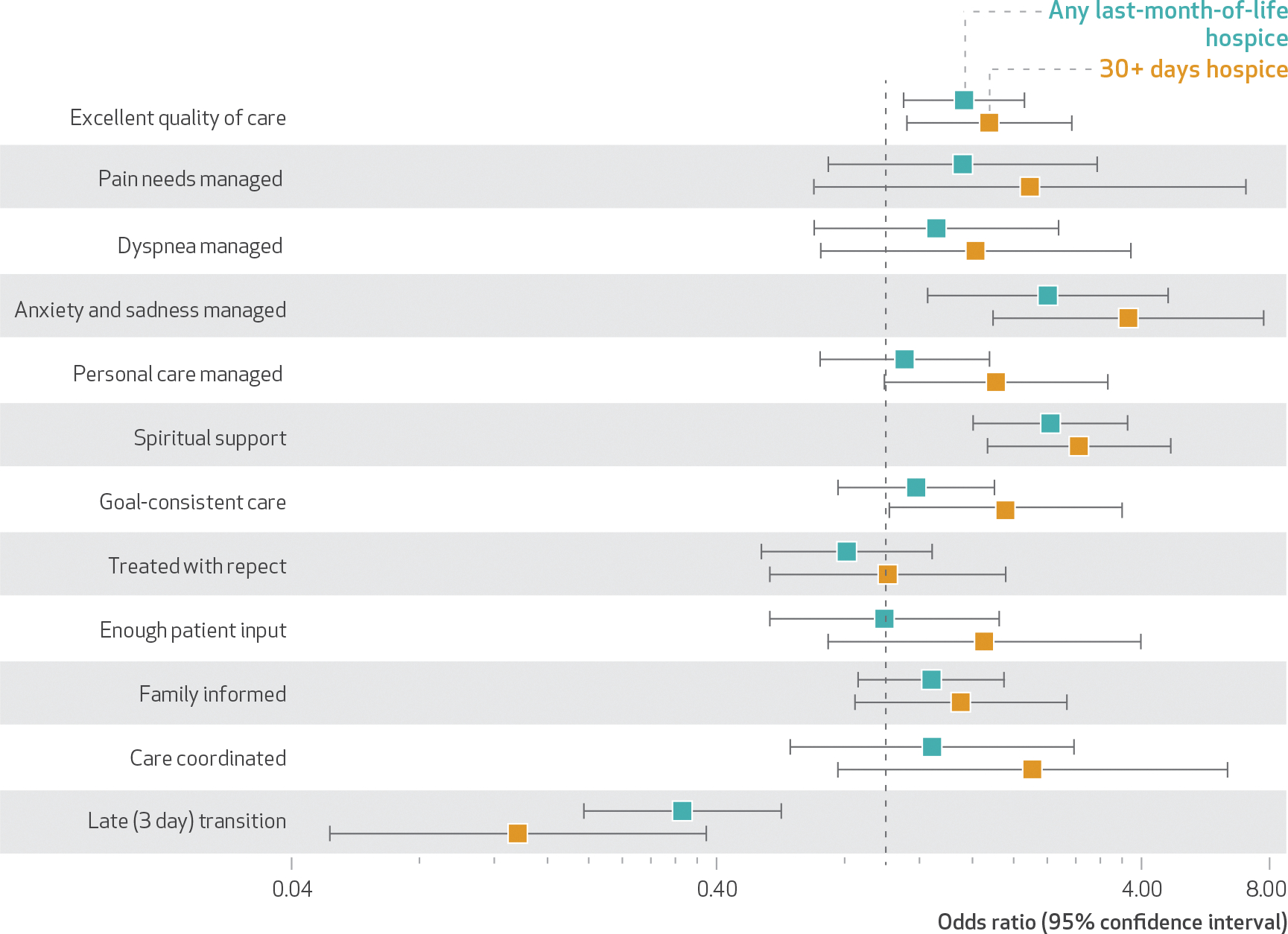
The Medicare hospice benefit was originally designed around a cancer disease paradigm but increasingly serves people living with dementia. At this time, almost half of all older adults receiving hospice care have dementia. Yet there is minimal evidence as to whether hospice benefits people living with dementia outside of nursing facilities. We asked whether and how the perceived quality of last-month-of-life care differed between people with and without dementia and whether hospice use among people living with dementia was associated with perceived quality of care compared with the quality of care for those who did not use hospice. We used nationally representative data from the National Health and Aging Trends Study and Medicare claims from the period 2011-17 to examine the impact of hospice enrollment on proxy perceptions of last-month-of-life care quality. Proxies of people living with dementia enrolled in hospice compared with proxies of those not enrolled more often reported care to be excellent (predicted probability: 52 percent versus 41 percent), more often reported having anxiety or sadness managed (67 percent versus 46 percent), and less often reported changes in care settings in the last three days of life (10 percent versus 25 percent). There were no differences in the impact of hospice on proxy ratings of care for people with and without dementia. Policy makers should consider these benefits when weighing changes to hospice policy and regulations that may affect people living with dementia.
Figures
References
-
- Alzheimer’s Association. 2022. Alzheimer’s disease facts and figures [Internet]. Chicago (IL): Alzheimer’s Association; [cited 2022 Apr 7]. Available from: https://www.alz.org/media/Documents/alzheimers-facts-and-figures.pdf - PubMed
-
- Kochanek KD, Xu J, Arias E. Mortality in the United States, 2019 [Internet]. Hyattsville (MD): National Center for Health Statistics; 2020. Dec [cited 2022 Apr 7]. (NCHS Data brief No. 395). Available from: https://www.cdc.gov/nchs/products/databriefs/db395.htm
-
- Aldridge MD, Bradley EH. Epidemiology and patterns of care at the end of life: rising complexity, shifts in care patterns and sites of death. Health Aff (Millwood). 2017;36(7):1175–83. - PubMed
-
- Authors’ analysis of data from: Centers for Disease Control and Prevention. CDC WONDER; [Internet]. Atlanta (GA): CDC; [cited 2022 Apr 7]. Available from: https://wonder.cdc.gov
-
- National Hospice and Palliative Care Organization. NHPCO facts and figures: 2020 edition [Internet]. Alexandria (VA): NHPCO; 2020. Aug 20 [cited 2022 Apr 7]. Available for download from: https://www.nhpco.org/wp-content/uploads/NHPCO-Facts-Figures-2020-editio...
