Review
. 2022 Jun;69(3):547-571.
doi: 10.1016/j.pcl.2022.01.013. Epub 2022 Feb 2.

COVID-19 in Children

Affiliations
Review

COVID-19 in Children

Meena Kalyanaraman et al. Pediatr Clin North Am. 2022 Jun.

Abstract

Coronavirus disease 2019 (COVID-19) is an ongoing pandemic caused by the severe acute respiratory syndrome coronavirus-2 (SARS-CoV-2) virus. More than 5 million children have been infected in the United States. Risk factors for more severe disease progression include obesity, pulmonary disease, gastrointestinal disorders, and neurologic comorbidities. Children with COVID-19 are admitted to the pediatric intensive care unit because of severe acute COVID-19 illness or COVID-19-associated multisystem inflammatory syndrome in children. The delta surge of 2021 was responsible for an increased disease burden in children and points to the key role of vaccinating children against this sometimes-deadly disease.

Keywords: ARDS; COVID-19; Epidemiology; MIS-C; Pediatric COVID; Risk factors; SARS-CoV-2.


Conflict of interest statement

Disclosure The authors have nothing to disclose.

Figures

Fig. 1
Fig. 1
Summary of children with positive COVID-19 test
Fig. 2
Fig. 2
Chest radiograph of infant with bronchopulmonary dysplasia who developed COVID-19 ARDS showing bilateral ground-glass opacities.
Fig. 3
Fig. 3
Management of acute respiratory failure in severe COVID-19. BiPAP, bilevel positive airway pressure; CPAP, continuous positive airway pressure; ETT, endotracheal tube; HEPA, high-efficiency particulate air filter; HFNC, high-flow nasal cannula; LMA, laryngeal mask airway; NIV, noninvasive ventilation; PAPR, powered air purifying respirator; PEEP, positive end-expiratory pressure; POCUS, point-of-care ultrasonography; PPE, personal protective equipment; Pplat, plateau pressure; RSI, rapid sequence intubation; Spo2, oxygen saturation by pulse oximetry.
Fig. 4
Fig. 4
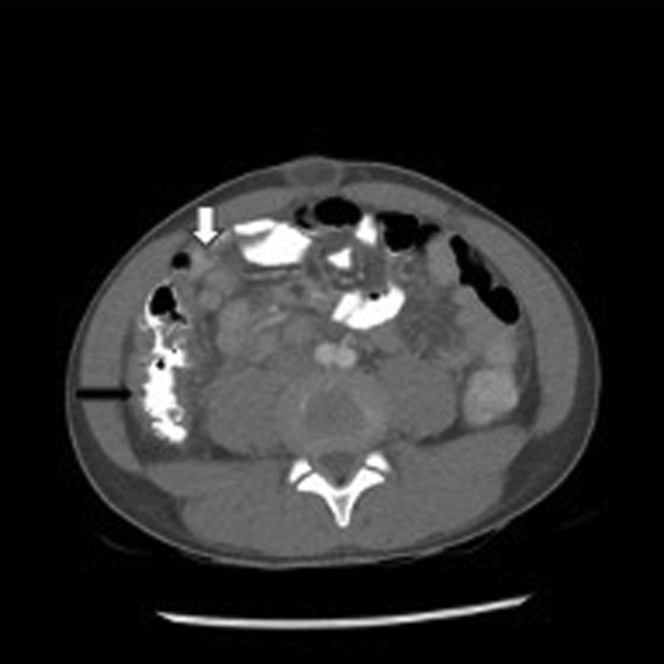
Abdominal CT of 11-year-old African-American male with MIS-C who presented with fever, mucocutaneous symptoms, severe abdominal pain, vomiting, and CoV-2 antibody (Ab) IgG+. Bowel wall thickening of ascending colon (black arrow) with several enlarged lymph nodes (white arrow).
Fig. 5
Fig. 5
Chest radiographs of a 5-year-old Hispanic male with MIS-C who presented with fever; cardiorespiratory, mucocutaneous, and abdominal symptoms; hypoalbuminemia; positive for SARS-CoV-2 RT-PCR and CoV-2 IgG Ab. (A) On presentation, when he had moderately decreased LV systolic function and required BiPAP. (B) Three days after presentation, with normal biventricular systolic function and resolution of respiratory symptoms, hypoalbuminemia, and fever.
Fig. 6
Fig. 6
Chest CT of an 18-year-old African-American male with MIS-C who presented with fever, shock with LV dysfunction requiring inotropic/vasoactive medication, pneumonia, mucocutaneous symptoms, hypoalbuminemia, CoV-2 Ab IgG+, requiring BiPAP with pleural effusion (black arrow) and bilateral lower lobe consolidation (white arrow).
Fig. 7
Fig. 7
Diagnostic pathway for MIS-C. Moderate to high consensus was reached by the task force in the development of this diagnostic pathway for MIS-C associated with SARS-CoV-2. aAn epidemiologic link to SARS-CoV-2 infection is defined as a child with any of the following criteria: positive for SARS-CoV-2 by polymerase chain reaction (PCR), positive for SARS-CoV-2 by serology, preceding illness resembling COVID-19, or close contact with an individual with confirmed or suspected COVID-19 in the past 4 weeks. bSuggestive clinical features include rash (polymorphic, maculopapular, or petechial, but not vesicular), gastrointestinal symptoms (diarrhea, abdominal pain, or vomiting), oral mucosal changes (red and/or cracked lips, strawberry tongue, or erythema of the oropharyngeal mucosa), conjunctivitis (bilateral conjunctival infection without exudate), and neurologic symptoms (altered mental status, encephalopathy, focal neurologic deficits, meningismus, or papilledema). cThe CMP includes measurement of sodium, potassium, carbon dioxide, chloride, blood urea nitrogen, creatinine, glucose, calcium, albumin, total protein, aspartate aminotransferase, alanine aminotransferase, alkaline phosphatase, and bilirubin. dProcalcitonin, cytokine panel, and blood smear test results should be sent, if available. eSerologic test results should be sent if not sent in tier 1 evaluation, and if possible, SARS-CoV-2 IgG, IgM, and IgA test results should be sent. ALC, absolute lymphocyte count; u/a, urinalysis.
Fig. 8
Fig. 8
Algorithm for initial immunomodulatory treatment of MIS-C. Moderate to high consensus was reached by the task force in the development of this treatment algorithm for MIS-C associated with SARS-CoV-2. aIntravenous immunoglobulin (IVIG) dosing is 2 g/kg based on ideal body weight. Cardiac function and fluid status should be assessed before IVIG is given. In some patients with cardiac dysfunction, IVIG may be given in divided doses (1 g/kg daily over 2 days). bMethylprednisolone or another steroid at equivalent dosing may be used. cRefractory disease is defined as persistent fevers and/or ongoing and significant end-organ involvement. dLow-dose to moderate-dose glucocorticoids (methylprednisolone 1–2 mg/kg/d) may be considered for first-line therapy in some MIS-C patients with concerning features (ill appearance, highly increased B-type natriuretic peptide levels, unexplained tachycardia) who have not yet developed shock or organ-threatening disease. eIf the patient was given low-dose to moderate-dose glucocorticoids as first-line therapy, methylprednisolone IV dosing should be 10 to 30 mg/kg/d for intensification treatment.

References

    1. Centers for Disease Control and Prevention . 2021. Laboratory-confirmed COVID-19-associated hospitalizations.https://gis.cdc.gov/grasp/COVIDNet/COVID19_5.html#virusTypeDiv
    1. Dong Y., Mo X., Hu Y., et al. Epidemiology of COVID-19 among children in China. Pediatrics. 2020;145(6):e20200702. - PubMed
    1. Lu X., Zhang L., Du H., et al. SARS-CoV-2 Infection in Children. N Engl J Med. 2020;382(17):1663–1665. doi: 10.1056/NEJMc2005073. - DOI - PMC - PubMed
    1. Hoang A., Chorath K., Moreira A., et al. COVID-19 in 7780 pediatric patients: a systematic review. EClinicalMedicine. 2020;24:100433. - PMC - PubMed
    1. Viner R.M., Ward J.L., Hudson L.D., et al. Systematic review of reviews of symptoms and signs of COVID-19 in children and adolescents. Arch Dis Child. 2020 doi: 10.1136/archdischild-2020-320972. - DOI - PubMed

Supplementary concepts