


A systematic review and meta-analysis on prevalence of and risk factors associated with depression, anxiety and insomnia in infectious diseases, including COVID-19: a call to action
- PMID: 35668158
- PMCID: PMC9168354
- DOI: 10.1038/s41380-022-01638-z
A systematic review and meta-analysis on prevalence of and risk factors associated with depression, anxiety and insomnia in infectious diseases, including COVID-19: a call to action
Abstract
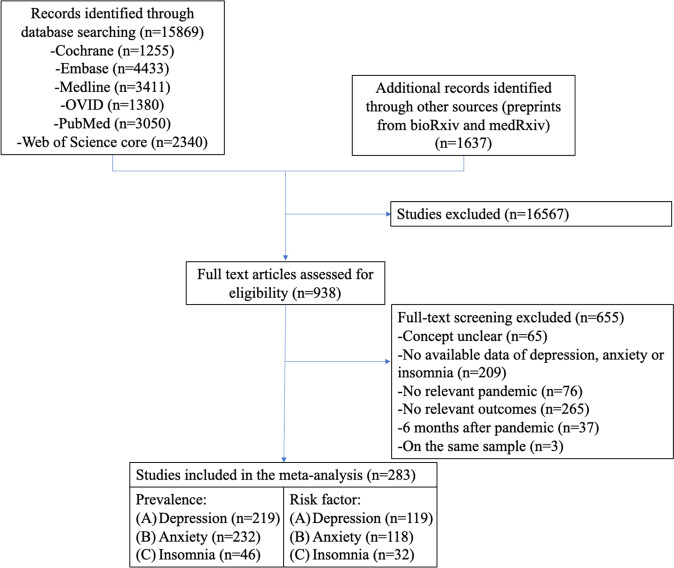
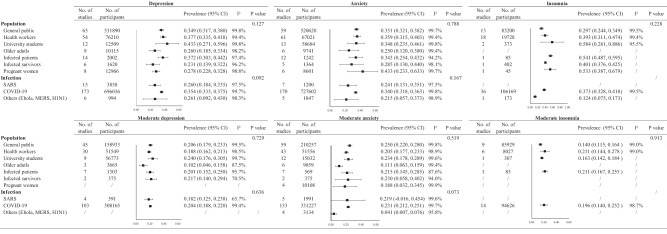
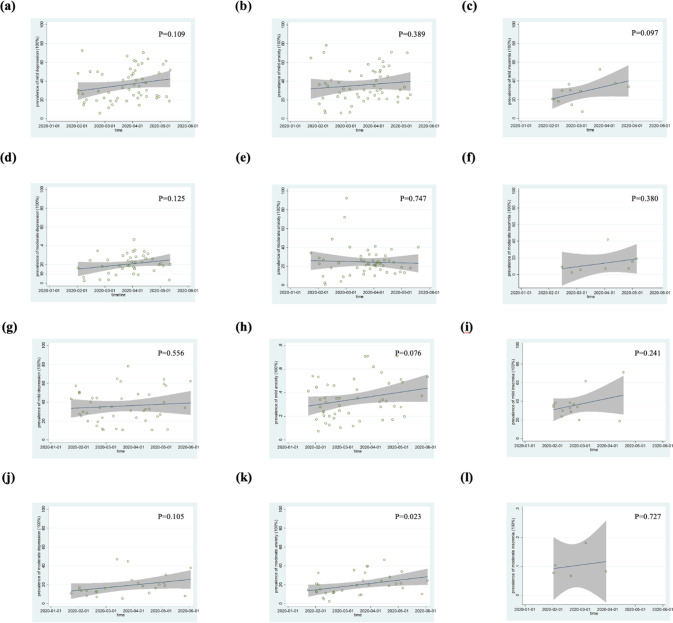
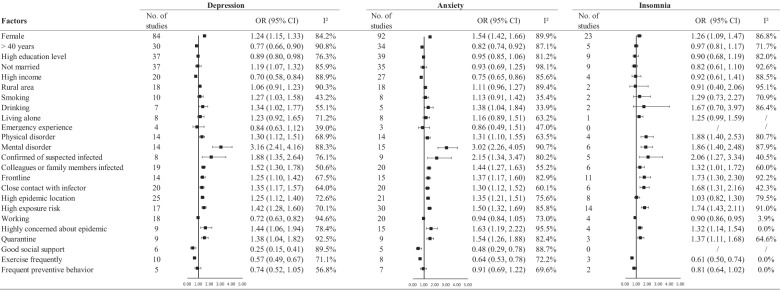
Infectious disease epidemics have become more frequent and more complex during the 21st century, posing a health threat to the general public and leading to psychological symptoms. The current study was designed to investigate the prevalence of and risk factors associated with depression, anxiety and insomnia symptoms during epidemic outbreaks, including COVID-19. We systematically searched the PubMed, Embase, Web of Science, OVID, Medline, Cochrane databases, bioRxiv and medRxiv to identify studies that reported the prevalence of depression, anxiety or insomnia during infectious disease epidemics, up to August 14th, 2020. Prevalence of mental symptoms among different populations including the general public, health workers, university students, older adults, infected patients, survivors of infection, and pregnant women across all types of epidemics was pooled. In addition, prevalence of mental symptoms during COVID-19 was estimated by time using meta-regression analysis. A total of 17,506 papers were initially retrieved, and a final of 283 studies met the inclusion criteria, representing a total of 948,882 individuals. The pooled prevalence of depression ranged from 23.1%, 95% confidential intervals (95% CI: [13.9-32.2]) in survivors to 43.3% (95% CI: [27.1-59.6]) in university students, the pooled prevalence of anxiety ranged from 25.0% (95% CI: [12.0-38.0]) in older adults to 43.3% (95% CI: [23.3-63.3]) in pregnant women, and insomnia symptoms ranged from 29.7% (95% CI: [24.4-34.9]) in the general public to 58.4% (95% CI: [28.1-88.6]) in university students. Prevalence of moderate-to-severe mental symptoms was lower but had substantial variation across different populations. The prevalence of mental problems increased over time during the COVID-19 pandemic among the general public, health workers and university students, and decreased among infected patients. Factors associated with increased prevalence for all three mental health symptoms included female sex, and having physical disorders, psychiatric disorders, COVID infection, colleagues or family members infected, experience of frontline work, close contact with infected patients, high exposure risk, quarantine experience and high concern about epidemics. Frequent exercise and good social support were associated with lower risk for these three mental symptoms. In conclusion, mental symptoms are common during epidemics with substantial variation across populations. The population-specific psychological crisis management are needed to decrease the burden of psychological problem and improve the mental wellbeing during epidemic.
© 2022. The Author(s), under exclusive licence to Springer Nature Limited.
Conflict of interest statement
The authors declare no competing interests.
Figures
References
Publication types
MeSH terms
Grants and funding
LinkOut - more resources
Full Text Sources
Medical
Miscellaneous
