


Potential Role of Yoga Intervention in the Management of Chronic Non-malignant Pain
- PMID: 35668780
- PMCID: PMC9167073
- DOI: 10.1155/2022/5448671
Potential Role of Yoga Intervention in the Management of Chronic Non-malignant Pain
Abstract
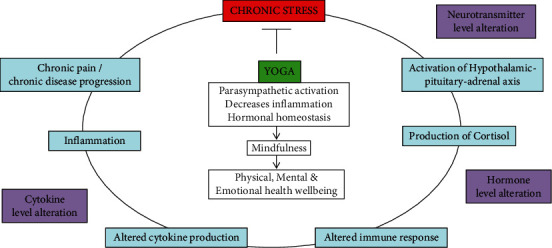
Pain is an unpleasant and upsetting experience. Persistent pain has an impact on an individual's quality of life which causes stress and mood disorders. There are currently no pain-relieving techniques available that can eliminate pain and offer relief without causing any adverse effects. These factors draw attention to traditional treatments like yoga and meditation, which can reduce biological stress and hence increase immunity, as well as alleviate the psychological and emotional suffering produced by pain. Yoga reduces the stress response and the pain cascade via the downregulation of the hypothalamus-pituitary-adrenal (HPA) axis and vagal stimulation. Yoga is a cost-effective growing health practice that, unlike pharmaceuticals, has no side effects and can help patients stay in remission for longer periods of time with fewer relapses. Yoga not only reduces stress and depression severity but also improves functional status and reduces pain perception. This article highlights the impact of yoga on pain management and on a malfunctioning immune system, which leads to improved health, pain reduction, disease management, and improvement in overall quality of life.
Copyright © 2022 Shivani Gupta et al.
Conflict of interest statement
The authors declare that they have no conflicts of interest.
Figures
References
Publication types
LinkOut - more resources
Full Text Sources
