


Systemic Lupus Erythematosus Delivery Outcomes Are Unchanged Across Three Decades
- PMID: 35670028
- PMCID: PMC9374054
- DOI: 10.1002/acr2.11447
Systemic Lupus Erythematosus Delivery Outcomes Are Unchanged Across Three Decades
Abstract
Objective: Using a large, de-identified electronic health record database with over 3.2 million patients, we aimed to identify trends of systemic lupus erythematosus (SLE) medication use during pregnancy and birth outcomes from 1989 to 2020.
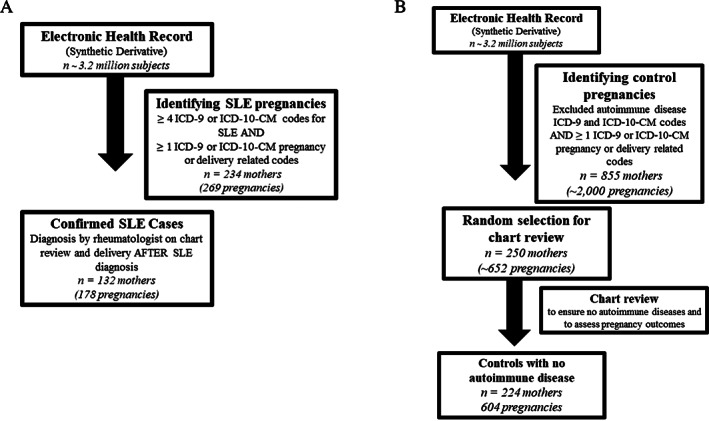
Methods: Using a previously validated algorithm for SLE deliveries, we identified 255 pregnancies in patients with SLE and 604 pregnancies in controls with no known autoimmune diseases. We examined demographics, medications, SLE comorbidities, and maternal and fetal outcomes in SLE and control deliveries.
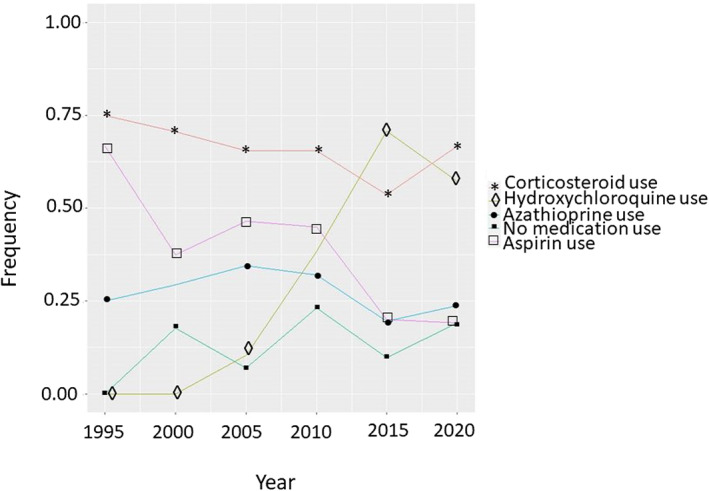
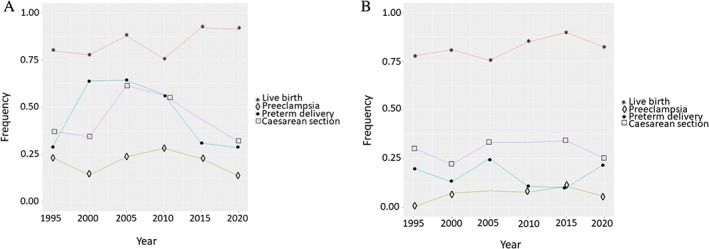
Results: Compared with control deliveries, SLE deliveries were more likely to be complicated by preterm delivery (odds ratio [OR]: 6.71; 95% confidence interval [CI]: 4.31-10.55; P < 0.001) and preeclampsia (OR: 3.22; 95% CI: 1.83-5.66; P < 0.001) after adjusting for age at delivery, race, and parity. In a longitudinal analysis, medication use during SLE pregnancies remained relatively stable, with some increased use of hydroxychloroquine over time but no increase in aspirin use. For SLE deliveries, preterm delivery and preeclampsia rates remained stable.
Conclusion: We observed rates of preeclampsia and preterm delivery in SLE that were five times higher than the general population and higher compared with other prospective SLE cohorts. Furthermore, we did not observe improved outcomes over time with preeclampsia and preterm delivery. Despite increasing evidence for universal use of hydroxychloroquine and aspirin, we did not observe substantially higher use of these medications over time, particularly for aspirin. Our results demonstrate the continued need to prioritize educational and implementation efforts to improve adverse pregnancy outcomes in SLE.
© 2022 The Authors. ACR Open Rheumatology published by Wiley Periodicals LLC on behalf of American College of Rheumatology.
Figures
References
-
- Andrade RM, McGwin G, Alarcón GS, Sanchez ML, Bertoli AM, Fernández M, et al. Predictors of post‐partum damage accrual in systemic lupus erythematosus: data from LUMINA, a multiethnic US cohort (XXXVIII). Rheumatology (Oxford) 2006;45:1380–4. - PubMed
-
- Skorpen CG, Lydersen S, Gilboe IM, Skomsvoll JF, Salvesen KA, Palm O, et al. Influence of disease activity and medications on offspring birth weight, pre‐eclampsia and preterm birth in systemic lupus erythematosus: a population‐based study. Ann Rheum Dis 2018;77:264–9. - PubMed
-
- Zusman EZ, Sayre EC, Avina‐Zubieta JA, De Vera MA. Patterns of medication use before, during and after pregnancy in women with systemic lupus erythematosus: a population‐based cohort study. Lupus 2019;28:1205–13. - PubMed
Grants and funding
LinkOut - more resources
Full Text Sources
