


The circadian system, sleep, and the health/disease balance: a conceptual review
- PMID: 35670313
- PMCID: PMC9352354
- DOI: 10.1111/jsr.13621
The circadian system, sleep, and the health/disease balance: a conceptual review
Abstract
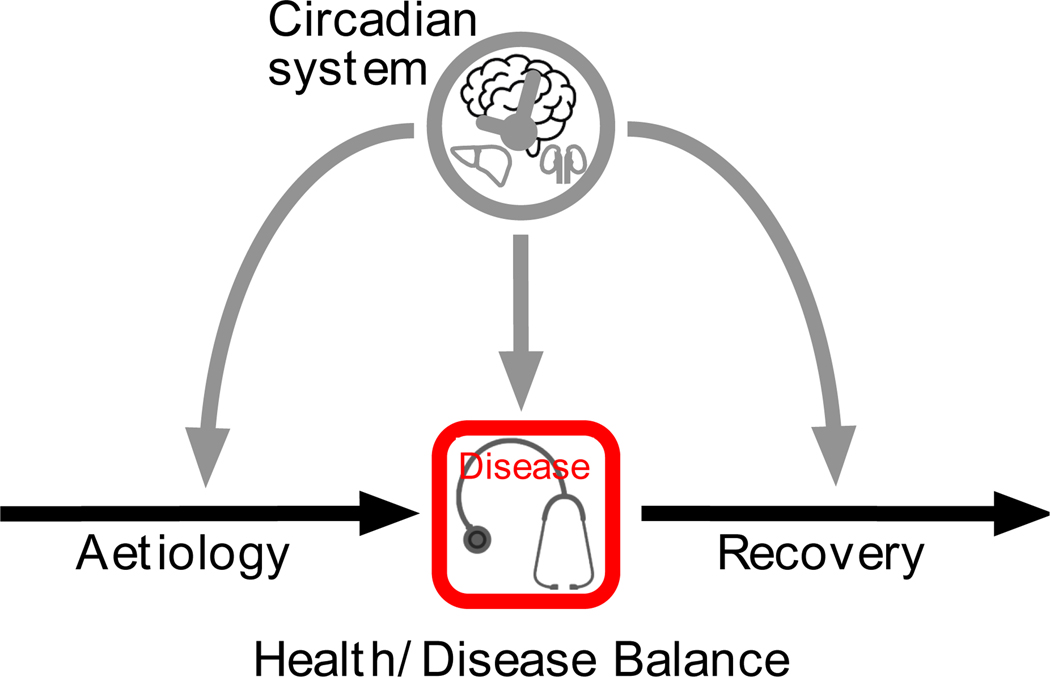
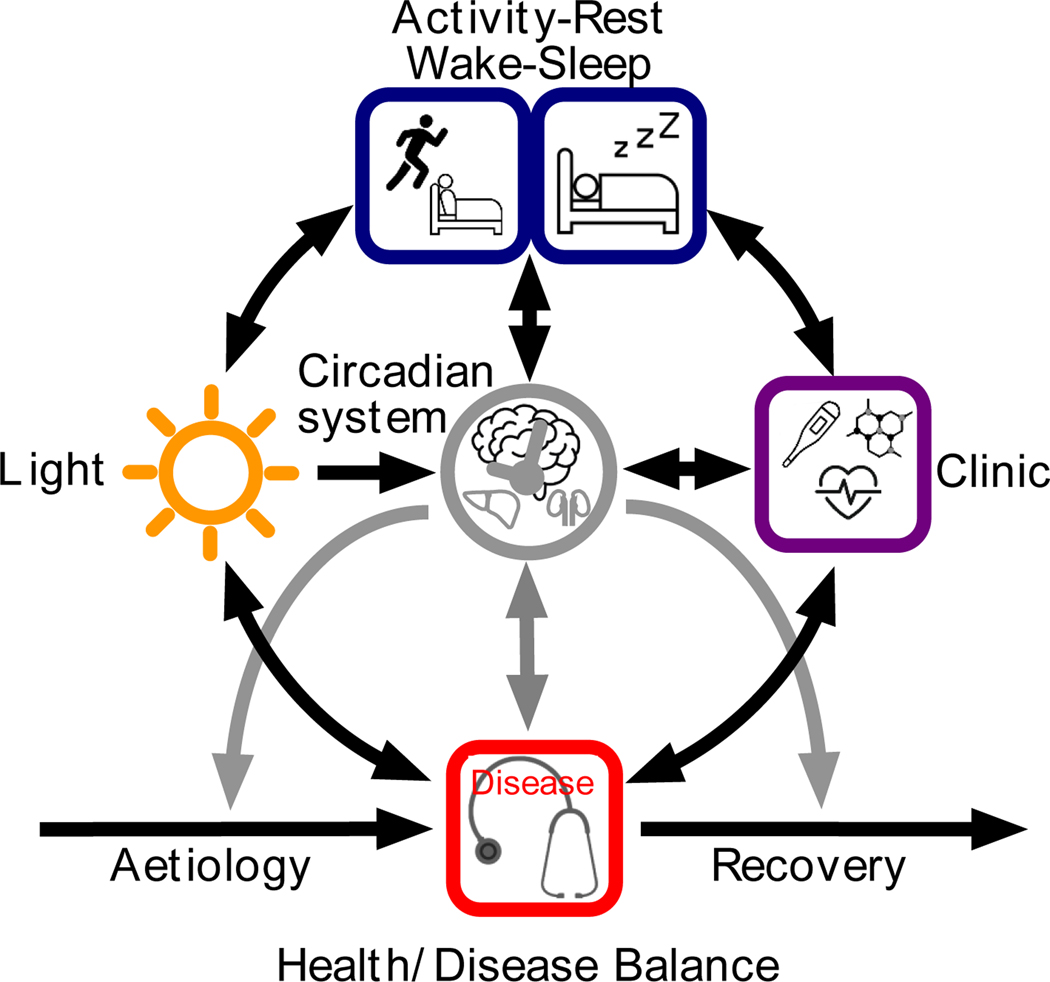
The field of "circadian medicine" is a recent addition to chronobiology and sleep research efforts. It represents a logical step arising from the increasing insights into the circadian system and its interactions with life in urbanised societies; applying these insights to the health/disease balance at home and in the medical practice (outpatient) and clinic (inpatient). Despite its fast expansion and proliferating research efforts, circadian medicine lacks a formal framework to categorise the many observations describing interactions among the circadian system, sleep, and the health/disease balance. A good framework allows us to categorise observations and then assign them to one or more components with hypothesised interactions. Such assignments can lead to experiments that document causal (rather than correlational) relationships and move from describing observations to discovering mechanisms. This review details such a proposed formal framework for circadian medicine and will hopefully trigger discussion among our colleagues, so that the framework can be improved and expanded. As the basis of the framework for circadian medicine, we define "circadian health" and how it links to general health. We then define interactions among the circadian system, sleep, and the health/disease balance and put the framework into the context of the literature with examples from six domains of health/disease balance: fertility, cancer, immune system, mental health, cardiovascular, and metabolism.
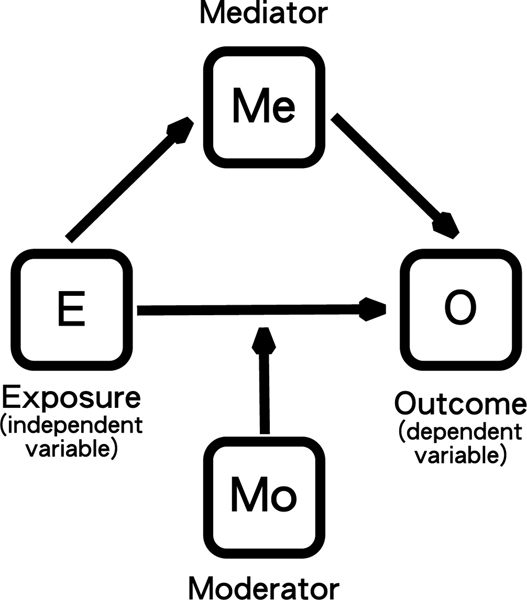
Keywords: circadian; circadian medicine; conditional process model; health; humans.
© 2022 The Authors. Journal of Sleep Research published by John Wiley & Sons Ltd on behalf of European Sleep Research Society.
Figures
References
Publication types
MeSH terms
Grants and funding
- U54 AG062322/AG/NIA NIH HHS/United States
- 106174/Z/14/A/WT_/Wellcome Trust/United Kingdom
- 20650/WT_/Wellcome Trust/United Kingdom
- 214571/Z/18/Z/WT_/Wellcome Trust/United Kingdom
- R01 NS114526/NS/NINDS NIH HHS/United States
- R01 HD107064/HD/NICHD NIH HHS/United States
- U01 NS114001/NS/NINDS NIH HHS/United States
- R01 NS099055/NS/NINDS NIH HHS/United States
- WT_/Wellcome Trust/United Kingdom
- 21CVD04; BBSRC: BB/S015817/1/Fondation Leducq
- U01NS1/US NIH
- 106174/Z/14/Z/WT_/Wellcome Trust/United Kingdom
- R21 DA052861/DA/NIDA NIH HHS/United States
LinkOut - more resources
Full Text Sources
Medical
Research Materials
