


Successful Treatment of Pediatric Holo-Spinal Epidural Abscess With Percutaneous Drainage
- PMID: 35673318
- PMCID: PMC9165922
- DOI: 10.7759/cureus.24735
Successful Treatment of Pediatric Holo-Spinal Epidural Abscess With Percutaneous Drainage
Abstract
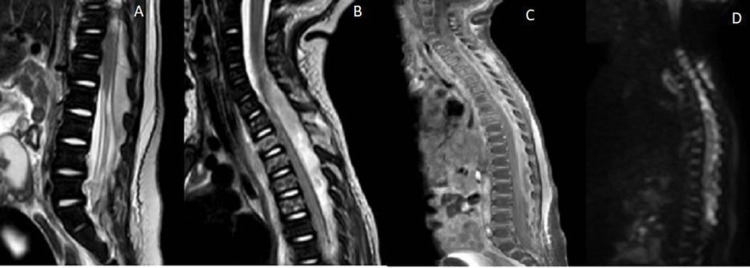
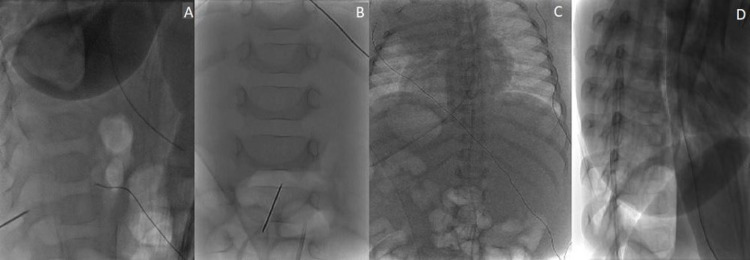
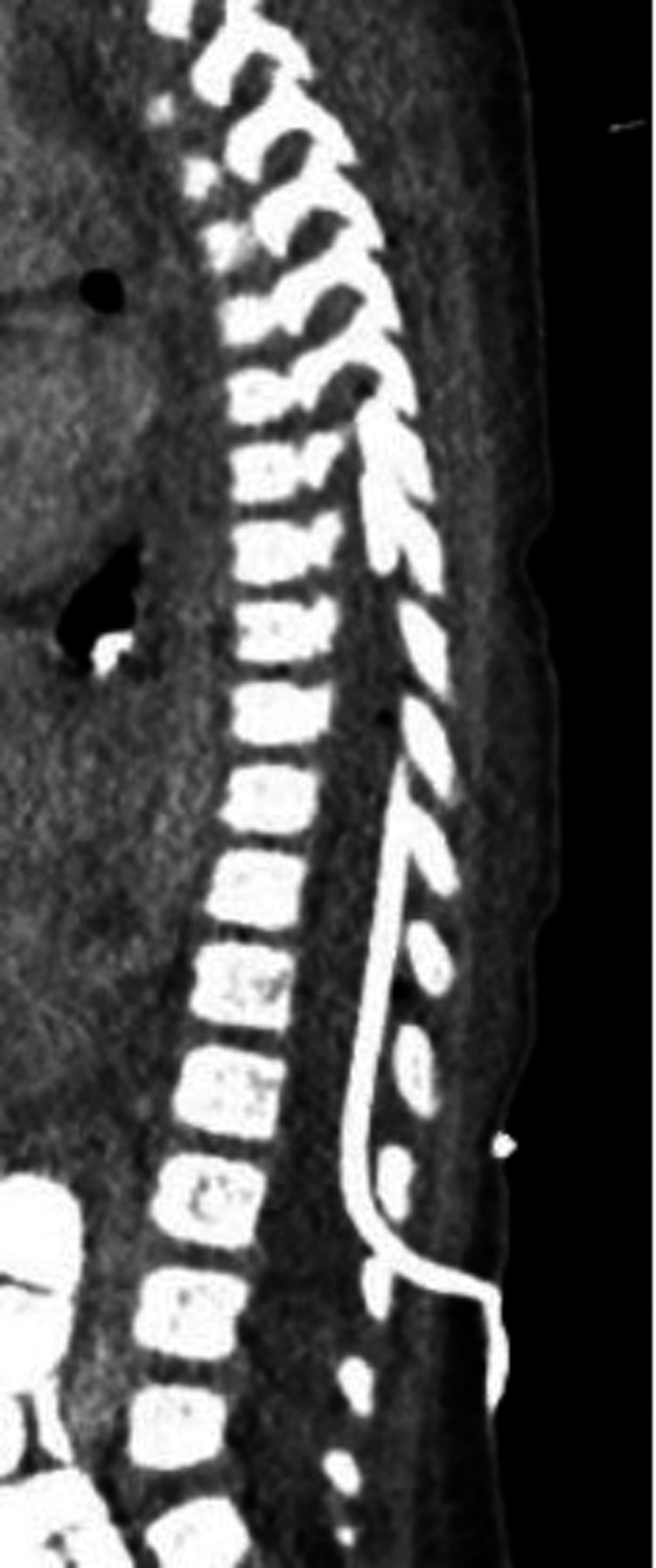
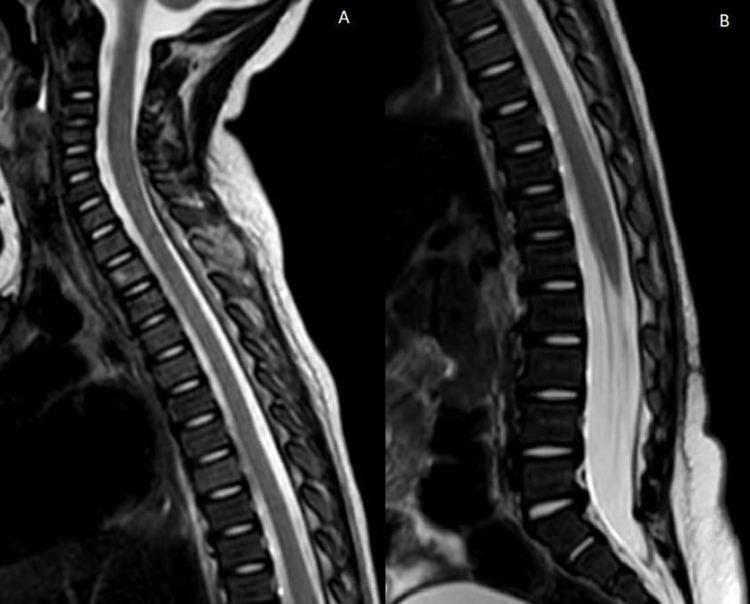
Spinal epidural abscess (SEA) is a rare and potentially devastating neurologic disease that is commonly treated with neurosurgical decompression and evacuation. We describe the case of an 11-month-old immunocompetent infant who presented with a large multiloculated methicillin-resistant Staphylococcus aureus abscess in the left lung apex with likely mediastinal involvement, extending into the epidural space from C7 down to L2 causing cord compression which was successfully treated with percutaneous placement of an epidural drainage catheter and antibiotic therapy. Although there are rare reports of percutaneous drainage of SEAs, to our knowledge, there are no reports of successful use of percutaneous indwelling catheters resulting in the complete resolution of an SEA. Holo-spinal epidural abscess in an infant is an extremely rare disease with limited literature available regarding the best practice for its treatment. Multiple considerations must be taken into account when weighing the different treatment options ranging from surgical decompression to conservative management with antibiotic therapy. We present a unique case of successful treatment with percutaneous epidural drain placement. This provides a reasonable alternative for management in children for whom surgical decompression carries multiple risks for complications both acutely and delayed.
Keywords: conservative management; holocord; mrsa; percutaneous drainage; treatment of spinal epidural abscess.
Copyright © 2022, Ammar et al.
Conflict of interest statement
The authors have declared that no competing interests exist.
Figures
References
-
- Spinal epidural abscesses in children. Jacobsen FS, Sullivan B. Orthopedics. 1994;17:1131–1138. - PubMed
-
- Holocord spinal epidural abscess. Ghosh PS, Loddenkemper T, Blanco MB, Marks M, Sabella C, Ghosh D. J Child Neurol. 2009;24:768–771. - PubMed
-
- Spinal epidural abscess in children. Fischer EG, Greene CS Jr, Winston KR. https://pubmed.ncbi.nlm.nih.gov/7301067/ Neurosurgery. 1981;9:257–260. - PubMed
-
- Spinal epidural abscess in infancy: successful percutaneous drainage in a nine-month-old and review of the literature. Walter RS, King JC Jr, Manley J, Rigamonti D. https://pubmed.ncbi.nlm.nih.gov/1749698/ Pediatr Infect Dis J. 1991;10:860–864. - PubMed
-
- Spinal epidural abscess in children: a case-based review. Spennato P, Renedo D, Cascone D, Mirone G, Imperato A, Di Martino G, Cinalli G. Childs Nerv Syst. 2020;36:1385–1392. - PubMed
Publication types
LinkOut - more resources
Full Text Sources
Miscellaneous