


Association of open-plan offices and sick leave-a systematic review and meta-analysis
- PMID: 35675991
- PMCID: PMC10269830
- DOI: 10.2486/indhealth.2022-0053
Association of open-plan offices and sick leave-a systematic review and meta-analysis
Abstract
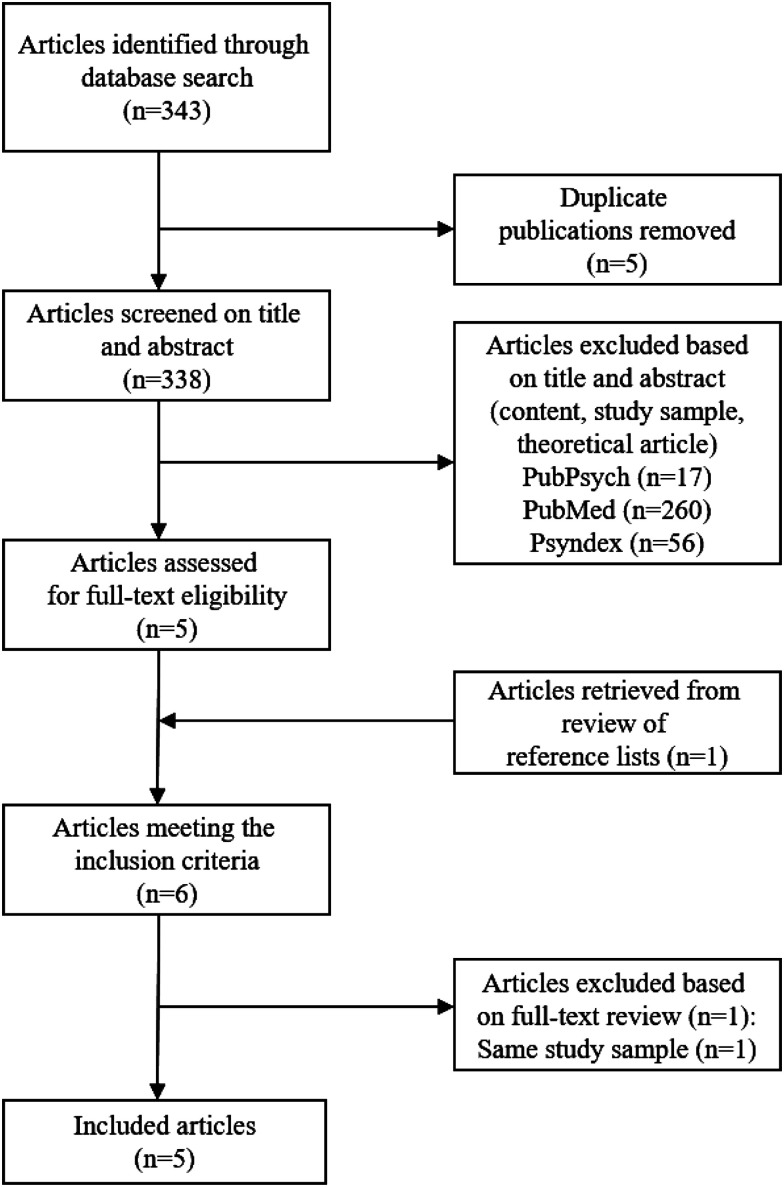
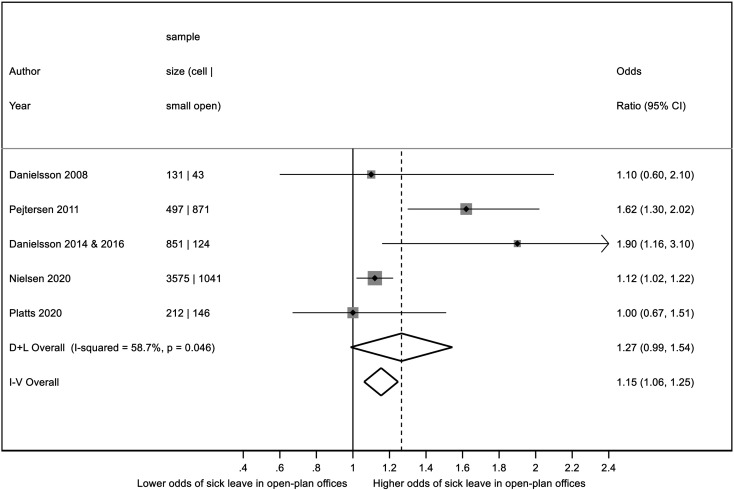
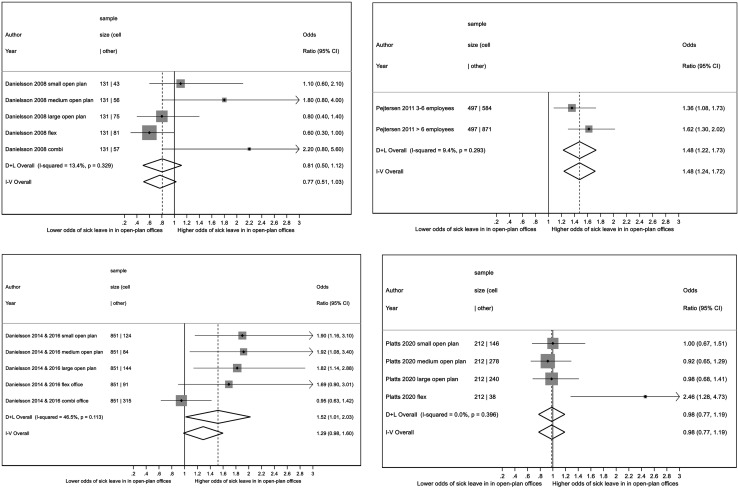
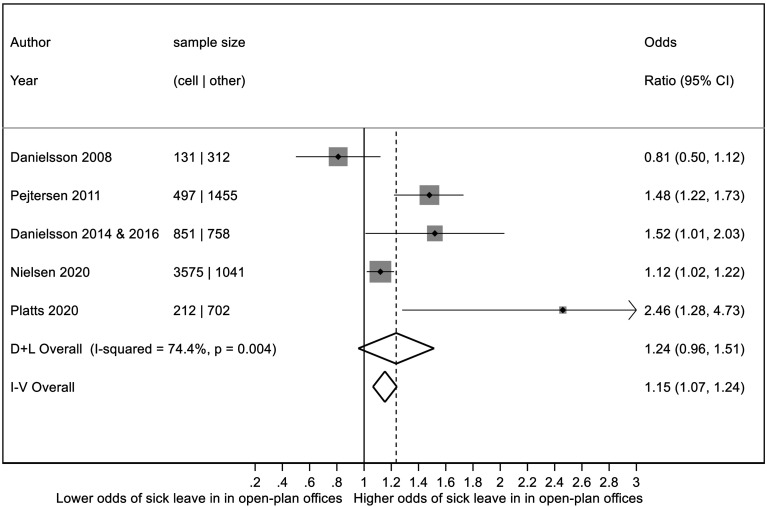
We aimed to systematically review and meta-analyze the association of employees working in various kinds of open-plan offices with sick leave data, compared to those working in traditional cell offices. Databases of PubMed, PubPsych, and Psyndex were systematically searched following the PRISMA statement. Pooled summary estimates of odds ratio (OR) were calculated comparing sick leave of employees in cell offices with those working in small open-plan offices (4-9 people), and those in various open-plan office solutions (≥4 people). We used Forest plots visualizing study-specific estimates and the pooled fixed and random effects estimators. Five studies were identified (2008-2020) with a total of 13,277 (range 469-6,328) participants. Compared with employees working in cell offices, those working in small open-plan offices were associated with higher odds of sick leave days (OR=1.27; 95% CI 0.99-1.54; p=0.046) as well as those working in various kinds of open-plan offices with ≥4 colleagues (OR=1.24; 95% CI 0.96-1.51; p=0.004). Our results are consistent with those of earlier reviews focusing on other effects of open-plan office solutions such as health and well-being. Different solutions for office design and architectural lay-out should be the focus of future studies to balance pros and cons of open-plan offices.
Keywords: Absenteeism; Activity-based working; Employees; Office type; Open office; Sick leave; Sickness; Workspace.
Figures
References
-
- Duffy F, Powell K .(1999) The new office, Repr. Conran Octopus, London.
-
- Danielsson CB, Bodin L. (2008) Office type in relation to health, well-being, and job satisfaction among employees. Environ Behav 40, 636–68.
-
- Boutellier R, Ullman F, Schreiber J, Naef R. (2008) Impact of office layout on communication in a science-driven business. R & D Manag 38, 372–91.
-
- Robertson MM, Huang YH, O’Neill MJ, Schleifer LM. (2008) Flexible workspace design and ergonomics training: impacts on the psychosocial work environment, musculoskeletal health, and work effectiveness among knowledge workers. Appl Ergon 39, 482–94. - PubMed
-
- Blok MM, Groenesteijn L, Schelvis R, Vink P. (2012) New ways of working: does flexibility in time and location of work change work behavior and affect business outcomes? Work 41Suppl 1, 5075–80. - PubMed
Publication types
MeSH terms
LinkOut - more resources
Full Text Sources
Miscellaneous
