


Zoom-delivered Physical Activities Can Increase Perceived Physical Activity Level in Children with Autism Spectrum Disorder: a Pilot Study
- PMID: 35677592
- PMCID: PMC9163290
- DOI: 10.1007/s10882-022-09854-9
Zoom-delivered Physical Activities Can Increase Perceived Physical Activity Level in Children with Autism Spectrum Disorder: a Pilot Study
Abstract
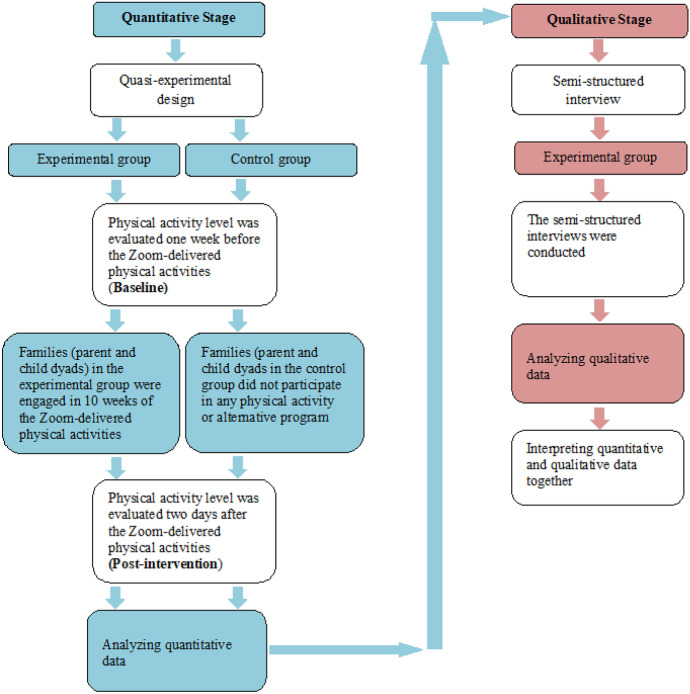
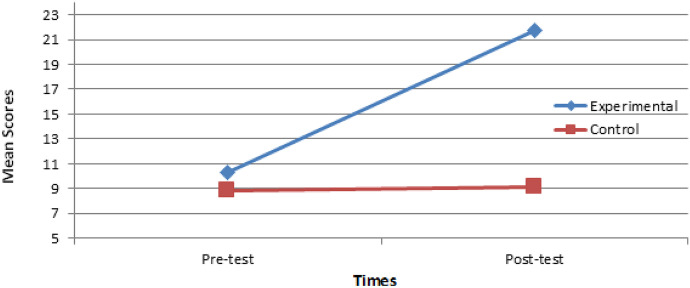
Although the benefits of regular physical activity are clearly expressed, children with Autism Spectrum Disorder (ASD) are less physically active than their typically developing peers. Recent empirical studies have revealed that the level of physical activity of children with ASD has further decreased during the novel coronavirus (COVID-19) pandemic, which has adversely affected the whole world. The aim of this study was to evaluate the potential efficacy of a Zoom-delivered physical activities for children with Autism Spectrum Disorder (ASD). Twenty-two families (parent and child dyads) participated in the study. Families were assigned randomly to an experimental group (n = 11) and a control group (n = 11). Families in the experimental group were engaged in 10 weeks of the Zoom-delivered physical activities. Data were collected using multiple data collection strategies (Personal Information Form- Leisure Time Exercise Questionnaire-Semi-Structured Interview). After the Zoom-delivered physical activities, a significant increase was observed in the physical activity level of children with ASD in the experimental group (F = 95.396, p = 0.000, Ƞ 2 = 0.834). Parents reported that Zoom-delivered physical activities are a viable and useful intervention to increase the level of physical activity of children with ASD. The findings suggest that Zoom-delivered physical activities merit further investigation as an intervention to increase physical activity in children with ASD.
Keywords: Exercise; Intervention; Neurodevelopmental disorder; Perception; Zoom.
© The Author(s), under exclusive licence to Springer Science+Business Media, LLC, part of Springer Nature 2022.
Conflict of interest statement
Conflict of InterestThe authors declare that they have no conflict of interest.
Figures
References
-
- American Psychiatric Association . Diagnostic and statistical manual of mental disorders. 5. American Psychiatric Association; 2013.
-
- Baranowski, T. (1997). Families and health actions. In D. S. Gochman (Ed.). Handbook of health behavior research I: Personal and social determinants (pp. 179-206). New York: Plenum Press.
-
- Bolliger DU, Halupa C. Student perceptions of Satisfaction and anxiety in an online doctoral program. Distance Education. 2012;33(1):81–98. doi: 10.1080/01587919.2012.667961. - DOI
-
- Colombo-Dougovito AM, Block ME. Fundamental motor skill interventions for children and adolescents on the autism spectrum: A literature review. Review Journal of Autism and Developmental Disorders. 2019;6(2):159–171. doi: 10.1007/s40489-019-00161-2. - DOI
LinkOut - more resources
Full Text Sources