


Subjects With Diabetes Mellitus Are at Increased Risk for Developing Tuberculosis: A Cohort Study in an Inner-City District of Barcelona (Spain)
- PMID: 35677764
- PMCID: PMC9168433
- DOI: 10.3389/fpubh.2022.789952
Subjects With Diabetes Mellitus Are at Increased Risk for Developing Tuberculosis: A Cohort Study in an Inner-City District of Barcelona (Spain)
Abstract
Background: Tuberculosis is the leading cause of mortality from lung infectious disease worldwide in recent years, and its incidence has re-emerged in large cities in low-incidence countries due to migration and socioeconomic deprivation causes. Diabetes mellitus and tuberculosis are syndemic diseases, with diabetes being considered a risk factor for developing tuberculosis.
Objective: To investigate whether diabetic patients were at increased risk of tuberculosis living in an inner-district of a large city of northeastern Spain.
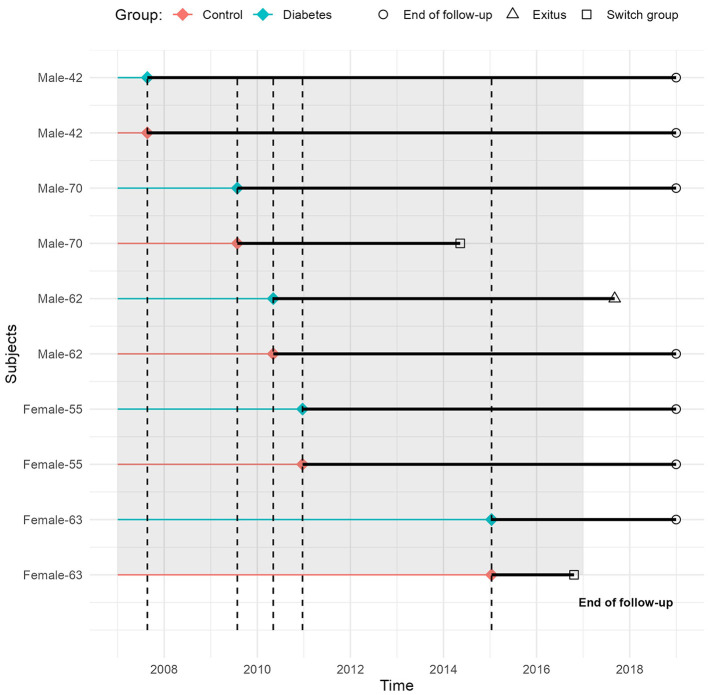
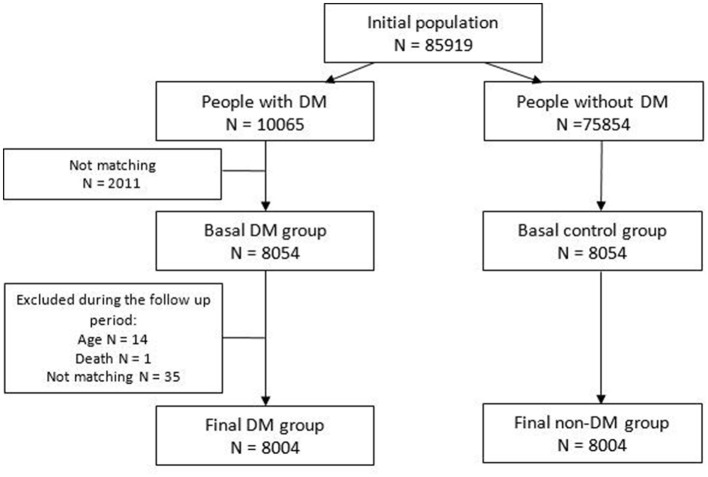
Methods: Observational matched retrospective cohort study based on clinical records from the population of the lowest socioeconomic status in Barcelona (Ciutat Vella district). A cohort including patients with type 1 and type 2 diabetes mellitus in 2007 and new cases until 2016 (8004 subjects), matched 1:1 by sex and age with a non-diabetic cohort. Follow-up period was until December 31st 2018. We evaluated the risk of developing tuberculosis in diabetic patients compared to non-diabetic patients during the follow up period. We used time-to-event analysis to estimate the incidence of tuberculosis, and competing risks regression by clusters and conditional Cox regression models to calculate the hazard ratio (HR) and its 95% confidence intervals (CI).
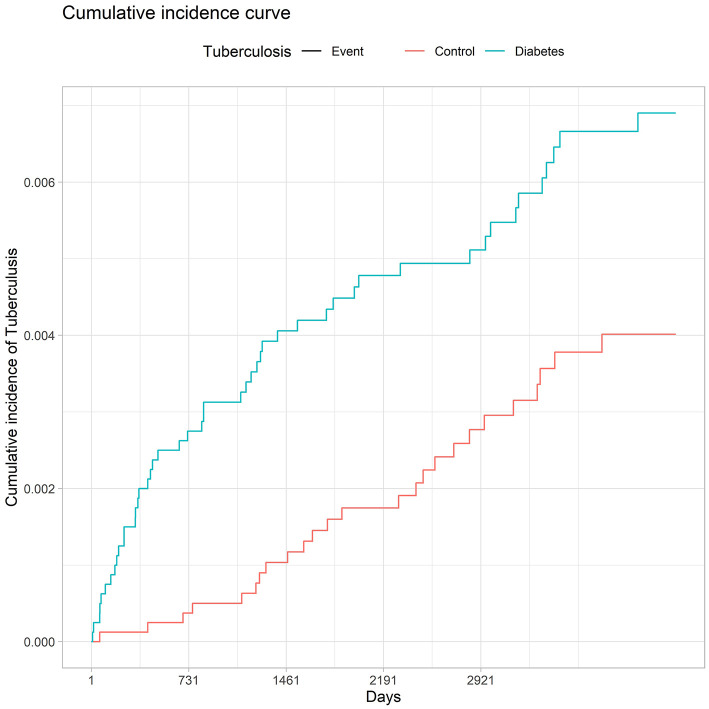
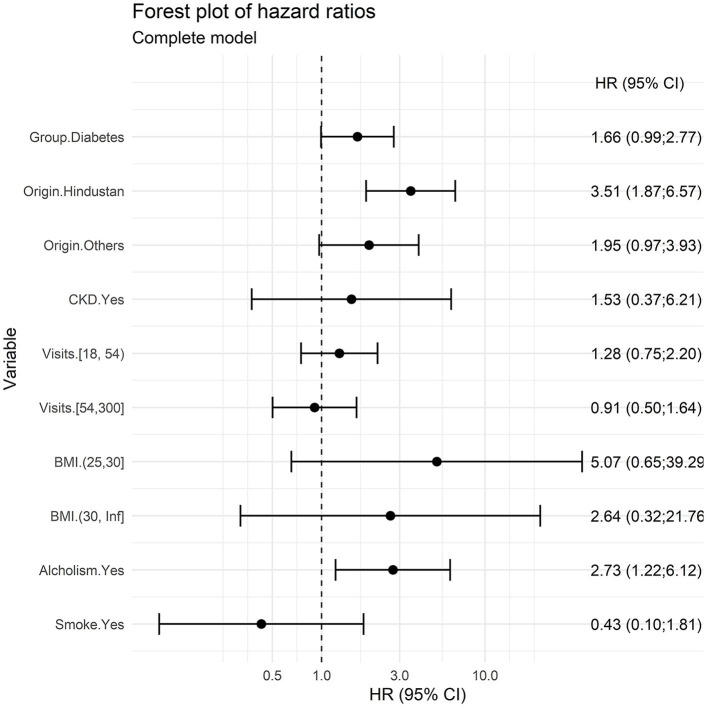
Results: Among the 16,008 included subjects, the median follow-up was 8.7 years. The mean age was 57.7 years; 61.2% men and 38.8% women in both groups. The incidence of tuberculosis was 69.9 per 100,000 person-years in diabetic patients, and 40.9 per 100,000 person-years in non-diabetic patients (HR = 1.90; CI: 1.18-3.07). After adjustment for the country of origin, chronic kidney disease, number of medical appointments, BMI, alcoholism and smoking, the risk remained higher in diabetic patients (1.66: CI 0.99-2.77). Additionally, subjects from Hindustan or with a history of alcohol abuse also showed a higher risk of developing tuberculosis (HR = 3.51; CI:1.87-6.57, and HR = 2.73; CI:1.22-6.12 respectively).
Conclusion: People with diabetes mellitus were at higher risk of developing tuberculosis in a large cohort recruited in an inner-city district with a high incidence for this outcome, and low socioeconomic conditions and high proportion of migrants. This risk was higher among Hindustan born and alcohol abusers.
Keywords: Mycobacterium tuberculosis infection; alcohol abuse; diabetes complications; diabetes mellitus; incidence; tuberculosis.
Copyright © 2022 Antonio-Arques, Franch-Nadal, Moreno-Martinez, Real, Orcau, Mauricio, Mata-Cases, Julve, Navas Mendez, Puig Treserra, Barrot de la Puente, Millet, Del Val García, Vlacho and Caylà.
Conflict of interest statement
The authors declare that the research was conducted in the absence of any commercial or financial relationships that could be construed as a potential conflict of interest.
Figures
References
-
- World Health Organization . Global Tuberculosis Report 2021. Available online at: https://www.who.int/teams/global-tuberculosis-programme/tb-reports/globa... (accessed May 15, 2021).
Publication types
MeSH terms
LinkOut - more resources
Full Text Sources
Medical
