


Third-party punishment by preverbal infants
- PMID: 35680993
- PMCID: PMC9489529
- DOI: 10.1038/s41562-022-01354-2
Third-party punishment by preverbal infants
Abstract
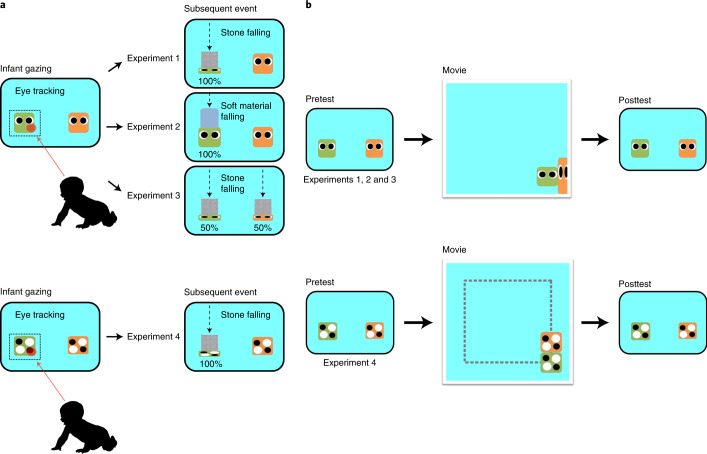
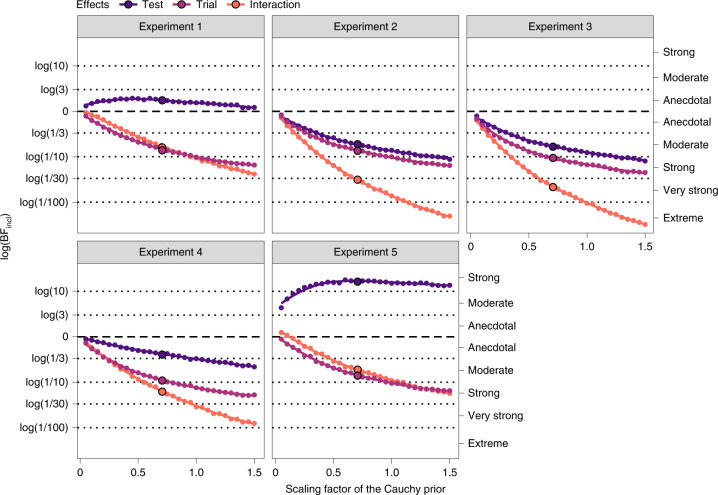
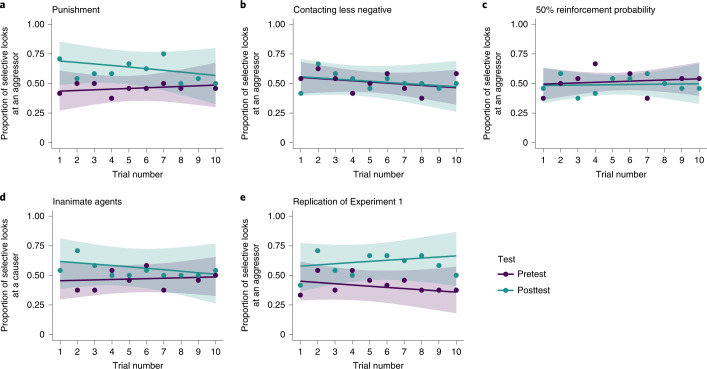
Third-party punishment of antisocial others is unique to humans and seems to be universal across cultures. However, its emergence in ontogeny remains unknown. We developed a participatory cognitive paradigm using gaze-contingency techniques, in which infants can use their gaze to affect agents displayed on a monitor. In this paradigm, fixation on an agent triggers the event of a stone crushing the agent. Throughout five experiments (total N = 120), we show that eight-month-old infants punished antisocial others. Specifically, infants increased their selective looks at the aggressor after watching aggressive interactions. Additionally, three control experiments excluded alternative interpretations of their selective gaze, suggesting that punishment-related decision-making influenced looking behaviour. These findings indicate that a disposition for third-party punishment of antisocial others emerges in early infancy and emphasize the importance of third-party punishment for human cooperation. This behavioural tendency may be a human trait acquired over the course of evolution.
© 2022. The Author(s).
Conflict of interest statement
The authors declare no competing interests.
Figures
References
-
- Fehr E, Fischbacher U. Third-party punishment and social norms. Evol. Hum. Behav. 2004;25:63–87. doi: 10.1016/S1090-5138(04)00005-4. - DOI
Publication types
MeSH terms
LinkOut - more resources
Full Text Sources
