


Reactive Oxygen Species in Regulating Lymphangiogenesis and Lymphatic Function
- PMID: 35681445
- PMCID: PMC9179518
- DOI: 10.3390/cells11111750
Reactive Oxygen Species in Regulating Lymphangiogenesis and Lymphatic Function
Abstract
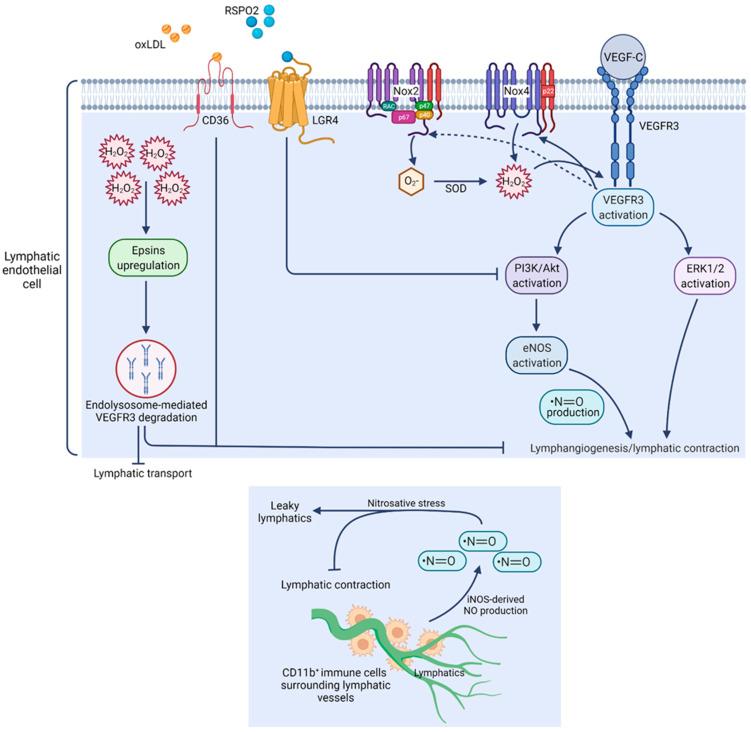
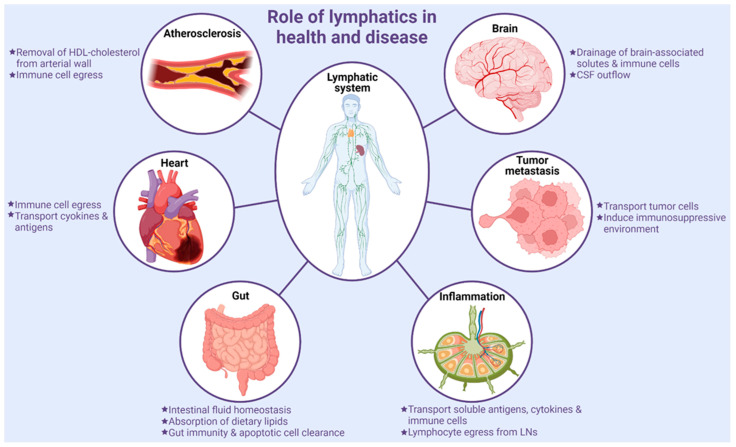
The lymphatic system is pivotal for immunosurveillance and the maintenance of tissue homeostasis. Lymphangiogenesis, the formation of new lymphatic vessels from pre-existing vessels, has both physiological and pathological roles. Recent advances in the molecular mechanisms regulating lymphangiogenesis have opened a new area of research on reparative lymphangiogenesis for the treatment of various pathological disorders comprising neurological disorders, cardiac repair, autoimmune disease, obesity, atherosclerosis, etc. Reactive oxygen species (ROS) produced by the various cell types serve as signaling molecules in several cellular mechanisms and regulate various aspects of growth-factor-mediated responses, including lymphangiogenesis. The ROS, including superoxide anion, hydrogen peroxide, and nitric oxide, play both beneficial and detrimental roles depending upon their levels and cellular microenvironment. Low ROS levels are essential for lymphangiogenesis. On the contrary, oxidative stress due to enhanced ROS generation and/or reduced levels of antioxidants suppresses lymphangiogenesis via promoting lymphatic endothelial cell apoptosis and death. In this review article, we provide an overview of types and sources of ROS, discuss the role of ROS in governing lymphangiogenesis and lymphatic function, and summarize the role of lymphatics in various diseases.
Keywords: hydrogen peroxide; lymphangiogenesis; lymphatic vessels; nitric oxide; reactive oxygen species; superoxide anion.
Conflict of interest statement
The authors declare no conflict of interest.
Figures
References
-
- Miller N.E., Michel C.C., Nanjee M.N., Olszewski W.L., Miller I.P., Hazell M., Olivecrona G., Sutton P., Humphreys S.M., Frayn K.N. Secretion of adipokines by human adipose tissue in vivo: Partitioning between capillary and lymphatic transport. Am. J. Physiol. Endocrinol. Metab. 2011;301:E659–E667. doi: 10.1152/ajpendo.00058.2011. - DOI - PubMed
Publication types
MeSH terms
Substances
Grants and funding
LinkOut - more resources
Full Text Sources
