


The Next Frontier in Pancreatic Cancer: Targeting the Tumor Immune Milieu and Molecular Pathways
- PMID: 35681599
- PMCID: PMC9179513
- DOI: 10.3390/cancers14112619
The Next Frontier in Pancreatic Cancer: Targeting the Tumor Immune Milieu and Molecular Pathways
Abstract
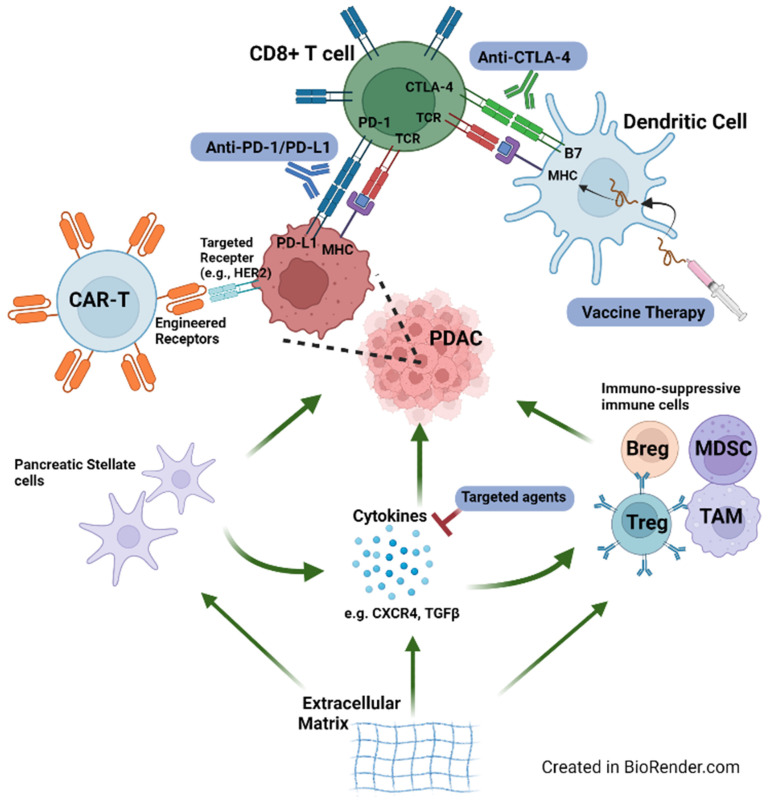
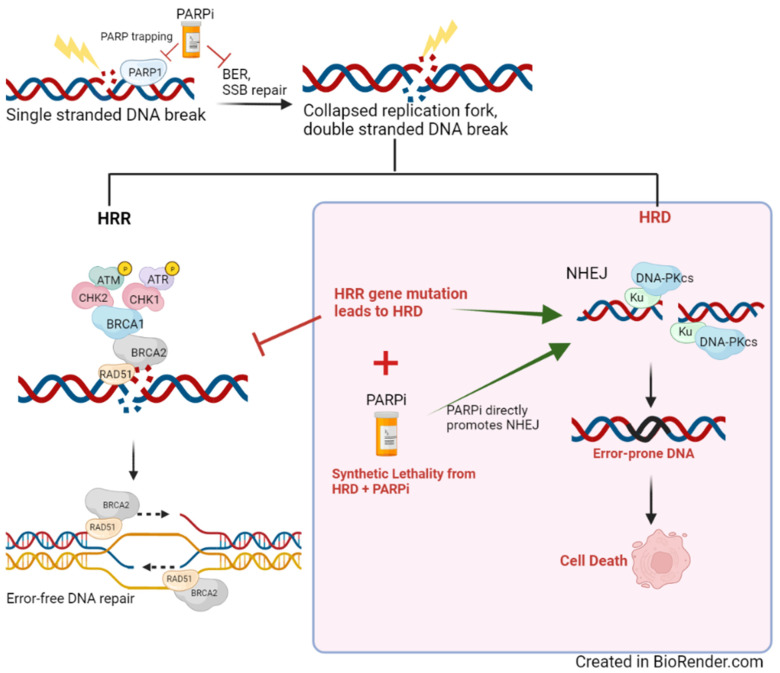
Pancreatic ductal adenocarcinoma (PDAC) is an aggressive cancer with abysmal prognosis. It is currently the third most common cause of cancer-related mortality, despite being the 11th most common cancer. Chemotherapy is standard of care in all stages of pancreatic cancer, yet survival, particularly in the advanced stages, often remains under one year. We are turning to immunotherapies and targeted therapies in PDAC in order to directly attack the core features that make PDAC notoriously resistant to chemotherapy. While the initial studies of these agents in PDAC have generally been disappointing, we find optimism in recent preclinical and early clinical research. We find that despite the immunosuppressive effects of the PDAC tumor microenvironment, new strategies, such as combining immune checkpoint inhibitors with vaccine therapy or chemokine receptor antagonists, help elicit strong immune responses. We also expand on principles of DNA homologous recombination repair and highlight opportunities to use agents, such as PARP inhibitors, that exploit deficiencies in DNA repair pathways. Lastly, we describe advances in direct targeting of driver mutations and metabolic pathways and highlight some technological achievements such as novel KRAS inhibitors.
Keywords: immunotherapy; pancreatic cancer; targeted therapy; tumor microenvironment.
Conflict of interest statement
Marcus S. Noel received research funding from Erytech and consult for Ipsen. The other authors have no conflict of interest.
Figures
References
-
- National Cancer Institute Cancer Stat Facts: Pancreatic Cancer. [(accessed on 4 May 2022)]; Available online: https://seer.cancer.gov/statfacts/html/pancreas.html.
Publication types
LinkOut - more resources
Full Text Sources
Miscellaneous
