


No Recommendation Is (at Least Presently) the Best Recommendation: An Updating Quality Appraisal of Recommendations on Screening for Scoliosis
- PMID: 35682242
- PMCID: PMC9180347
- DOI: 10.3390/ijerph19116659
No Recommendation Is (at Least Presently) the Best Recommendation: An Updating Quality Appraisal of Recommendations on Screening for Scoliosis
Abstract
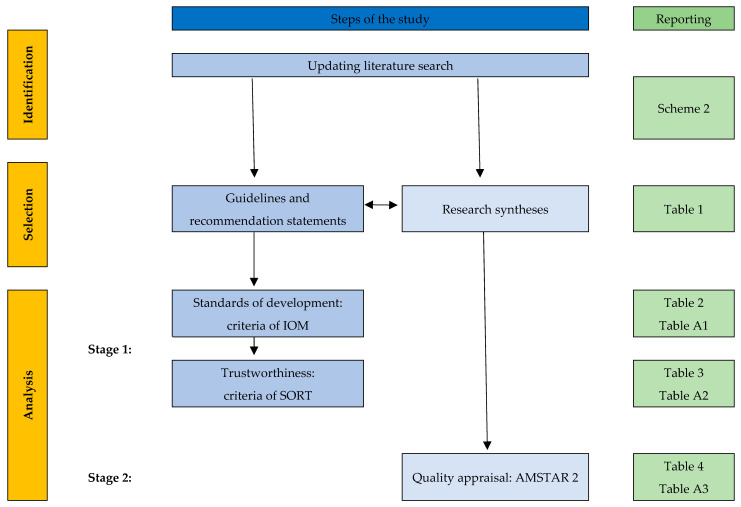
Recommendations addressing screening for scoliosis differ substantially. Systematically developed guidelines are confronted by consensus and opinion-based statements. This paper elaborates on the issue of the standards of development and reporting of current guidelines and recommendation statements, as well as on the methodological quality of the corresponding evidence syntheses. The SORT classification and the AMSTAR 2 tool were used for those purposes, respectively. Publications included in the analysis differed substantially in terms of their methodological quality. Based on the SORT and AMSTAR 2 scores, the 2018 US PSTF recommendation statement and systematic review on screening for scoliosis are trustworthy and high-quality sources of evidence and aid for decision making. The recommendation statement on insufficient evidence to formulate any recommendations is, paradoxically, very informative. Significantly, updated opinion-based position statements supporting screening for scoliosis acknowledged the importance of research evidence as a basis for recommendation formulation and are more cautious and balanced than formerly. Expert opinions, not built on properly presented analyses of evidence, are at odds with evidence-based practice. Nonetheless, contemporary principles of screening programs, especially those addressing people's values and preferences, and the possible harms of screening, remain underrepresented in both research and recommendations addressing screening for scoliosis.
Keywords: expert evidence; guidelines; levels of evidence; screening for scoliosis; standards of development; strength of recommendations.
Conflict of interest statement
The author declares no conflict of interest. The funders had no role in the design of the study; in the collection, analyses, or interpretation of data; in the writing of the manuscript, or in the decision to publish the results.
Figures
References
-
- Dunn J., Henrikson N.B., Morrison C.C., Nguyen M., Blasi P.R., Lin J.S. Screening for Adolescent Idiopathic Scoliosis: A Systematic Evidence Review for the U.S. Preventive Services Task Force. Agency for Healthcare Research and Quality (US); Rockville, MD, USA: 2018. U.S. Preventive Services Task Force Evidence Syntheses, formerly Systematic Evidence Reviews. - PubMed
Publication types
MeSH terms
LinkOut - more resources
Full Text Sources
Medical
