


Biodegradable Nonwoven Agrotextile and Films-A Review
- PMID: 35683946
- PMCID: PMC9182797
- DOI: 10.3390/polym14112272
Biodegradable Nonwoven Agrotextile and Films-A Review
Abstract
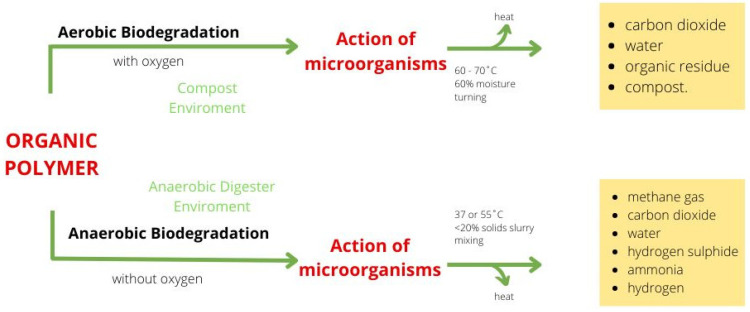
As society becomes more aware of environmental pollution, global warming, and environmental disasters, people are increasingly turning to sustainable materials and products. This includes agrotextiles in a wide range of products, including nonwoven agrotextiles for mulching. This review provides insight into relevant available data and information on the condition, possibilities, and trends of nonwoven mulches from natural fibres, biopolymers, and recycled sources. The basic definitions and differences between biodegradation and composting processes are explained, and the current standards related to biodegradation are presented. In addition, an insight into the biodegradation of various nonwoven mulches and films, including their advantages and disadvantages, is provided, to predict the future directions of nonwoven mulches development.
Keywords: biodegradability; biopolymers; mulch; natural fibres; nonwoven fabric; recycled mulches.
Conflict of interest statement
The authors declare no conflict of interest.
Figures
References
-
- Muthu S.S., Gardetti M.A. Sustainability in the Textile and Apparel Industries. 1st ed. Springer; Cham, Switzerland: 2020. - DOI
-
- Goswami P., O’Haire T. Developments in the Use of Green (biodegradable), Recycled and Biopolymer Materials in Technical Nonwovens. In: Kellie G., editor. Advances in Technical Nonwovens. 1st ed. Woodhead Publishing; Sawston, UK: 2016. pp. 97–114.
-
- Grand View Research: Agro Textile Market Size, Share Industry Report, 2021–2028. 2021. [(accessed on 19 May 2022)]. Report ID: GVR-2-68038-272-3. Available online: https://www.grandviewresearch.com/industry-analysis/agro-textiles-market.
Publication types
LinkOut - more resources
Full Text Sources
Research Materials
