


Perilla frutescens: A Rich Source of Pharmacological Active Compounds
- PMID: 35684514
- PMCID: PMC9182122
- DOI: 10.3390/molecules27113578
Perilla frutescens: A Rich Source of Pharmacological Active Compounds
Abstract
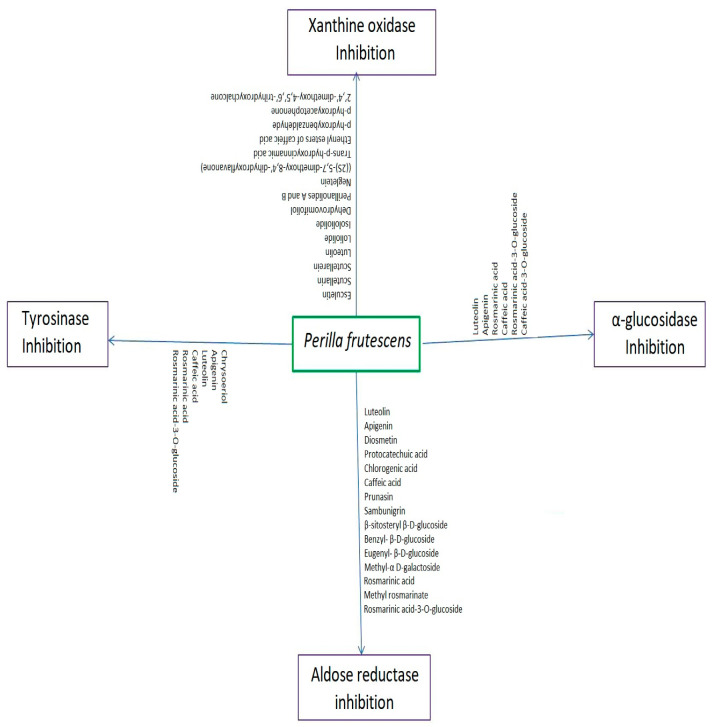
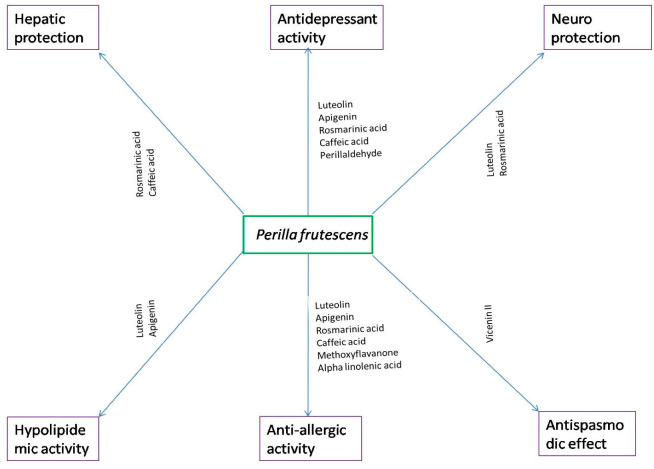
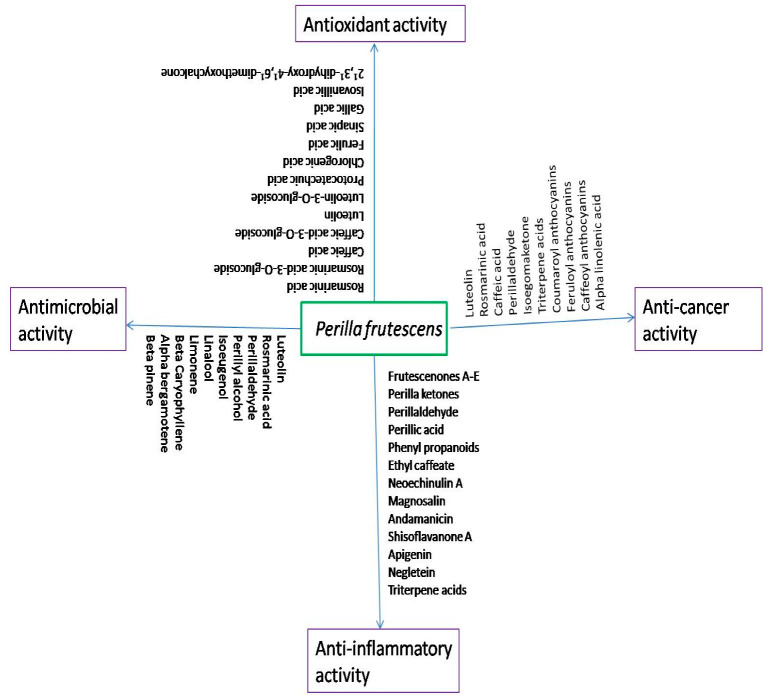
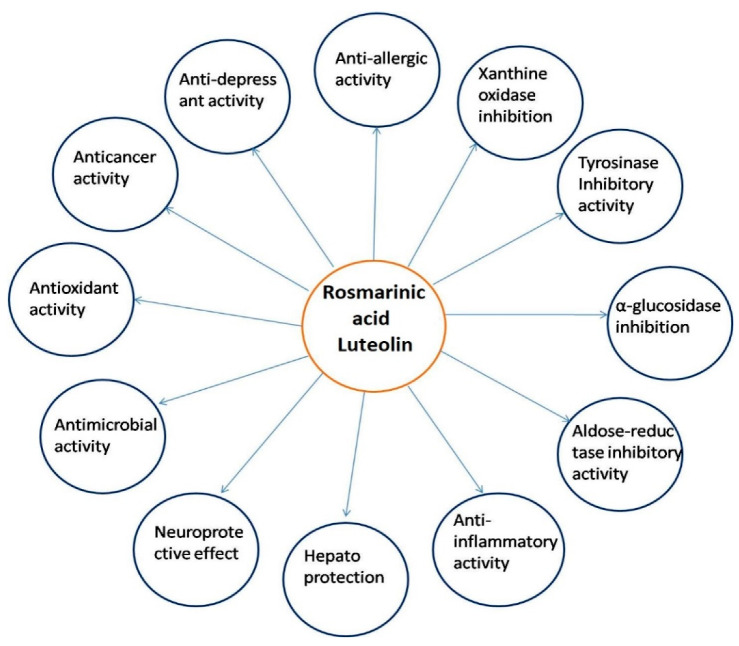
Perilla frutescens (L.) Britton, an important pharmaceutical and nutraceutical crop, is widely cultivated in East Asian countries. In this review, we present the latest research findings on the phytochemistry and pharmacological activities of P. frutescens. Different databases, including PubMed, Scopus, CNKI, Agricola, Scifinder, Embase, ScienceDirect, DOAJ, and Web of Science, were searched to present the best review. In this review, we clearly represent the active constituents responsible for each and every pharmacological activity, plausible mechanism of action, and maximum inhibitory concentrations, as well as IC50 values. Approximately 400 different bioactive compounds, including alkaloids, terpenoids, quinines, phenylpropanoids, polyphenolic compounds, flavonoids, coumarins, anthocyanins, carotenoids, neolignans, fatty acids, polycosanols, tocopherols, and sitosterols, have been reported in the leaves, seeds, roots, and aerial parts of P. frutescens. The bioactive constituents of P. frutescens exhibited different enzyme-inhibition properties, including antihyaluronidase effects and aldose reductase inhibitory, α-glucosidase inhibitory, xanthine oxidase inhibitory, and tyrosinase inhibitory properties. P. frutescens showed strong anti-inflammatory, antidepressant, anti-spasmodic, anticancer, antioxidant, antimicrobial, insecticidal, neuroprotective, and hepatoprotective effects. Hence, the active constituents of P. frutescens used in the treatment of diabetes and diabetic complications (retinopathy, neuropathy, and nephropathy), prevention of hyperuricemia in gout patients, hyper pigmentation, allergic conditions, skin inflammation, skin allergy, atopic dermatitis, periodontosis, androgenic alopecia, gastric inflammation, oesophagitis, carcinogenesis, cardiovascular, Alzheimer's, Parkinson's, and cerebral ischemic disorders. Furthermore, we revealed the most active constituents and possible mechanisms of the pharmacological properties of P. frutescens.
Keywords: Perilla frutescens; bioactive compounds; pharmacological activities; secondary metabolites.
Conflict of interest statement
The authors declare no conflict of interest.
Figures
References
-
- Lin L.Y., Peng C.C., Wang H.E., Liu Y.W., Shen K.H., Chen K.C., Peng R.Y. Active volatile constituents in Perilla frutescens essential oils and improvement of antimicrobial and anti-inflammatory bioactivity by fractionation. J. Essen. Oil Bear. Plants. 2016;19:1957–1983. doi: 10.1080/0972060X.2016.1226962. - DOI
-
- Tian J., Zeng X., Zhang S., Wang Y., Zhang P., Lü A., Peng X. Regional variation in components and antioxidant and antifungal activities of Perilla frutescens essential oils in China. Ind. Crops Prod. 2014;59:69–79. doi: 10.1016/j.indcrop.2014.04.048. - DOI
-
- Ito M., Toyoda M., Honda G. Chemical composition of the essential oil of Perilla frutescens. Nat. Med. 1999;53:32–36.
-
- Tabanca N., Demirci B., Ali A., Ali Z., Blythe E.K., Khan I.A. Essential oils of green and red Perilla frutescens as potential sources of compounds for mosquito management. Ind. Crops Prod. 2015;1:36–44. doi: 10.1016/j.indcrop.2014.11.043. - DOI
Publication types
MeSH terms
Substances
Grants and funding
LinkOut - more resources
Full Text Sources
