Therapeutic effect of scalp-based acupuncture and moxibustion as an adjunctive treatment on children with cerebral palsy comparing to conventional rehabilitation therapy: a systematic review and meta-analysis of randomized controlled trials
- PMID: 35685079
- PMCID: PMC9173885
- DOI: 10.21037/tp-22-85
Therapeutic effect of scalp-based acupuncture and moxibustion as an adjunctive treatment on children with cerebral palsy comparing to conventional rehabilitation therapy: a systematic review and meta-analysis of randomized controlled trials
Abstract
Background: Cerebral palsy (CP) in children is a predominantly congenital developmental disease with complex causes and diverse symptoms. Chinese medicine mainly uses acupuncture for the treatment of CP; as the disease site is in the brain, emphasis is placed on scalp acupuncture therapy. There were studies about the treatment but different studies had very different results. In this study, we performed a systematic review and meta-analysis of the recent reports on scalp acupuncture in the treatment of CP in children, providing evidence for clinical diagnosis and treatment.
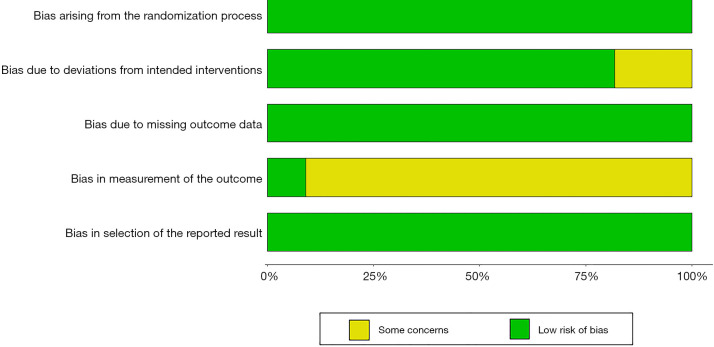
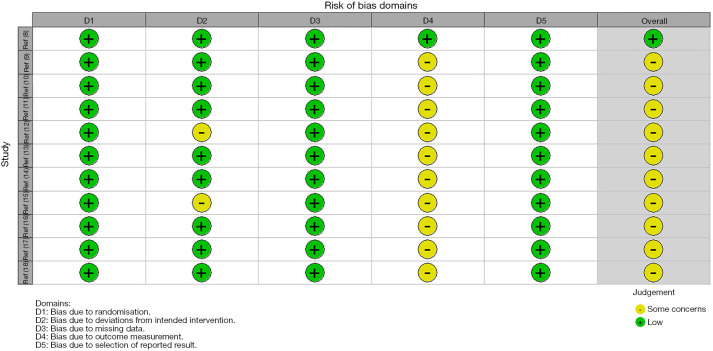
Methods: The databases of PubMed, Chinese Biomedical Literature (CBM), China National Knowledge Infrastructure (CNKI), and VIP were searched for randomized controlled trials (RCTs) on scalp acupuncture treatment of pediatric CP published from January 2000 to December 2021. The inclusion criteria of studies were made according to the Participants, Intervention, Control, Outcomes, Study design (PICOS) principles. The Cochrane risk of bias 2.0 was used to evaluate the bias of the included literature. Meta-analysis was performed using the effective rate, Mental Development Index (MDI), Psychological Development Index (PDI), and Gross Motor Function Measure (GMFM-88 scale) as outcome indicators for the efficacy, and the safety of scalp acupuncture was assessed.
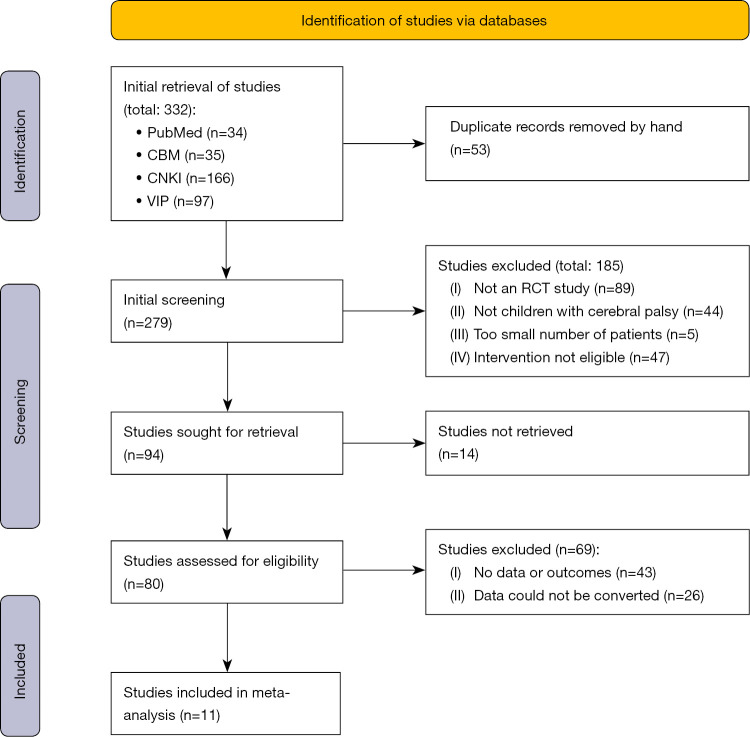
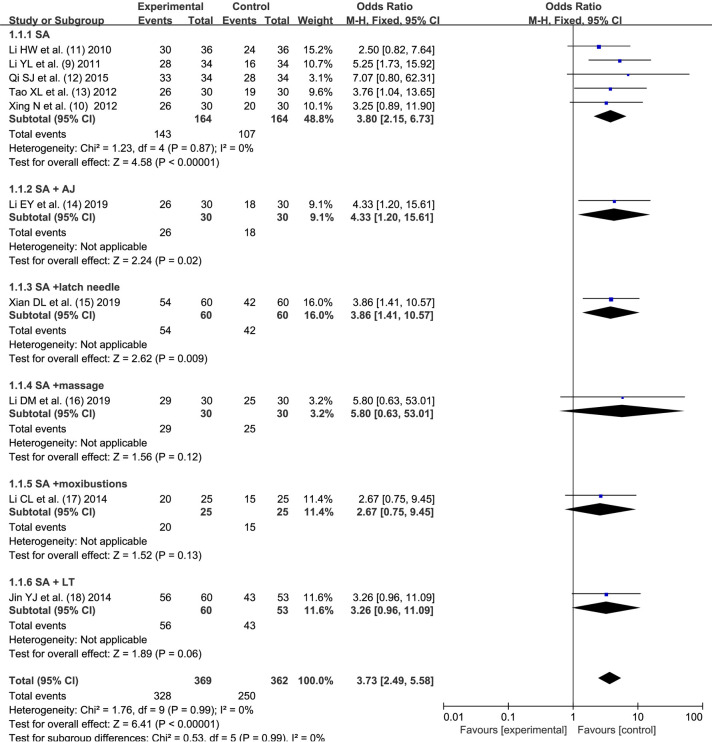
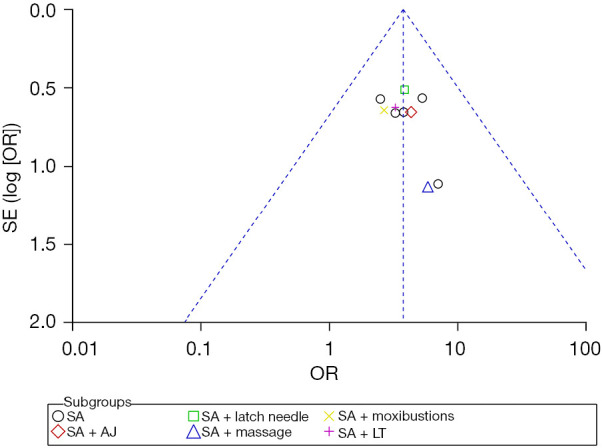
Results: Initially, 332 articles were retrieved; after screening, 11 articles were included in the selection, including a total of 731 children, with 369 and 362 children for the experimental group and control group respectively. Meta-analysis showed that scalp acupuncture significantly improved the symptoms of children with CP [odds ratio (OR) =3.73, 95% confidence interval (CI): 2.49-5.58, Z=6.41, P<0.00001], could significantly improve their mental development [mean difference (MD) =15.58, 95% CI: 11.74-19.43, Z=7.95, P<0.00001] and psychological development (MD =13.23, 95% CI: 6.17-20.28, Z=3.67, P=0.0002) of children, and significantly improved the motor ability of CP children (MD =17.45, 95% CI: 8.19-26.72, Z=3.69, P=0.0002).
Discussion: The curative effect of scalp acupuncture is better than that of conventional rehabilitation. Scalp-based acupuncture therapy can effectively improve the symptoms of pediatric CP, promote the mental and psychological development of children, and improve their gross motor function, the treatment is safe.
Keywords: Scalp acupuncture; acupuncture; cerebral palsy (CP); meta-analysis.
2022 Translational Pediatrics. All rights reserved.
Conflict of interest statement
Conflicts of Interest: All authors have completed the ICMJE uniform disclosure form (available at https://tp.amegroups.com/article/view/10.21037/tp-22-85/coif). The authors have no conflicts of interest to declare.
Figures



Comment in
-
Is scalp-based acupuncture and moxibustion better than conventional rehabilitation therapy for children with cerebral palsy?Transl Pediatr. 2022 Oct;11(10):1735-1736. doi: 10.21037/tp-22-249. Transl Pediatr. 2022. PMID: 36345440 Free PMC article. No abstract available.
References
-
- Luo W, Wang PQ, Liu CL, et al. Therapeutic effect of scalp acupuncture combined with rehabilitation training on balance dysfunction in children with spastic hemiplegia. Chinese Journal of acupuncture and moxibustion. 2020;45:662-6. - PubMed
LinkOut - more resources
Full Text Sources
Miscellaneous