Plate Fixation for Atypical Fractures of the Femoral Diaphysis
- PMID: 35685979
- PMCID: PMC9152895
- DOI: 10.4055/cios21173
Plate Fixation for Atypical Fractures of the Femoral Diaphysis
Abstract
Background: Plate fixation for atypical femoral fractures has shown high failure rates compared to intramedullary nail fixation. The aim of this study was to evaluate the radiological results of patients treated with a plate and screws for atypical fractures of the femoral diaphysis.
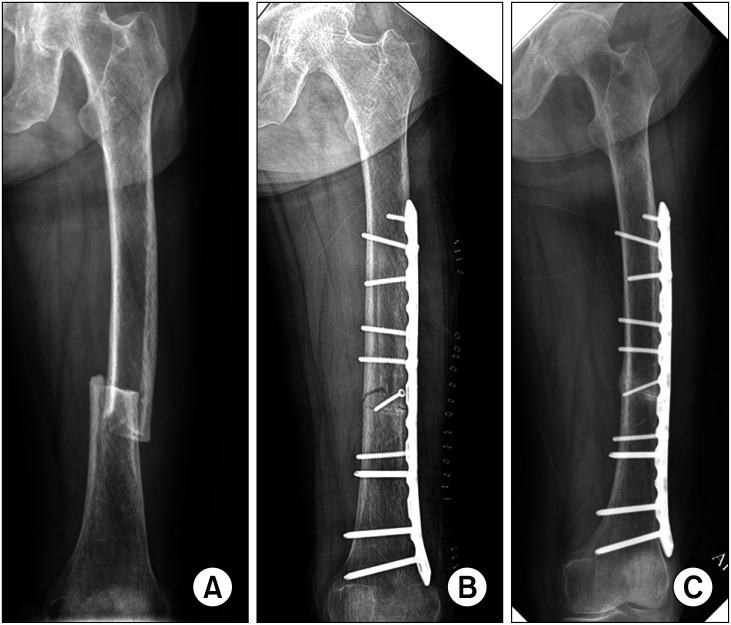
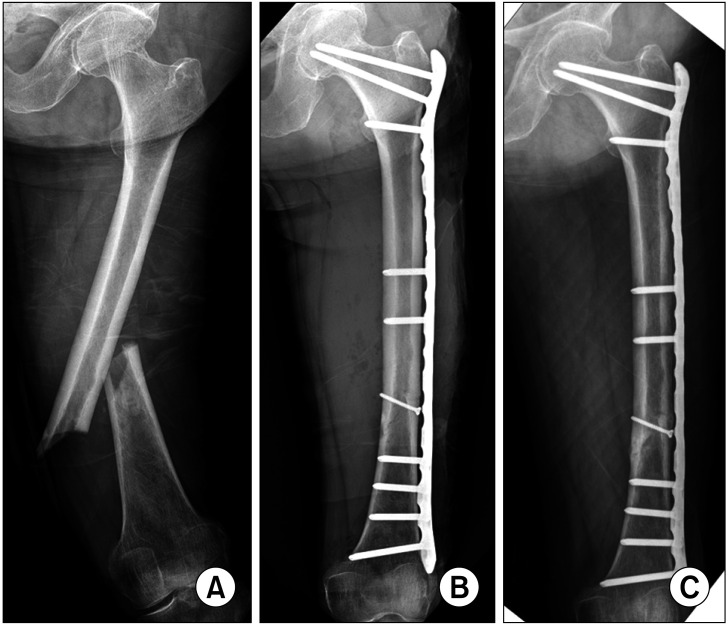
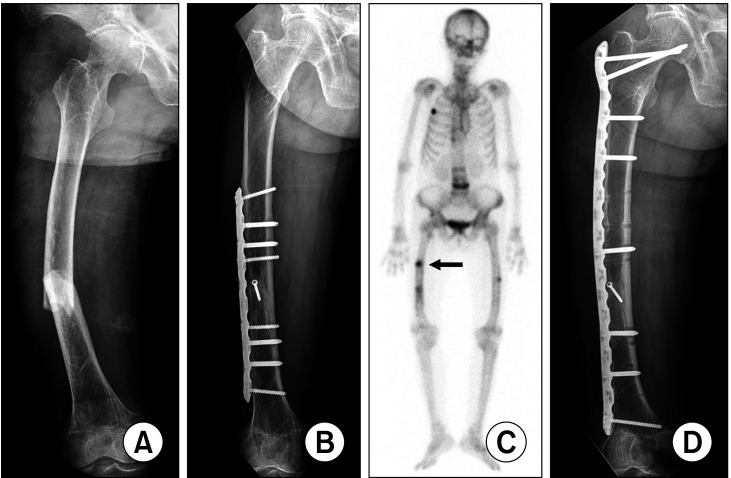
Methods: This study was conducted retrospectively on 16 patients who had undergone internal fixation using plates for treatment of atypical femoral complete fractures from 2007 to 2015. Nine patients were treated with lag screws and short plates while 7 patients were treated with position screws and long plates, which covered the whole femur. Radiologic evaluation was performed on all patients. Complications were also evaluated.
Results: Bone union was achieved in all patients and the average bone union time was 17.7 weeks (range, 14-28 weeks). There was no correlation between the preoperative use of a bisphosphonate, plate length, postoperative teriparatide use, and the time to bone union. Regarding complications, 2 cases of complete fractures and 1 impending fracture occurred at the end of short plates.
Conclusions: Satisfactory results were obtained with use of plates for patients with atypical femoral complete diaphyseal fractures, in whom intramedullary nails could not be applied due to severe bowing. In particular, it seemed advantageous compared with intramedullary nail fixation in that it could maintain the leg length through anatomical reduction and prevent iatrogenic fracture.
Keywords: Atypical femoral fracture; Diaphysis; Plate fixation.
Copyright © 2022 by The Korean Orthopaedic Association.
Conflict of interest statement
CONFLICT OF INTEREST: No potential conflict of interest relevant to this article was reported.
Figures
References
-
- Black DM, Cummings SR, Karpf DB, et al. Fracture Intervention Trial Research Group. Randomised trial of effect of alendronate on risk of fracture in women with existing vertebral fractures. Lancet. 1996;348(9041):1535–1541. - PubMed
-
- McClung MR, Geusens P, Miller PD, et al. Effect of risedronate on the risk of hip fracture in elderly women. N Engl J Med. 2001;344(5):333–340. - PubMed
-
- Black DM, Delmas PD, Eastell R, et al. Once-yearly zoledronic acid for treatment of postmenopausal osteoporosis. N Engl J Med. 2007;356(18):1809–1822. - PubMed
-
- Chesnut CH, 3rd, Skag A, Christiansen C, et al. Effects of oral ibandronate administered daily or intermittently on fracture risk in postmenopausal osteoporosis. J Bone Miner Res. 2004;19(8):1241–1249. - PubMed
-
- Odvina CV, Zerwekh JE, Rao DS, Maalouf N, Gottschalk FA, Pak CY. Severely suppressed bone turnover: a potential complication of alendronate therapy. J Clin Endocrinol Metab. 2005;90(3):1294–1301. - PubMed
MeSH terms
LinkOut - more resources
Full Text Sources
Medical