


Distinct Immunological Profiles Help in the Maintenance of Salivary Secretory IgA Production in Mild Symptoms COVID-19 Patients
- PMID: 35686128
- PMCID: PMC9171398
- DOI: 10.3389/fimmu.2022.890887
Distinct Immunological Profiles Help in the Maintenance of Salivary Secretory IgA Production in Mild Symptoms COVID-19 Patients
Abstract
Background: Relevant aspects regarding the SARS-CoV-2 pathogenesis and the systemic immune response to this infection have been reported. However, the mucosal immune response of the upper airways two months after SARS-CoV-2 infection in patients with mild/moderate symptoms is still not completely described. Therefore, we investigated the immune/inflammatory responses of the mucosa of the upper airways of mild/moderate symptom COVID-19 patients two months after the SARS-CoV-2 infection in comparison to a control group composed of non-COVID-19 healthy individuals.
Methods: A cohort of 80 volunteers (age 37.2 ± 8.2), including non-COVID-19 healthy individuals (n=24) and COVID-19 patients (n=56) who presented mild/moderate symptoms during a COVID-19 outbreak in Brazil in November and December of 2020. Saliva samples were obtained two months after the COVID-19 diagnosis to assess the levels of SIgA by ELISA and the cytokines by multiplex analysis.
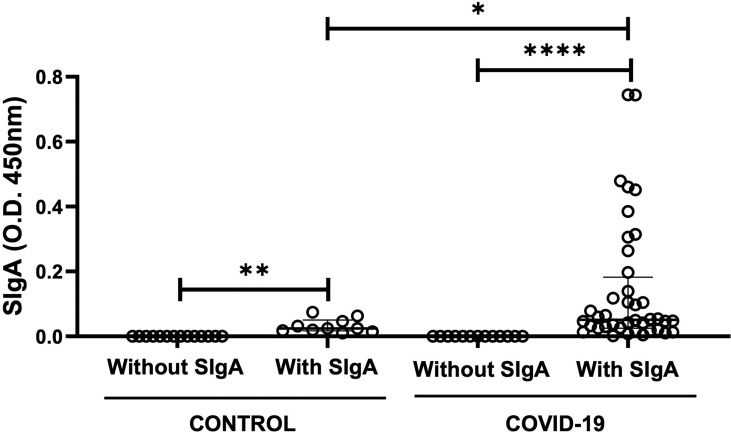
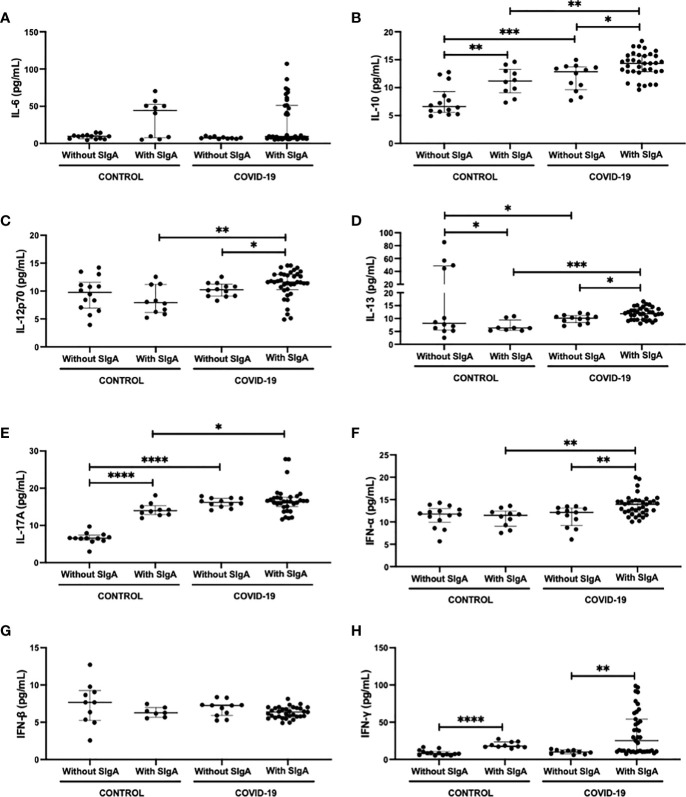
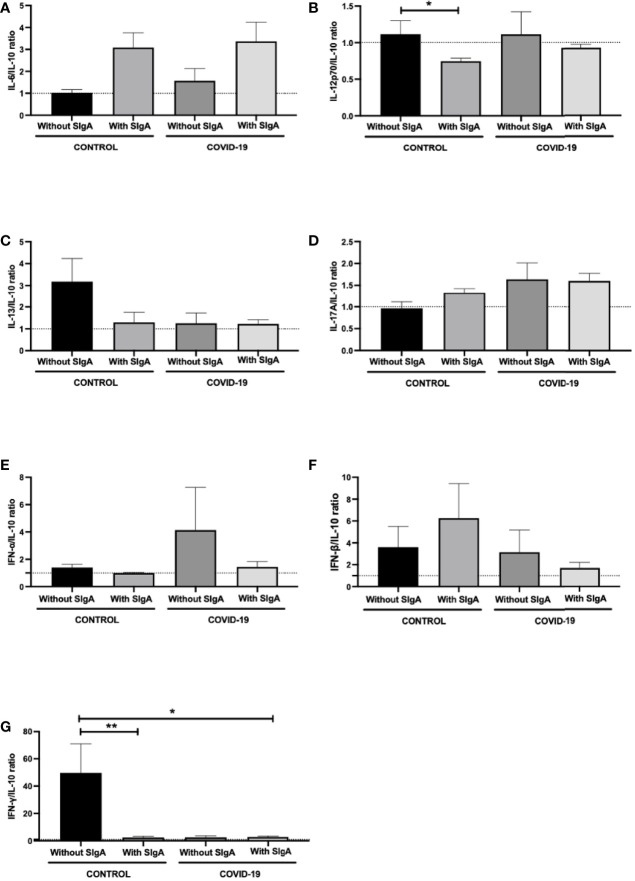
Results: Salivary levels of SIgA were detected in 39 volunteers into the COVID-19 group and, unexpectedly, in 14 volunteers in the control group. Based on this observation, we distributed the volunteers of the control group into without SIgA or with SIgA sub-groups, and COVID-19 group into without SIgA or with SIgA sub-groups. Individuals with SIgA showed higher levels of IL-10, IL-17A, IFN-γ, IL-12p70, IL-13, and IFN-α than those without SIgA. In intergroup analysis, the COVID-19 groups showed higher salivary levels of IL-10, IL-13, IL-17A, and IFN-α than the control group. No statistical differences were verified in the salivary levels of IL-6 and IFN-β. Lower IL-12p70/IL-10 and IFN-γ/IL-10 ratios were found in the control group without SIgA than the control group with SIgA and the COVID-19 group with SIgA.
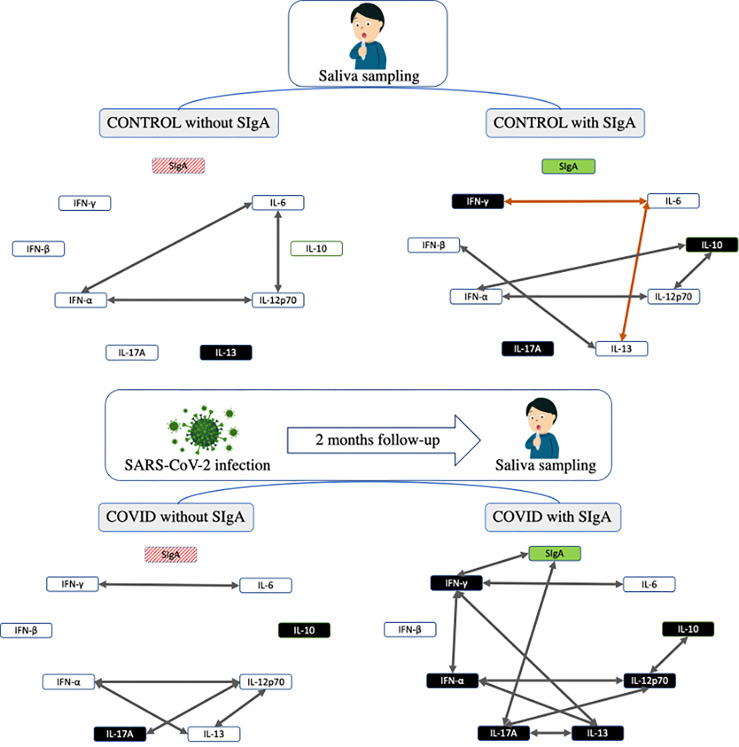
Conclusion: We were able to present, for the first time, that associations between distinct immunological profiles can help the mucosal immunity to maintain the salivary levels of SIgA in COVID-19 patients two months after the SARS-CoV-2 infection.
Keywords: SARS-CoV-2; cytokines; interferon; interleukin; mucosal immunity; saliva.
Copyright © 2022 Santos, Amaral, França, Monteiro, Alvares-Saraiva, Kalil, Durigon, Oliveira, Rodrigues, Heller, Welter, Pinho, Vieira and Bachi.
Conflict of interest statement
The authors declare that the research was conducted in the absence of any commercial or financial relationships that could be construed as a potential conflict of interest.
Figures
References
-
- World Health Organization . Who Director-General’s Opening Remarks at the Media Briefing on COVID-19-11 March 2020. Geneva, Switzerland: World Health Organization; (2020).
Publication types
MeSH terms
Substances
LinkOut - more resources
Full Text Sources
Medical
Miscellaneous
