


Differences and Associations between Physical Activity Motives and Types of Physical Activity among Adolescent Boys and Girls
- PMID: 35686232
- PMCID: PMC9173893
- DOI: 10.1155/2022/6305204
Differences and Associations between Physical Activity Motives and Types of Physical Activity among Adolescent Boys and Girls
Abstract
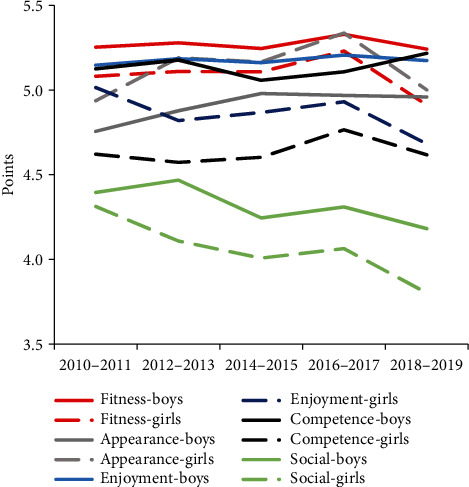
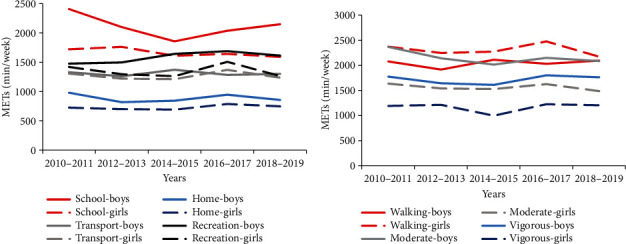
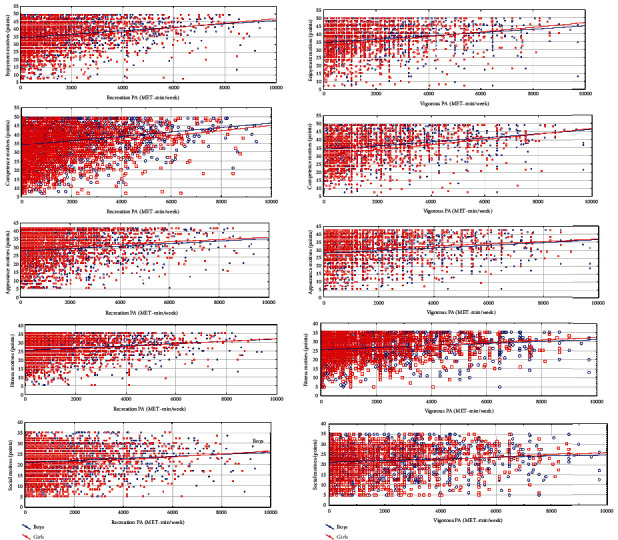
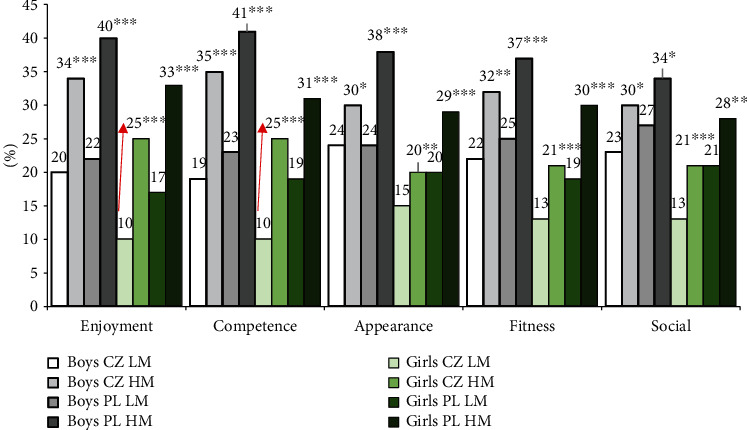
Interventions aimed at motivation for physical activity (PA) are mostly beneficial, but the effects on preventing the decrease in PA are not entirely clear, especially in girls. The main aim of this study was to identify the differences and associations between PA motives and types of PA in boys and girls and between low and high motivated boys and girls. Another aim is to identify the types of motivation and PA that increase the likelihood of achieving PA recommendations and to propose ways of increasing PA among low motivated adolescents. The research carried out before the COVID-19 pandemic (2010-2019) and involved 2,149 Czech and 1,927 Polish adolescents aged 15-19 years. The International Physical Activity Questionnaire-Long Form was used to identify the level of PA types, while PA motivation was examined through the Motives for Physical Activities Measure-Revised. During the ten years, a decline was observed in enjoyment, fitness, and social motives. An increase in appearance motives was observed in girls, while no significant changes were seen in boys. Boys showed a higher motivation for PA than girls in enjoyment, competence, fitness, and social motives, while girls were high motivated in appearance motives. The greatest statistically significant differences between low and high motivated individuals were found in the associations between recreation/vigorous PA and between all types of motivation in boys and girls in both countries. The strongest associations in both genders were observed between enjoyment/competence motives and recreation/vigorous PA. Respecting and using the associations between the types of PA motives and types of PA in low and high motivated boys and girls can support feelings of PA enjoyment, increase PA, support the achievement of PA recommendations, and positively affect adolescents' healthy lifestyles.
Copyright © 2022 Karel Frömel et al.
Conflict of interest statement
No potential conflict of interest was reported by the authors.
Figures
References
-
- Moreno-Murcia J. A., Hellín P., González-Cutre D., Martínez-Galindo C. Influence of perceived sport competence and body attractiveness on physical activity and other healthy lifestyle habits in adolescents. The Spanish Journal of Psychology . 2011;14(1):282–292. doi: 10.5209/rev_sjop.2011.v14.n1.25. - DOI - PubMed
-
- van de Kop J. H., van Kernebeek W. G., Otten R. H. J., Toussaint H. M., Verhoeff A. P. School-based physical activity interventions in prevocational adolescents: a systematic review and meta-analyses. Journal of Adolescent Health . 2019;65(2):185–194. doi: 10.1016/j.jadohealth.2019.02.022. - DOI - PubMed
MeSH terms
LinkOut - more resources
Full Text Sources
Medical
