


Effectiveness of clinical dashboards as audit and feedback or clinical decision support tools on medication use and test ordering: a systematic review of randomized controlled trials
- PMID: 35689652
- PMCID: PMC9471705
- DOI: 10.1093/jamia/ocac094
Effectiveness of clinical dashboards as audit and feedback or clinical decision support tools on medication use and test ordering: a systematic review of randomized controlled trials
Abstract
Background: Clinical dashboards used as audit and feedback (A&F) or clinical decision support systems (CDSS) are increasingly adopted in healthcare. However, their effectiveness in changing the behavior of clinicians or patients is still unclear. This systematic review aims to investigate the effectiveness of clinical dashboards used as CDSS or A&F tools (as a standalone intervention or part of a multifaceted intervention) in primary care or hospital settings on medication prescription/adherence and test ordering.
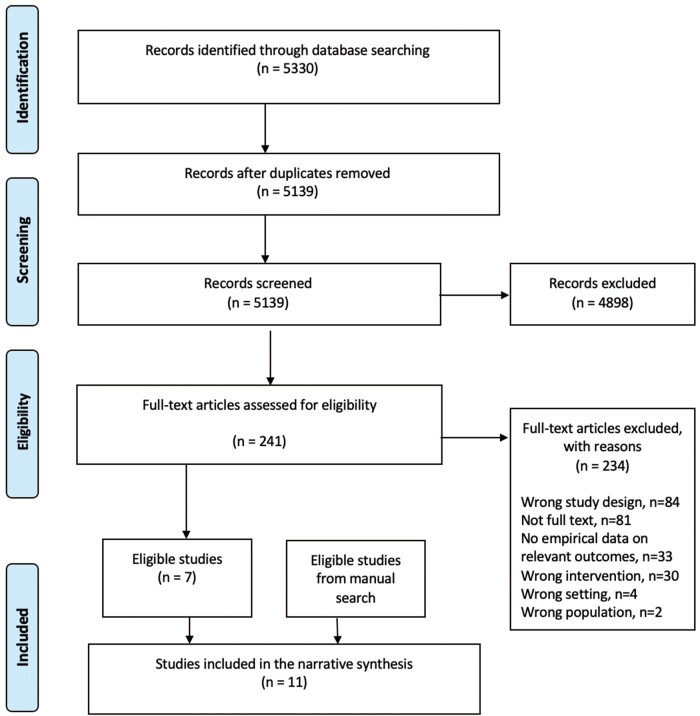
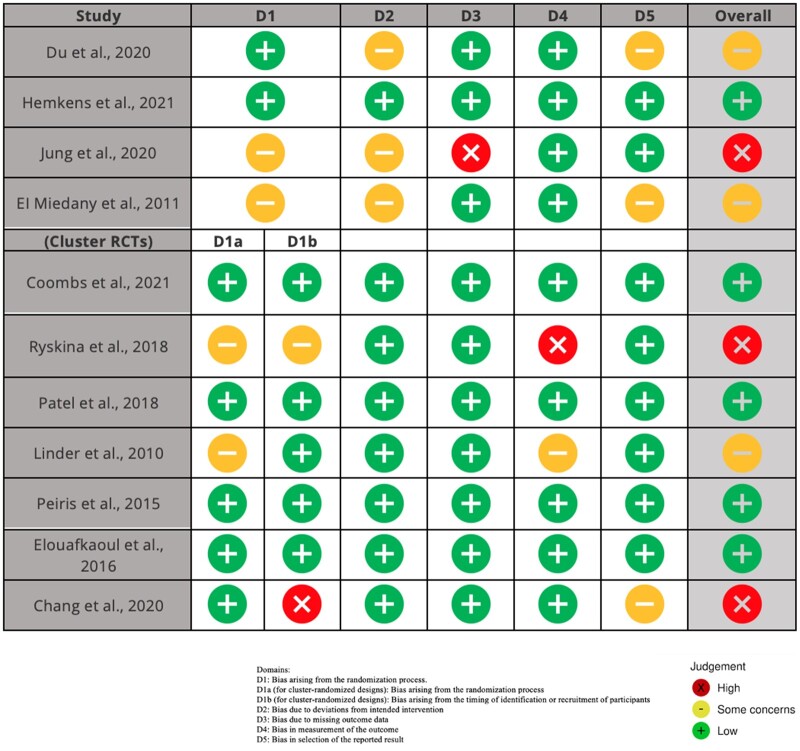
Methods: Seven major databases were searched for relevant studies, from inception to August 2021. Two authors independently extracted data, assessed the risk of bias using the Cochrane RoB II scale, and evaluated the certainty of evidence using GRADE. Data on trial characteristics and intervention effect sizes were extracted. A narrative synthesis was performed to summarize the findings of the included trials.
Results: Eleven randomized trials were included. Eight trials evaluated clinical dashboards as standalone interventions and provided conflicting evidence on changes in antibiotic prescribing and no effects on statin prescribing compared to usual care. Dashboards increased medication adherence in patients with inflammatory arthritis but not in kidney transplant recipients. Three trials investigated dashboards as part of multicomponent interventions revealing decreased use of opioids for low back pain, increased proportion of patients receiving cardiovascular risk screening, and reduced antibiotic prescribing for upper respiratory tract infections.
Conclusion: There is limited evidence that dashboards integrated into electronic medical record systems and used as feedback or decision support tools may be associated with improvements in medication use and test ordering.
Keywords: audit and feedback; clinical decision support; dashboard; review.
© The Author(s) 2022. Published by Oxford University Press on behalf of the American Medical Informatics Association.
Figures
References
-
- Murdoch TB, Detsky AS.. The inevitable application of big data to health care. JAMA 2013; 309 (13): 1351–2. - PubMed
-
- Stadler JG, Donlon K, Siewert JD, et al. Improving the efficiency and ease of healthcare analysis through use of data visualization dashboards. Big Data 2016; 4 (2): 129–35. - PubMed
-
- Dowding D, Randell R, Gardner P, et al. Dashboards for improving patient care: review of the literature. Int J Med Inform 2015; 84 (2): 87–100. - PubMed
