


Reintubation After Lung Cancer Resection: Development and External Validation of a Predictive Score
- PMID: 35690135
- PMCID: PMC11651361
- DOI: 10.1016/j.athoracsur.2022.05.035
Reintubation After Lung Cancer Resection: Development and External Validation of a Predictive Score
Abstract
Background: Reintubation after lung cancer resection is an important quality metric because of increased disability, mortality and cost. However, no validated predictive instrument is in use to reduce reintubation after lung resection. This study aimed to create and validate the PRediction Of REintubation After Lung cancer resection (PROREAL) score.
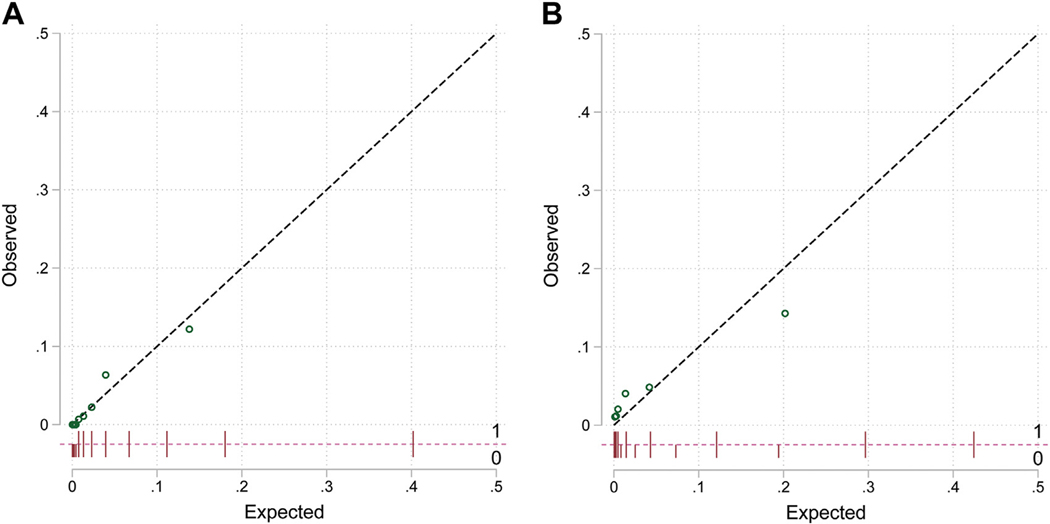
Methods: The study analyzed lung resection cases from 2 university hospitals. The primary end point was reintubation within 7 days after surgery. Predictors were selected through backward stepwise logistic regression and bootstrap resampling. The investigators used reclassification and receiver-operating characteristic (ROC) curve analyses to assess score performance and compare it with an established score for all surgical patients (Score for Prediction of Postoperative Respiratory Complications [SPORC]).
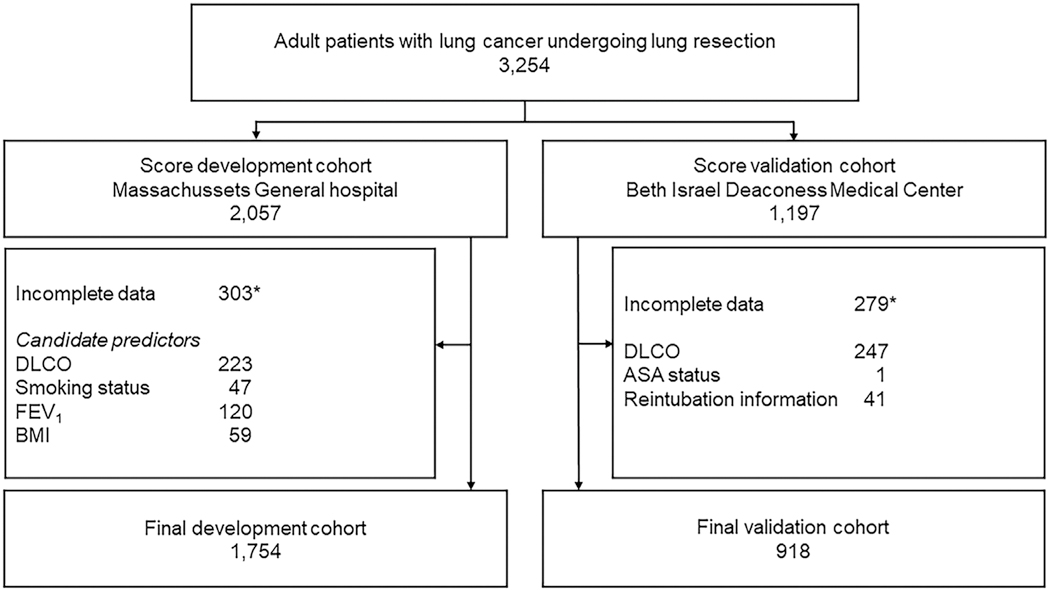
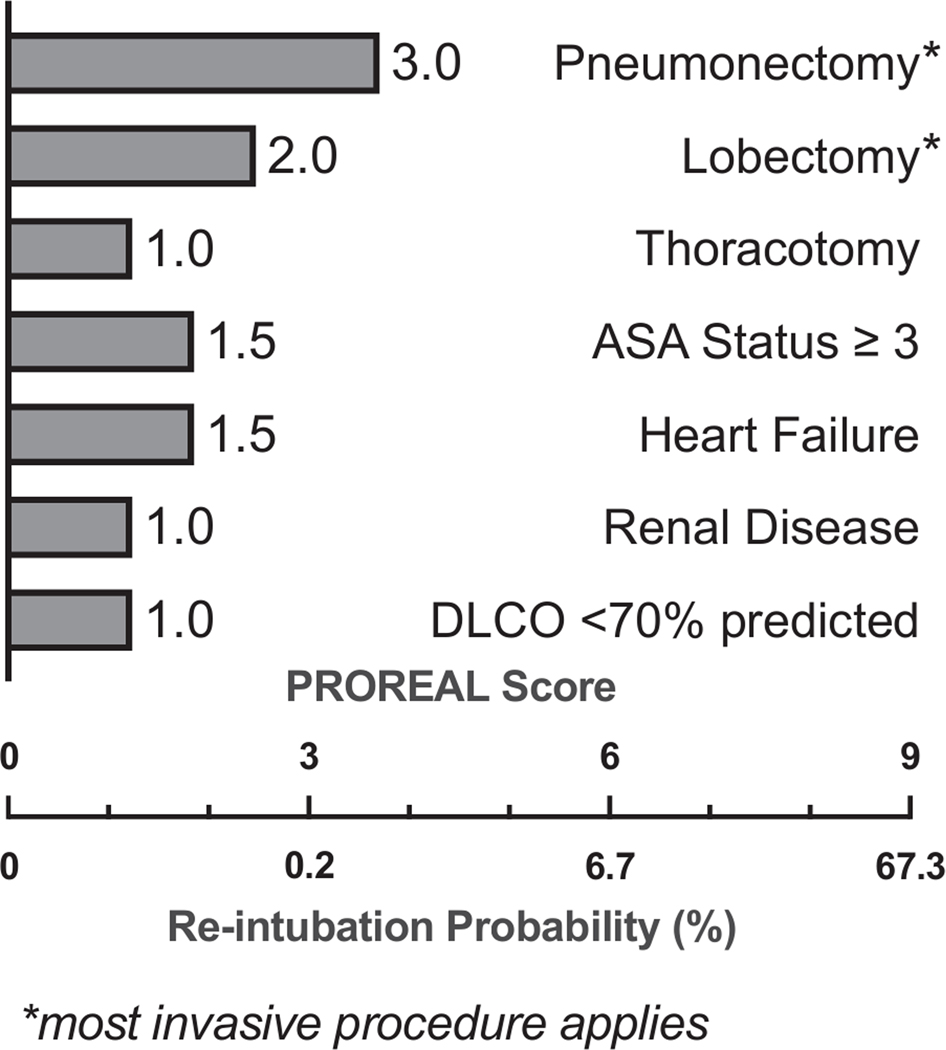
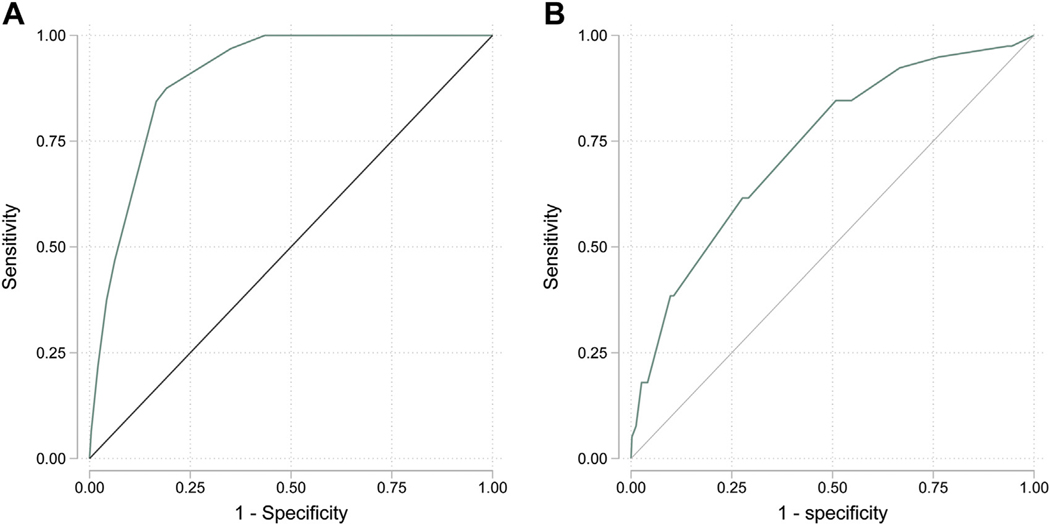
Results: The study included 2672 patients who underwent resection for lung cancer (1754, development cohort; 918, validation cohort) between 2008 and 2020, of whom 71 (2.7%) were reintubated within 7 days after surgery. Identified score variables were surgical extent and approach, American Society of Anesthesiologists physical status, heart failure, renal disease, and diffusing capacity of the lung for carbon monoxide. The score achieved excellent discrimination in the development cohort (ROC AUC, 0.90; 95% CI, 0.87-0.94) and good discrimination in the validation cohort (ROC AUC, 0.74, 95% CI; 0.66-0.82), thus outperforming the SPORC in both cohorts (P < .001 and P = .018, respectively; validation cohort net reclassification improvement, 0.39; 95% CI, 0.18-0.60; P = .001). The score cutoff of ≥5 yielded a sensitivity of 88% (95% CI, 72-95) and a specificity of 81% (95% CI,79-83) in the development cohort.
Conclusions: A simple score (PROREAL) specific to lung cancer predicts postoperative reintubation more accurately than the nonspecific SPORC score. Operative candidates at risk may be identified for preventive intervention or alternative oncologic therapy.
Copyright © 2024 The Society of Thoracic Surgeons. Published by Elsevier Inc. All rights reserved.
Conflict of interest statement
DISCLOSURES
The authors have no conflicts of interest to disclose.
Figures
References
-
- Bray F, Ferlay J, Soerjomataram I, Siegel RL, Torre LA, Jemal A. Global cancer statistics 2018: GLOBOCAN estimates of incidence and mortality worldwide for 36 cancers in 185 countries. CA Cancer J Clin. 2018;68:394–424. - PubMed
-
- Nafiu OO, Ramachandran SK, Ackwerh R, Tremper KK, Campbell DA Jr, Stanley JC. Factors associated with and consequences of unplanned post-operative intubation in elderly vascular and general surgery patients. Eur J Anaesthesiol. 2011;28:220–224. - PubMed
-
- Burton BN, Khoche S, A’Court AM, Schmidt UH, Gabriel RA. Perioperative risk factors associated with postoperative unplanned intubation after lung resection. J Cardiothorac Vasc Anesth. 2018;32:1739–1746. - PubMed
-
- Dimick JB, Chen SL, Taheri PA, Henderson WG, Khuri SF, Campbell DA Jr. Hospital costs associated with surgical complications: a report from the private-sector National Surgical Quality Improvement Program. J Am Coll Surg. 2004;199:531–537. - PubMed
Publication types
MeSH terms
Grants and funding
LinkOut - more resources
Full Text Sources
Medical
