


Analysis of the tumor microenvironment and mutation burden identifies prognostic features in thymic epithelial tumors
- PMID: 35693087
- PMCID: PMC9185609
Analysis of the tumor microenvironment and mutation burden identifies prognostic features in thymic epithelial tumors
Abstract
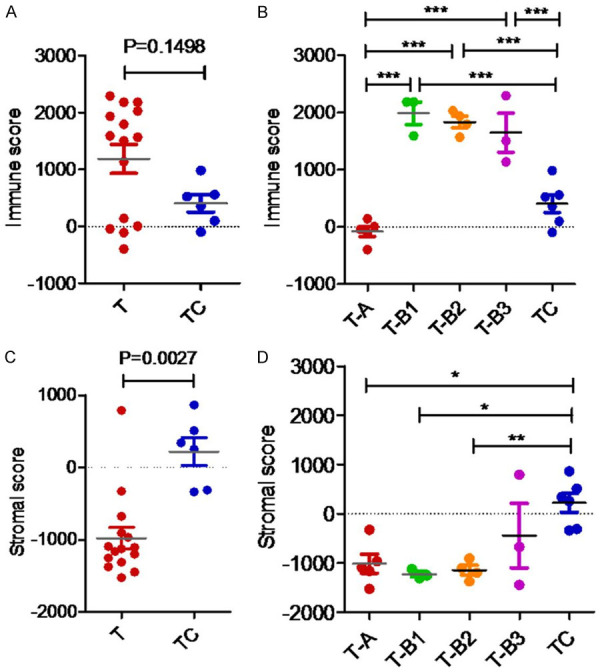
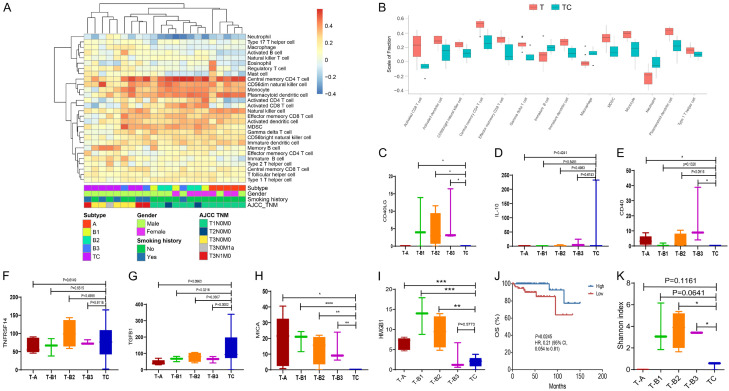
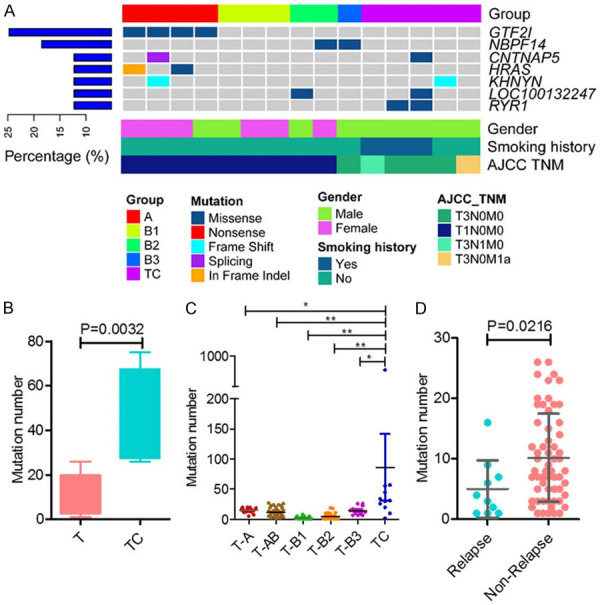
Thymic epithelial tumors (TETs) are one of the rarest adult malignancies in the anterior mediastinum. Thymic carcinomas (TCs) are less prevalent among TETs, but they are more clinically aggressive. Immunotherapy has emerged as a promising therapeutic approach for refractory TETs, even though chemotherapy remains the conventional treatment for the advanced disease. However, limited attention has been paid to the features of the tumor microenvironment (TME) which might provide clinically relevant information and guide treatment regimen design. Especially, to date, there have been only a few studies focusing on the differences between the TME and genomic features preserved by TETs and TCs. We analyzed the TME and genomic characteristics of TETs using RNA sequencing and whole-exome sequencing, finding that distinct characteristics of TME in different pathogenic subtypes of TETs. According to those findings, we found that thymic carcinomas had significantly lower expression of HMGB1, a pro-inflammatory cytokine-related gene, than thymomas, and low HMGB1 expression was linked to a poor prognosis. Additionally, higher mutation burdens were significantly associated with the later stage and more advanced pathological types. Thymoma patients with lower mutation burdens tended to relapse within 3 years. In summary, different characteristics of TME and genomic features between thymoma and thymic carcinoma were associated with clinical outcomes of TETs and presented promisingly predictive value for efficacy and toxicity of immunotherapy.
Keywords: Thymic epithelial tumors; genomic features HMGB1; the tumor microenvironment; thymic carcinomas; thymomas.
AJCR Copyright © 2022.
Conflict of interest statement
None.
Figures
References
-
- Engels EA, Pfeiffer RM. Malignant thymoma in the United States: demographic patterns in incidence and associations with subsequent malignancies. Int J Cancer. 2003;105:546–551. - PubMed
-
- Masaoka A. Staging system of thymoma. J Thorac Oncol. 2010;5(Suppl 4):S304–312. - PubMed
-
- Scorsetti M, Leo F, Trama A, D’Angelillo R, Serpico D, Macerelli M, Zucali P, Gatta G, Garassino MC. Thymoma and thymic carcinomas. Crit Rev Oncol Hematol. 2016;99:332–350. - PubMed
LinkOut - more resources
Full Text Sources