


Application of CRISPR/Cas Genomic Editing Tools for HIV Therapy: Toward Precise Modifications and Multilevel Protection
- PMID: 35694537
- PMCID: PMC9177041
- DOI: 10.3389/fcimb.2022.880030
Application of CRISPR/Cas Genomic Editing Tools for HIV Therapy: Toward Precise Modifications and Multilevel Protection
Abstract
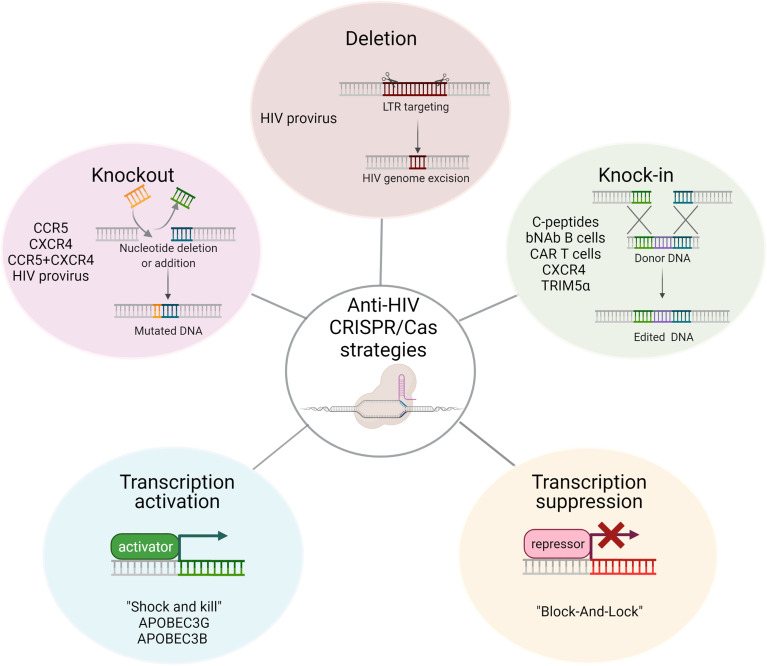
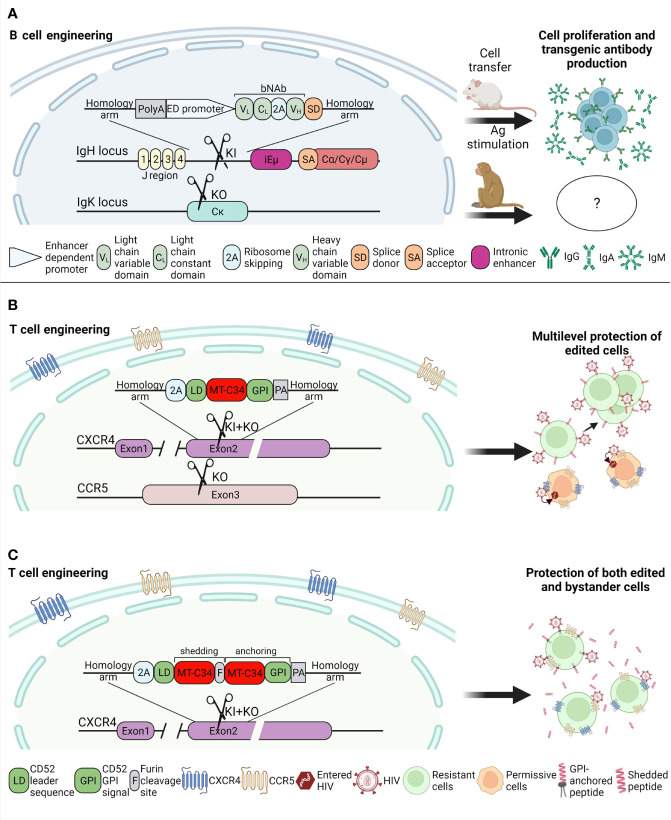
Although highly active antiretroviral therapy (HAART) can robustly control human immunodeficiency virus (HIV) infection, the existence of latent HIV in a form of proviral DNA integrated into the host genome makes the virus insensitive to HAART. This requires patients to adhere to HAART for a lifetime, often leading to drug toxicity or viral resistance to therapy. Current genome-editing technologies offer different strategies to reduce the latent HIV reservoir in the body. In this review, we systematize the research on CRISPR/Cas-based anti-HIV therapeutic methods, discuss problems related to viral escape and gene editing, and try to focus on the technologies that effectively and precisely introduce genetic modifications and confer strong resistance to HIV infection. Particularly, knock-in (KI) approaches, such as mature B cells engineered to produce broadly neutralizing antibodies, T cells expressing fusion inhibitory peptides in the context of inactivated viral coreceptors, or provirus excision using base editors, look very promising. Current and future advancements in the precision of CRISPR/Cas editing and its delivery will help extend its applicability to clinical HIV therapy.
Keywords: B cells; C-peptides; CD4 T cells; CRISPR/Cas; HIV; co-receptors; knock-in; restriction factors.
Copyright © 2022 Maslennikova and Mazurov.
Conflict of interest statement
The authors declare that the research was conducted in the absence of any commercial or financial relationships that could be construed as a potential conflict of interest.
Figures
References
-
- Anderson J., Akkina R. (2008). Human Immunodeficiency Virus Type 1 Restriction by Human–Rhesus Chimeric Tripartite Motif 5α (TRIM 5α) in CD34+ Cell-Derived Macrophages In Vitro and in T Cells In Vivo in Severe Combined Immunodeficient (SCID-Hu) Mice Transplanted With Human Fetal Tissue. Hum. Gene Ther. 19, 217–228. doi: 10.1089/hum.2007.108 - DOI - PubMed
Publication types
MeSH terms
LinkOut - more resources
Full Text Sources
Medical
Research Materials
