


Multilocus Sequence Typing and Virulence Potential of Vibrio parahaemolyticus Strains Isolated from Aquatic Bird Feces
- PMID: 35695558
- PMCID: PMC9241773
- DOI: 10.1128/spectrum.00886-22
Multilocus Sequence Typing and Virulence Potential of Vibrio parahaemolyticus Strains Isolated from Aquatic Bird Feces
Abstract
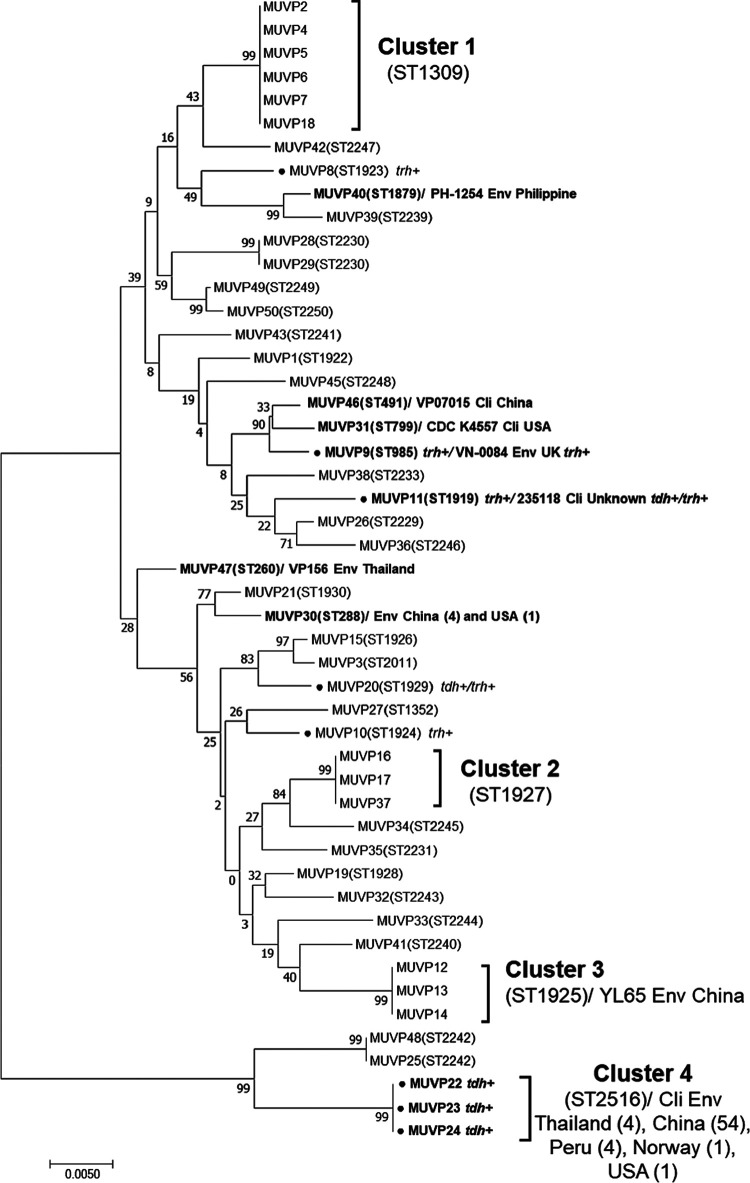
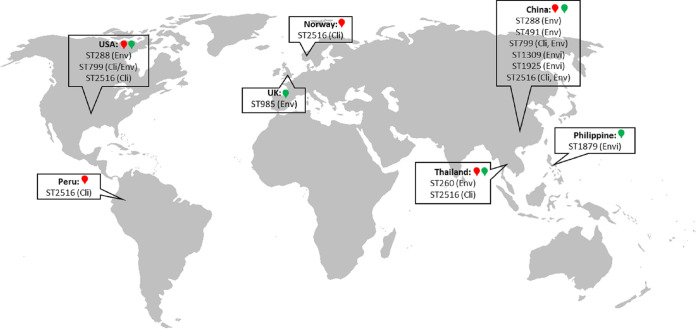
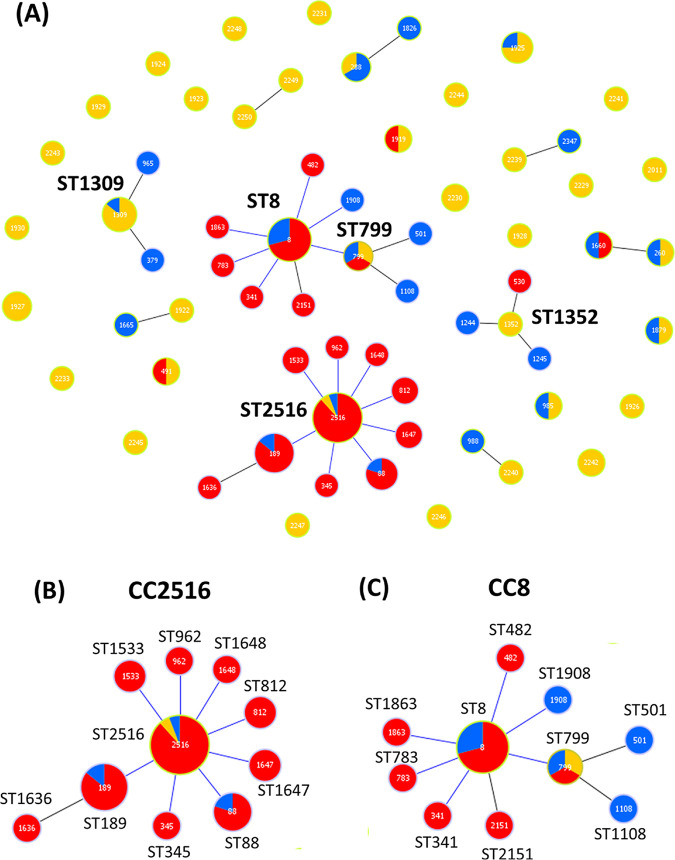
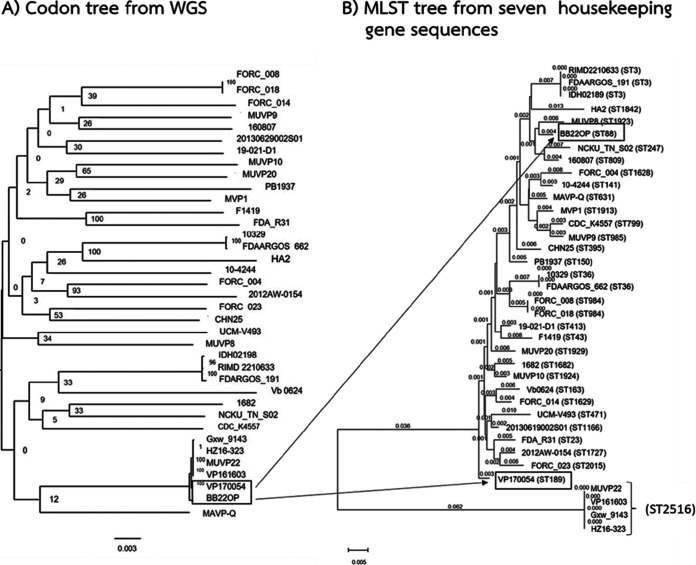
Vibrio parahaemolyticus is a Gram-negative, foodborne pathogenic bacterium that causes human gastroenteritis. This organism is ubiquitously present in the marine environment. Detection of V. parahaemolyticus in aquatic birds has been previously reported; however, the characterization of isolates of this bacterium recovered from these birds remains limited. The present study isolated and characterized V. parahaemolyticus from aquatic bird feces at the Bangpu Recreation Center (Samut Prakan province, Thailand) from 2016 to 2017, using multilocus sequence typing (MLST) and genome analysis. The results showed that V. parahaemolyticus was present in 34.9% (76/218) of the collected bird fecal samples. Among the ldh-positive V. parahaemolyticus isolates (n = 308), 1% (3/308) were positive for tdh, 1.3% (4/308) were positive for trh, and 0.3% (1/308) were positive for both tdh and trh. In turn, the MLST analysis revealed that 49 selected V. parahaemolyticus isolates resolved to 36 STs, 26 of which were novel (72.2%). Moreover, a total of 10 identified STs were identical to globally reported pathogenic strains (ST1309, ST1919, ST491, ST799, and ST2516) and environmental strains (ST1879, ST985, ST288, ST1925, and ST260). The genome analysis of isolates possessing tdh and/or trh (ST985, ST1923, ST1924, ST1929 and ST2516) demonstrated that the organization of the T3SS2α and T3SS2β genes in bird fecal isolates were almost identical to those of human clinical strains posing public health concerns of pathogen dissemination in the recreational area. The results of this study suggest that aquatic birds are natural reservoirs of new strains with high genetic diversity and are alternative sources of potentially pathogenic V. parahaemolyticus in the marine environment. IMPORTANCE To our knowledge, infection of foodborne bacterium V. parahamolyticus occurs via the consumption of undercooked seafood contaminated with pathogenic strains. Aquatic bird is a neglectable source that can transmit V. parahaemolyticus along coastal areas. This study reported the detection of potentially pathogenic V. parahamolyticus harboring virulence genes from aquatic bird feces at the recreational center situated near the Gulf of Thailand. These strains shared identical genetic profile to the clinical isolates that previously reported in many countries. Furthermore, the strains from aquatic birds showed extremely high genetic diversity. Our research pointed out that the aquatic bird is possibly involved in the evolution of novel strains of V. parahaemolyticus and play a role in dissimilation of the potentially pathogenic strains across geographical distance.
Keywords: Vibrio parahaemolyticus; aquatic bird feces; multilocus sequence typing; virulence genes; whole-genome analysis.
Conflict of interest statement
The authors declare no conflict of interest.
Figures
References
Publication types
MeSH terms
Substances
LinkOut - more resources
Full Text Sources
Molecular Biology Databases
