


People with intellectual and sensory disabilities can independently start and perform functional daily activities with the support of simple technology
- PMID: 35696373
- PMCID: PMC9191722
- DOI: 10.1371/journal.pone.0269793
People with intellectual and sensory disabilities can independently start and perform functional daily activities with the support of simple technology
Abstract
Objectives: The study assessed a smartphone-based technology system, which was designed to enable six participants with intellectual disability and sensory impairment to start and carry out functional activities through the use of reminders and verbal or pictorial instructions.
Methods: The technology system involved a Samsung Galaxy A22 with Android 11 operating system and four Philips Hue indoor motion sensors. Three to five activities were scheduled per day. At the time at which an activity was due, the system provided the participant with a reminder followed by the verbal or pictorial instruction for the initial part of the first response (e.g., "Go to the bathroom and take the dirty towels"). The instruction would be available (repeated) until the participant responded to it and, in so doing, activated a sensor. Sensor activation caused the presentation of the instruction for the second part of the same (first) response (e.g., "Put the towels in the laundry machine"). The same process occurred for each of the responses involved in the activity. The system was introduced according to nonconcurrent multiple baseline designs across participants.
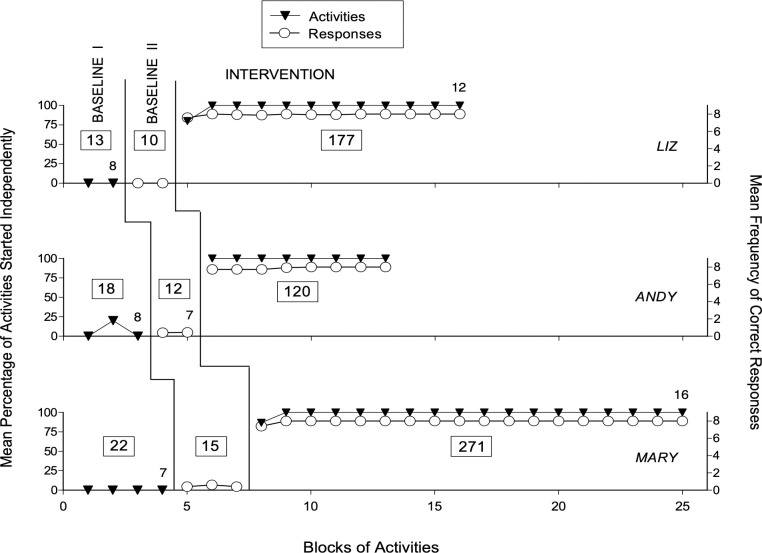
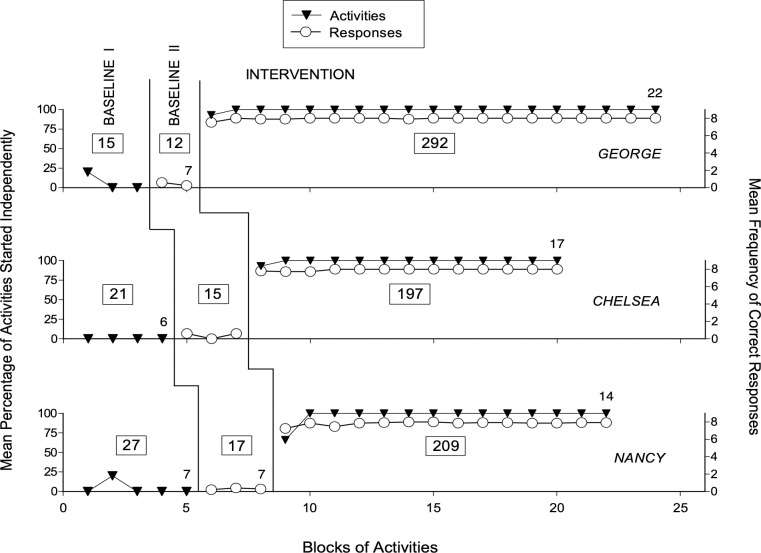
Results: During baseline, the mean percentage of activities the participants started independently was below 7; the mean frequency of correct responses per activity was below 0.5 (out of a maximum possible of 8). During the intervention (i.e., with the support of the technology system), the mean percentage and mean frequency values increased to nearly 100 and 8, respectively.
Conclusions: The data suggest that the aforementioned technology system may enable people with intellectual disability and sensory impairment to start and carry out functional activities independent of staff.
Conflict of interest statement
The authors have declared that no competing interests exist.
Figures
References
-
- Ayres K. M., Mechling L., & Sansosti F. J. (2013). The use of mobile technologies to assist with life skills/independence of students with moderate/severe intellectual disability and/or autism spectrum disorders: Considerations for the future of school psychology. Psychology in the Schools, 50(3), 259–271.
-
- Cullen J. M., Alber-Morgan S. R., Simmons-Reed E. A., & Izzo M. V. (2017). Effects of self-directed video prompting using iPads on the vocational task completion of young adults with intellectual and developmental disabilities. Journal of Vocational Rehabilitation, 46(3), 361–375.
-
- Cullen J. M., Simmons-Reed E. A., &Weaver L. (2017). Using 21st century video prompting technology to facilitate the independence of individuals with intellectual and developmental disabilities. Psychology in the Schools, 54(9), 965–978.
MeSH terms
LinkOut - more resources
Full Text Sources
Medical
