


Early results of totally endoscopic robotic aortic valve replacement: analysis of 4 cases
- PMID: 35698140
- PMCID: PMC9195332
- DOI: 10.1186/s13019-022-01899-3
Early results of totally endoscopic robotic aortic valve replacement: analysis of 4 cases
Abstract
Objective: To evaluate the role of totally endoscopic robotic aortic valve replacement in cardiac surgery.
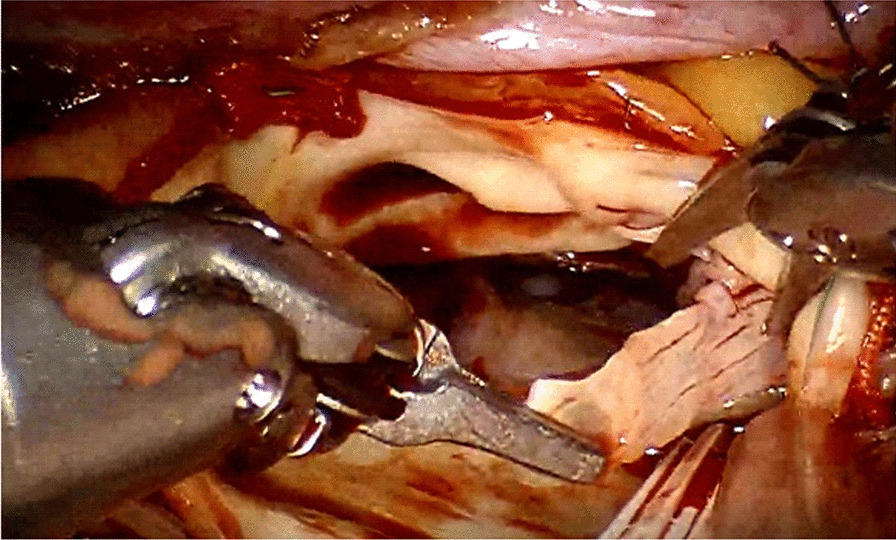
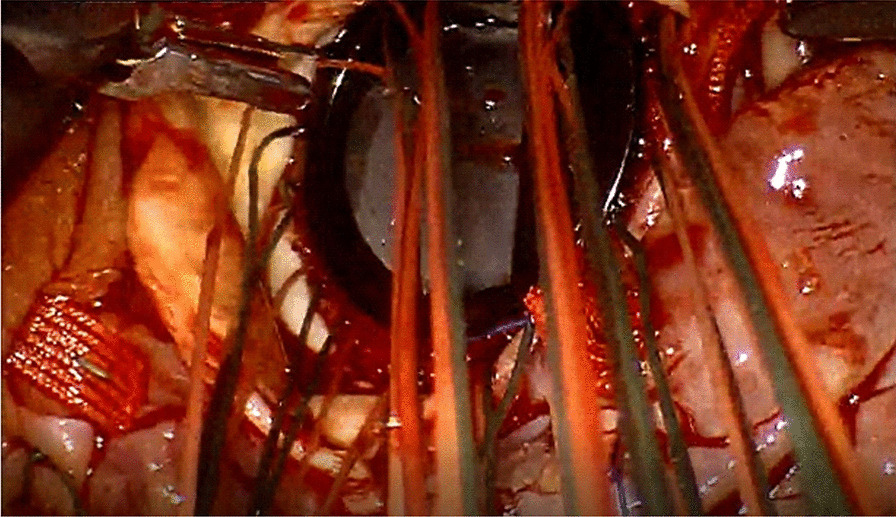
Methods: Four cases of totally robotic aortic valve replacement (AVR) were conducted from December 2016 to July 2018. All operations were completed with the Da Vinci robot Si™ system (intuitive Surgical, Inc. Sunnyvale, C.A, USA). Patients were male, with a mean age of 42.8 ± 6.2 years (range 32-49).
Results: AVR was completed with the Da Vinci Si™ system (intuitive Surgical, Inc. Sunnyvale, CA, USA). There was no mortality and no procedure-related morbidity. The mean cardiopulmonary bypass and mean cross-clamp time was 252 ± 13.6 min and 178.8 ± 17.1 min, respectively. The mean ICU time was 78.8 ± 27.1 h, and the mean hospital stay was 15 ± 3.5 d. During a mean follow-up of 3 years and 6 months, the patients returned to normal function, and no heart murmur was found. Compared with the operation, the body image score of the four patients increased after the operation, and the hospital anxiety and depression scale scores decreased, indicating that the patient's condition had been alleviated to a certain extent.
Conclusion: Totally endoscopic robotic AVR is a feasible and viable choice for patients but requires further improvement for broader use.
Keywords: Aortic valve replacement; Da Vinci SiTM system; Minimally invasive surgery; Robotic surgery.
© 2022. The Author(s).
Conflict of interest statement
The authors state that they have no conflict of interest.
Figures
References
-
- Mack MJ. Minimally invasive and robotic surgery. JAMA J Am Med Assoc. 2001. - PubMed
MeSH terms
LinkOut - more resources
Full Text Sources
