


Probiotics are a good choice for the treatment of bacterial vaginosis: a meta-analysis of randomized controlled trial
- PMID: 35698149
- PMCID: PMC9195231
- DOI: 10.1186/s12978-022-01449-z
Probiotics are a good choice for the treatment of bacterial vaginosis: a meta-analysis of randomized controlled trial
Abstract
Background: Bacterial vaginosis (BV) is one of the most common vaginal infectious diseases in female reproductive period. Although the existing view is that probiotic treatment may be one of the feasible methods for the treatment of BV, different intervention methods lead to different treatment results. Therefore, up-to-date and comprehensive evidence in this regard is essential for the development of intervention strategies.
Objective: This meta-analysis aims to systematically evaluate the role of probiotics in the treatment of BV in adult women.
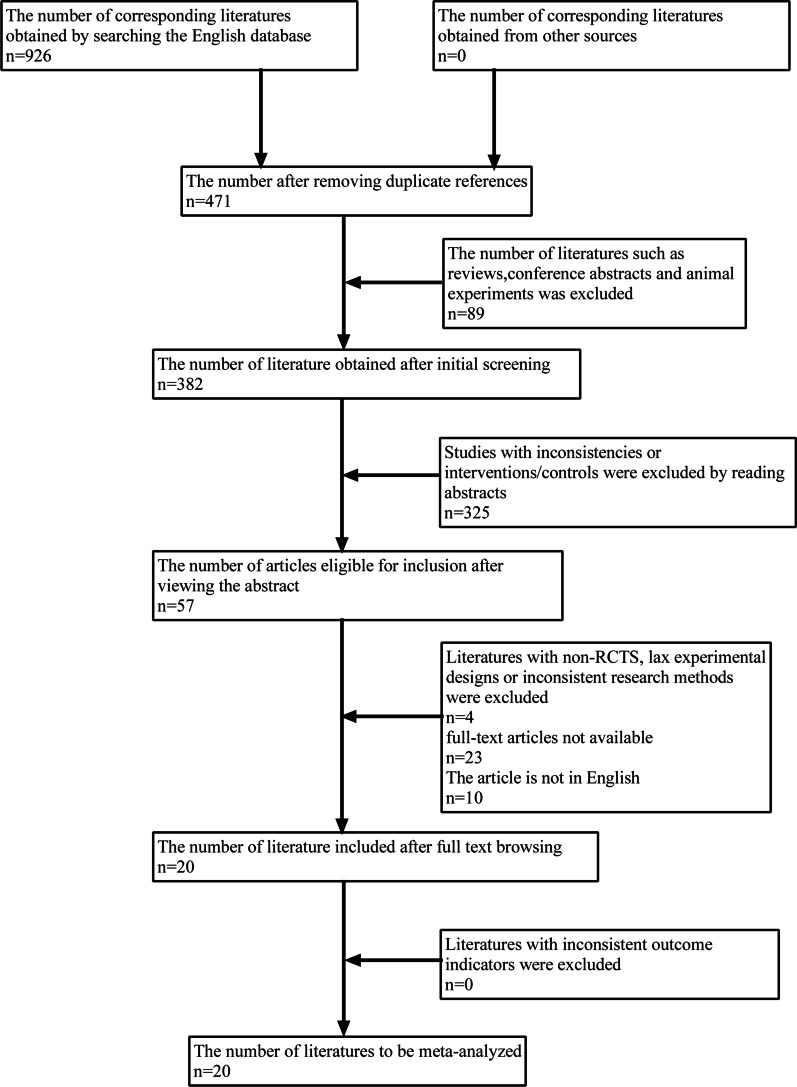
Methods: We searched the databases of Embase, Cochrane Library, PubMed, Web of Science and ClinicalTrials.gov for Randomized Controlled Trials published until November 7, 2021. Meta-analysis was performed by Revman5.3 software to systematically evaluate the clinical efficacy of probiotics adjunctive therapy in the treatment of BV. The literatures were screened and evaluated according to the inclusion and exclusion criteria. Chi-square test was used to test the heterogeneity between trials. Random or Fixed effect models were used to analyze the cure rate of BV.
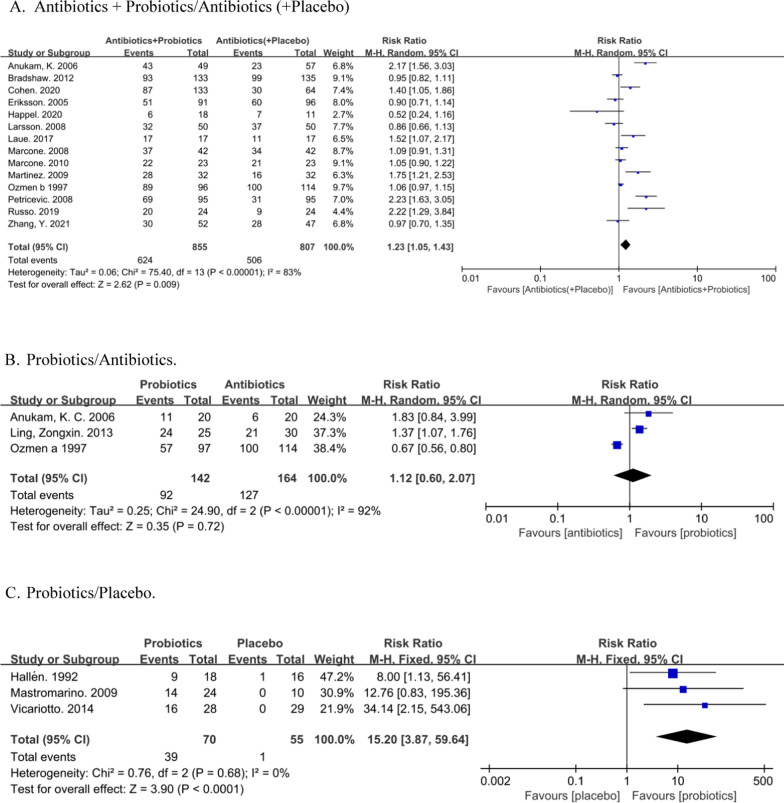
Results: Fourteen randomized controlled trials compared the efficacy of probiotics with antibiotic therapy (probiotics + antibiotics group) versus antibiotics alone or plus placebo (antibiotics (+ placebo) group) for BV [Risk Ratios (RR) = 1.23, 95% CI (1.05, 1.43), P = 0.009]. Three compared the efficacy of probiotics regimen (probiotics group) and antibiotics (antibiotics group) in the treatment of BV [RR = 1.12, 95% CI (0.60, 2.07), P = 0.72]. Another Three compared the efficacy of probiotics regimen (probiotics group) with placebo (placebo group) [RR = 15.20, 95% CI (3.87, 59.64), P < 0.0001].
Conclusion: Our meta-analysis suggests probiotics may play a positive role in the treatment of BV, but more strong evidence is needed.
Keywords: Bacterial vaginosis; Cure rate; Meta-analysis; Probiotics.
Plain language summary
Our meta-analysis found that probiotics may play an active role in adjuvant treatment of bacterial vaginosis by conventional antibiotic therapy. It was emphasized that oral administration of L. rhamnose was more effective than vaginal application of L. rhamnose in the treatment of bacterial vaginosis. The therapeutic effect of probiotics varies with the administration route and dosage of probiotics.
© 2022. The Author(s).
Conflict of interest statement
All authors have no conflict of interest to declare.
Figures
References
-
- Koumans EH, Sternberg M, Bruce C, McQuillan G, Kendrick J, Sutton M, Markowitz LE. The prevalence of bacterial vaginosis in the United States, 2001–2004; associations with symptoms, sexual behaviors, and reproductive health. Sex Transm Dis. 2007;34:864–869. doi: 10.1097/OLQ.0b013e318074e565. - DOI - PubMed
-
- Bradshaw CS, Vodstrcil LA, Hocking JS, Law M, Pirotta M, Garland SM, De Guingand D, Morton AN, Fairley CK. Recurrence of bacterial vaginosis is significantly associated with posttreatment sexual activities and hormonal contraceptive use. Clin Infect Dis. 2013;56:777–786. doi: 10.1093/cid/cis1030. - DOI - PubMed
Publication types
MeSH terms
Substances
Grants and funding
LinkOut - more resources
Full Text Sources
