


Evaluating the effectiveness of stepwise swallowing training on dysphagia in patients with Alzheimer's disease: study protocol for a randomized controlled trial
- PMID: 35698162
- PMCID: PMC9195482
- DOI: 10.1186/s13063-022-06446-y
Evaluating the effectiveness of stepwise swallowing training on dysphagia in patients with Alzheimer's disease: study protocol for a randomized controlled trial
Abstract
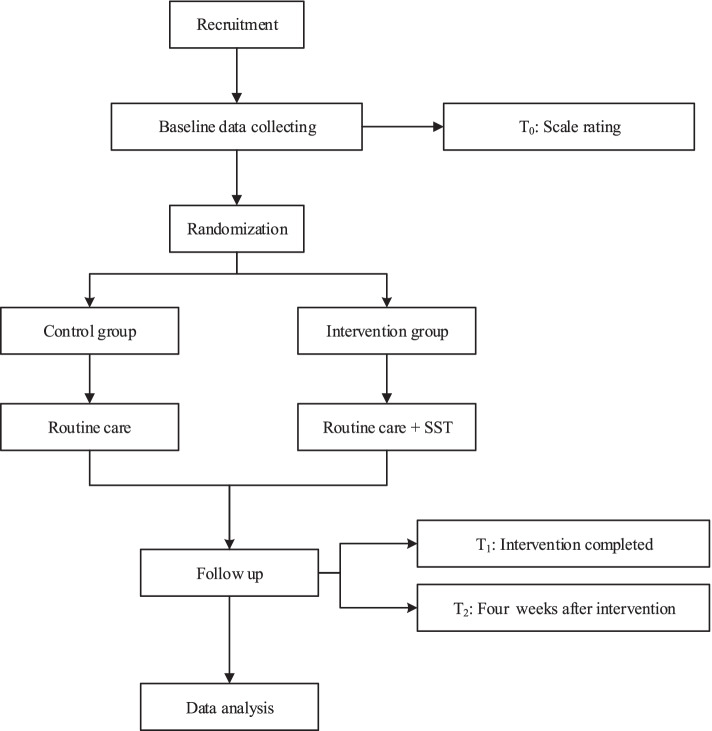
Background: The high prevalence of dysphagia among Alzheimer's disease (AD) patients has become a public health and economic concern. Therefore, effective and accessible dysphagia treatments are needed. As a fundamental rehabilitation of dysphagia, swallowing muscle exercises have received increased attention. Stepwise swallowing training (SST), integrated with all swallowing organs movement, is expected to improve swallowing dysfunction among AD patients. By using a randomized controlled trial design, we propose a multi-center research to evaluate the effectiveness of SST program among AD patients.
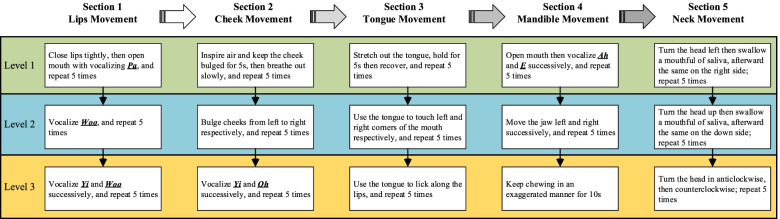
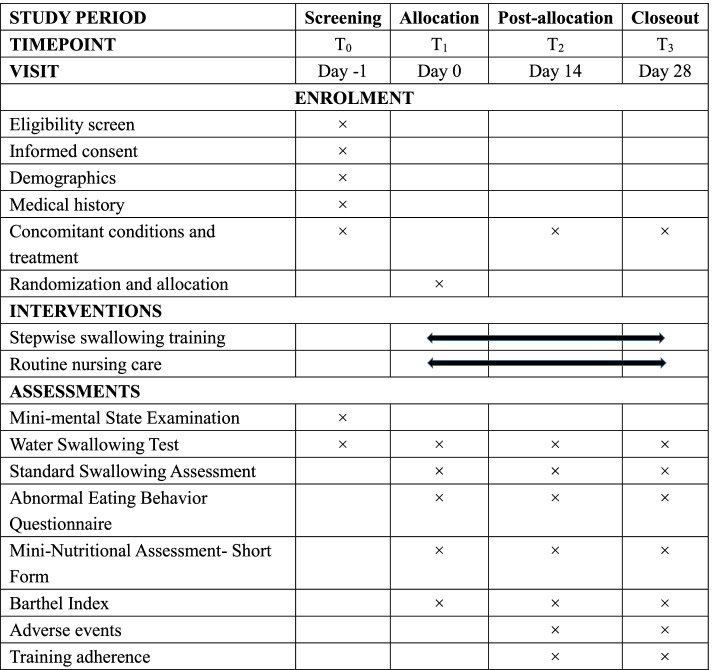
Methods: A multi-center exploratory randomized controlled trial, with a 4-week follow-up period, will be conducted in three major public psychiatric hospitals in Guangdong, China. Participants in the control group will be assigned to routine dysphagia care, while participants in the intervention group will undergo the same nursing care and additionally receive the SST program. The SST program includes five sections of swallowing organs training: lip movement, facial movement, tongue movement, mandibular movement, and neck movement. Primary outcomes evaluate the swallowing function, namely, Water Swallowing Test (WTS) and Standard Swallowing Assessment (SSA). Secondary outcomes aim at measuring the improvement of negative impacts of dysphagia, namely eating behavior, ability of daily activity, and nutritional status. Data will be collected at baseline (T1), at 2 weeks (T2, intervention), and 4 weeks after intervention (T3, follow-up).
Discussion: This study will offer trial-based evidence of the effectiveness of SST in relieving dysphagia among AD patients. SST program is expected to improve both the swallowing function and reduce the negative impacts of dysphagia, with an exploration of acceptability in the SST program.
Trial registration: Chinese Clinical Trial Registry, ChiCTR2200056481 . Prospectively registered on 6 February 2022.
Keywords: Alzheimer’s disease; Dysphagia; Protocol; Randomized controlled trial; Swallowing rehabilitation.
© 2022. The Author(s).
Conflict of interest statement
The authors declare that they have no competing interests.
Figures
References
-
- Wimo A, Ali GC, Guerchet M, Prince M, Prina M, Wu Y-T. World Alzheimer Report 2015: the Global Impact of dementia,an analysis of prevalence, incidence, cost and trends. London; 2015. https://www.alzint.org/resource/world-alzheimer-report-2015/
Publication types
MeSH terms
Grants and funding
LinkOut - more resources
Full Text Sources
Medical
Research Materials
