


A Decision-Making Tool for Evaluating and Selecting Prompting Strategies
- PMID: 35698480
- PMCID: PMC9177132
- DOI: 10.1007/s40617-022-00722-8
A Decision-Making Tool for Evaluating and Selecting Prompting Strategies
Abstract
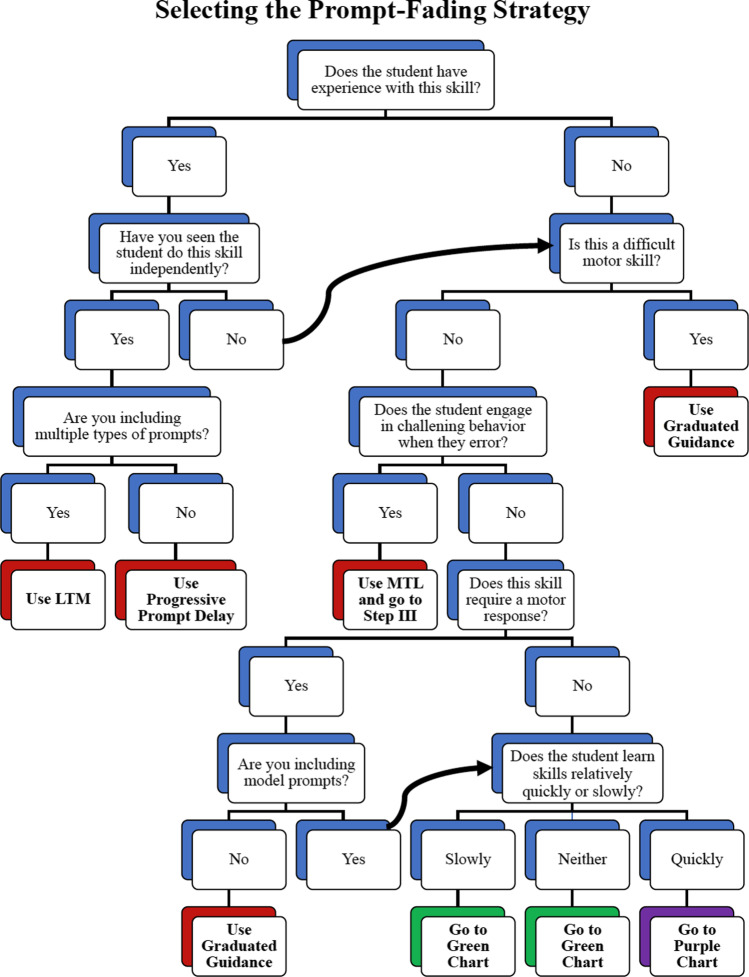
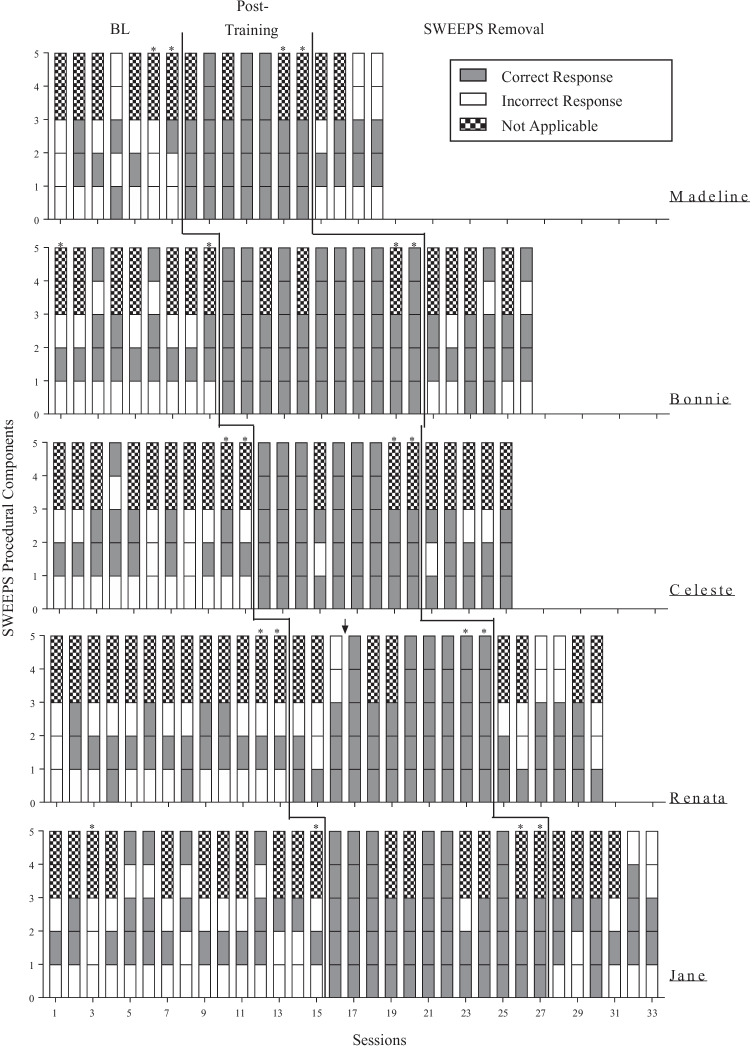
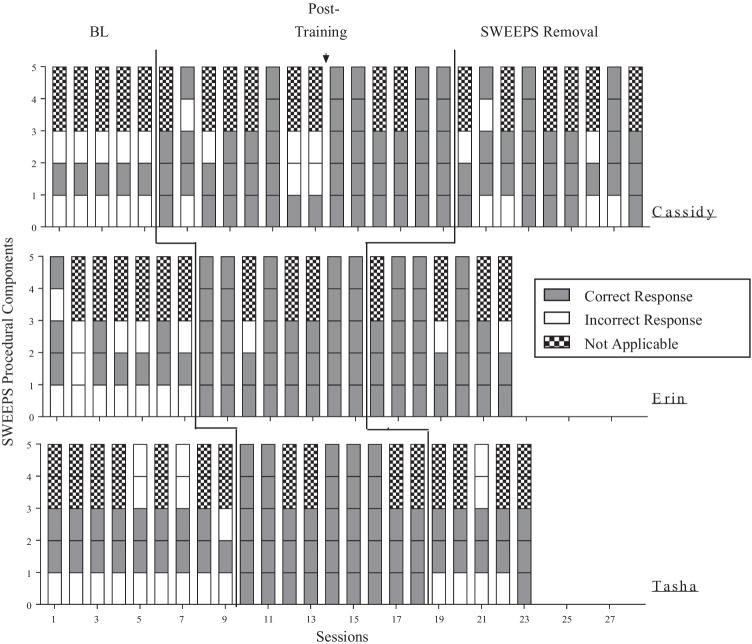
Literature has demonstrated the successful application of various prompts and prompt-fading procedures for teaching clients with intellectual and developmental disabilities. However, few practical resources exist to guide behavior analysts in the evaluation and selection of a prompting strategy for a given client and a targeted skill. In this article, we describe the development of a decision-making tool for selecting and evaluating prompting strategies, highlighting steps needed prior to evaluating clinical outcomes associated with the use of the tool. We used a multiple baseline across participants design to assess the ease with which graduate students could apply the decision-making tool with clients across a variety of skills. Results indicated that the participants learned to apply the decision-making tool with relatively limited involvement from a trainer. Social validity data collected from participants suggested that they found the tool helpful. Results contribute to the literature on the development of decision-making tools to guide behavior analysts in the selection of interventions to use with clients.
Supplementary information: The online version contains supplementary material available at 10.1007/s40617-022-00722-8.
Keywords: decision-making tool; prompt fading; prompting strategy; prompts; self-instruction.
© Association for Behavior Analysis International 2022.
Conflict of interest statement
Conflict of InterestThe authors have no conflicts of interest to disclose.
Figures
References
-
- *Ault, M. J., Wolery, M., Gast, D. L., Doyle, P. M., & Eizenstat, V. (1988). Comparison of response prompting procedures in teaching numeral identification to autistic participants. Journal of Autism & Developmental Disorders, 18, 627–636. 10.1007/BF02211880 - PubMed
-
- Behavior Analyst Certification Board . Ethics code for behavior analysts. Author; 2020.
-
- *Cengher, M., Budd, A., Farrell, N., & Fienup, D. M. (2018). A review of prompt-fading procedures: Implications for effective and efficient skill acquisition. Journal of Developmental & Physical Disabilities, 30, 155–173. 10.1007/s10882-017-9575-8
LinkOut - more resources
Full Text Sources
