


Building trust in research through information and intent transparency with health information: representative cross-sectional survey of 502 US adults
- PMID: 35699571
- PMCID: PMC9382374
- DOI: 10.1093/jamia/ocac084
Building trust in research through information and intent transparency with health information: representative cross-sectional survey of 502 US adults
Abstract
Objective: Participation in healthcare research shapes health policy and practice; however, low trust is a barrier to participation. We evaluated whether returning health information (information transparency) and disclosing intent of data use (intent transparency) impacts trust in research.
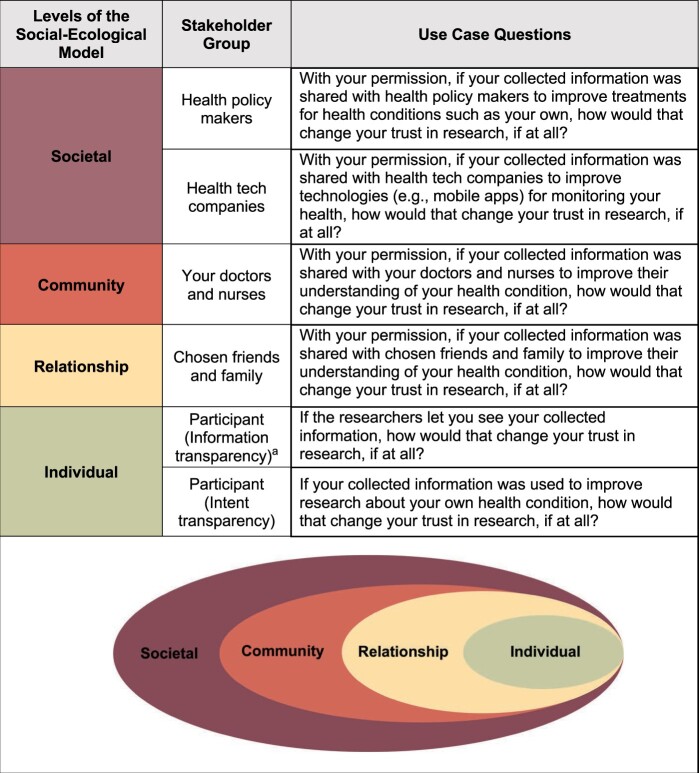
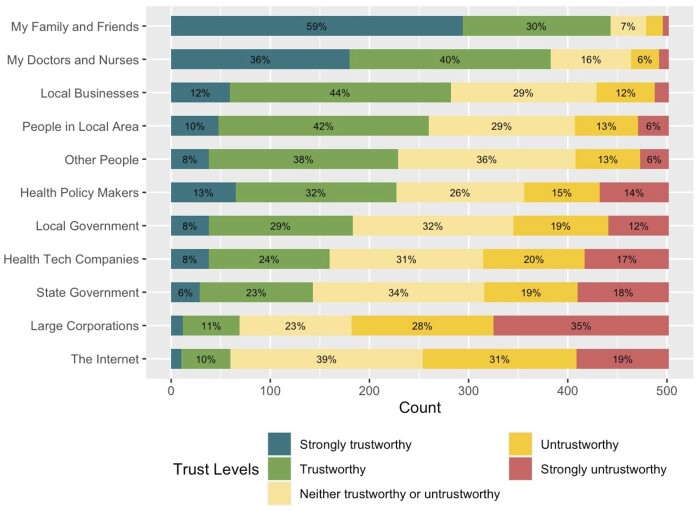
Materials and methods: We conducted an online survey with a representative sample of 502 US adults. We assessed baseline trust and change in trust using 6 use cases representing the Social-Ecological Model. We assessed descriptive statistics and associations between trust and sociodemographic variables using logistic and multinomial regression.
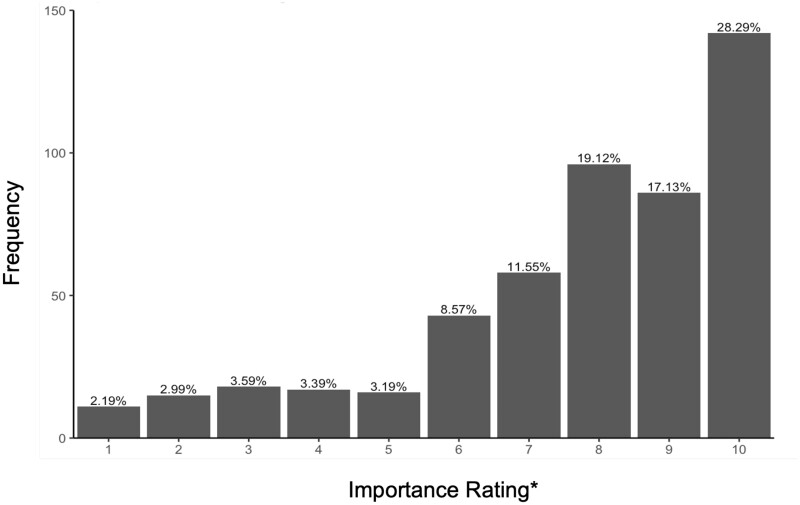
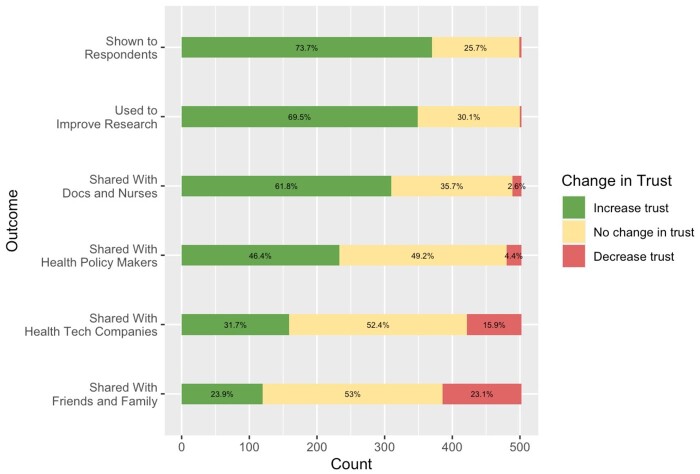
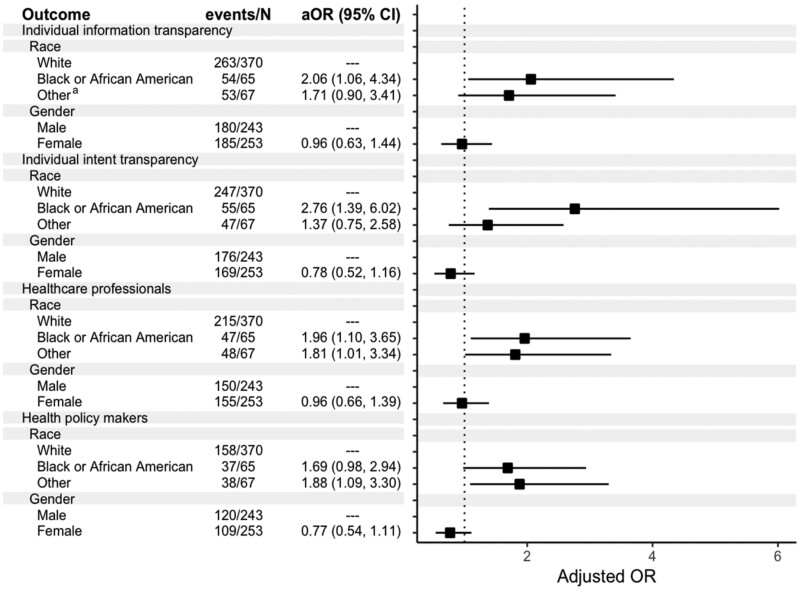
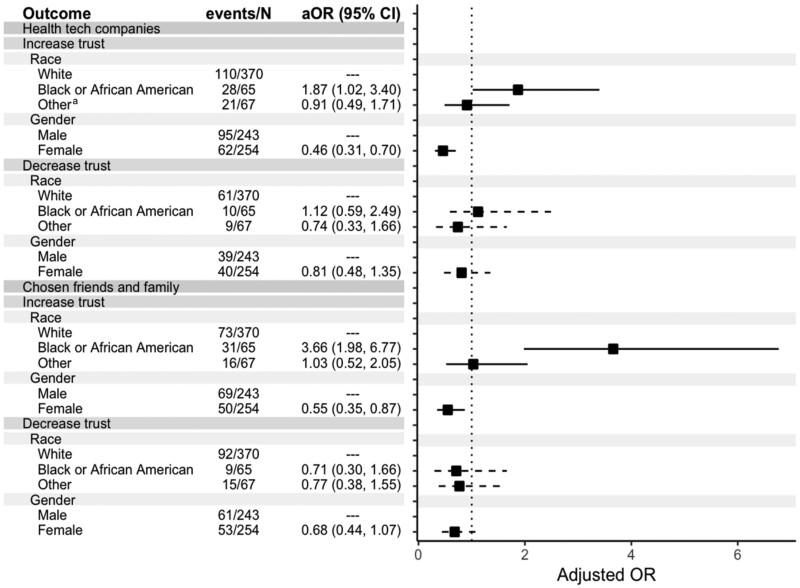
Results: Most participants (84%) want their health research information returned. Black/African American participants were more likely to increase trust in research with individual information transparency (odds ratio (OR) 2.06 [95% confidence interval (CI): 1.06-4.34]) and with intent transparency when sharing with chosen friends and family (3.66 [1.98-6.77]), doctors and nurses (1.96 [1.10-3.65]), or health tech companies (1.87 [1.02-3.40]). Asian, Native American or Alaska Native, Native Hawaiian or Pacific Islander, Multirace, and individuals with a race not listed, were more likely to increase trust when sharing with health policy makers (1.88 [1.09-3.30]). Women were less likely to increase trust when sharing with friends and family (0.55 [0.35-0.87]) or health tech companies (0.46 [0.31-0.70]).
Discussion: Participants wanted their health information returned and would increase their trust in research with transparency when sharing health information.
Conclusion: Trust in research is influenced by interrelated factors. Future research should recruit diverse samples with lower baseline trust levels to explore changes in trust, with variation on the type of information shared.
Keywords: health informatics; patient-reported outcomes; recruitment; transparency; trust.
© The Author(s) 2022. Published by Oxford University Press on behalf of the American Medical Informatics Association. All rights reserved. For permissions, please email: journals.permissions@oup.com.
Figures
References
-
- Greene J, Samuel-Jakubos H.. Building patient trust in hospitals: a combination of hospital-related factors and health care clinician behaviors. Jt Comm J Qual Patient Saf 2021; 47(12): 768–74. - PubMed
-
- Braunstein JB, Sherber NS, Schulman SP, et al. Race, medical researcher distrust, perceived harm, and willingness to participate in cardiovascular prevention trials. Medicine 2008; 87(1): 1–9. - PubMed
