


Characteristics of bile microbiota in cholelithiasis, perihilar cholangiocarcinoma, distal cholangiocarcinoma, and pancreatic cancer
- PMID: 35702117
- PMCID: PMC9185071
Characteristics of bile microbiota in cholelithiasis, perihilar cholangiocarcinoma, distal cholangiocarcinoma, and pancreatic cancer
Abstract
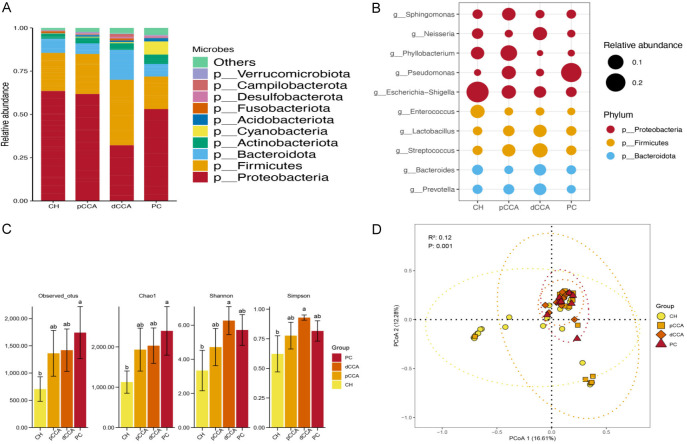
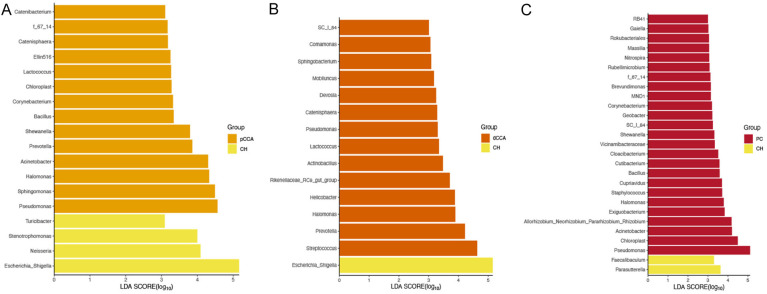
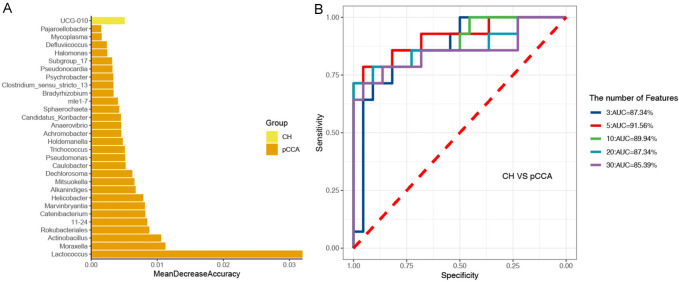
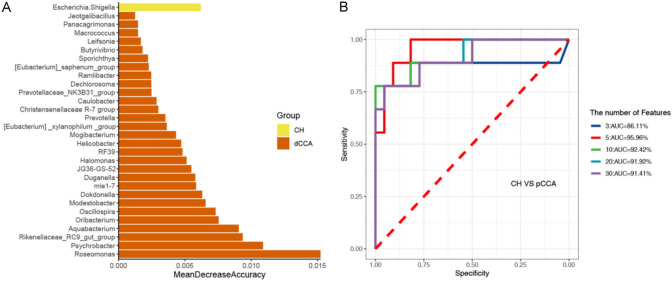
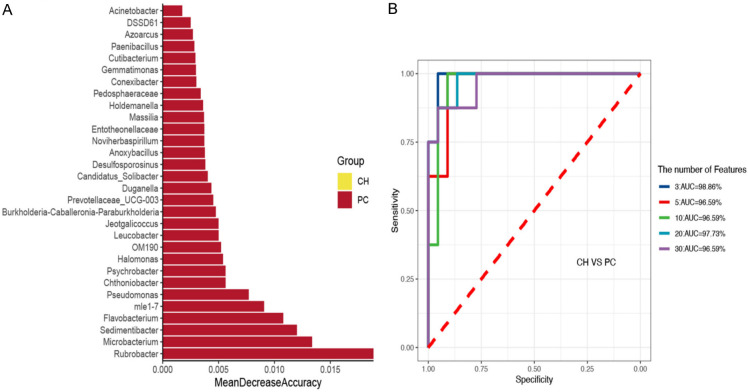
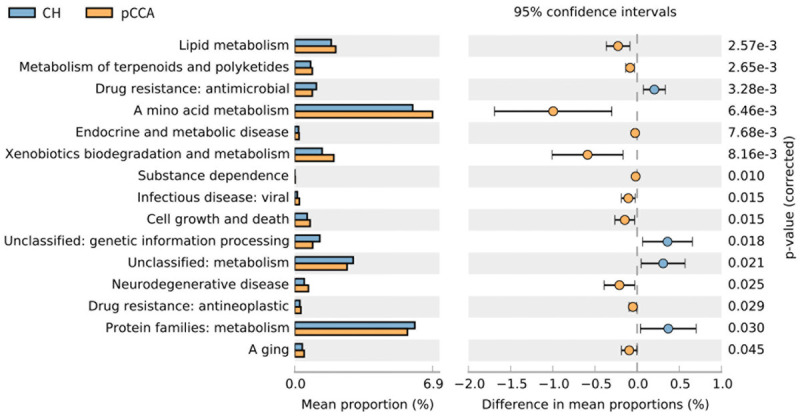
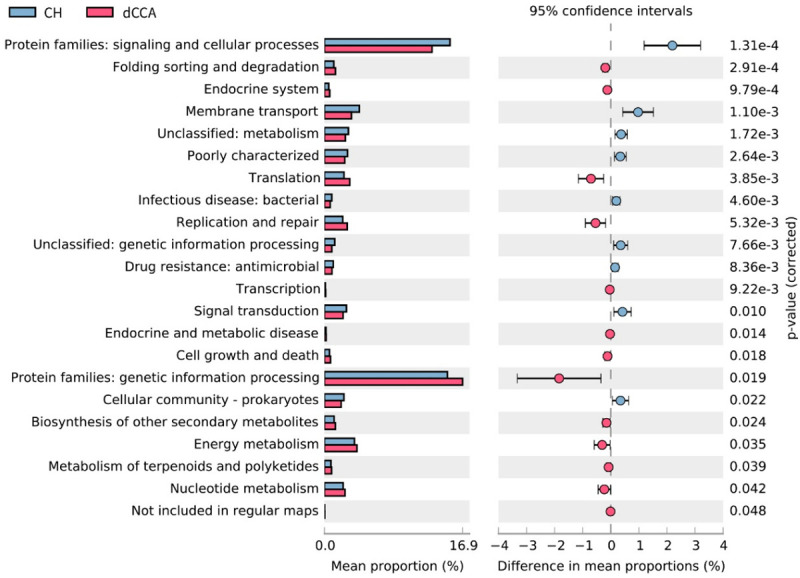
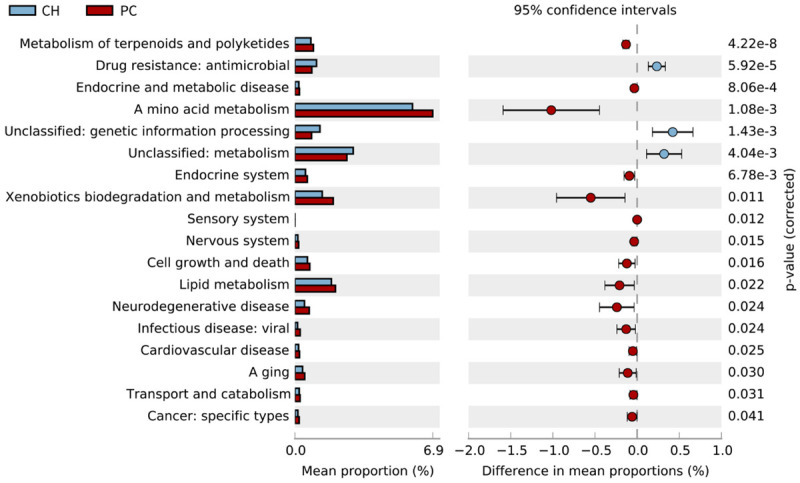
Significant proof suggests an essential role played by the bile microbiota in biliary diseases. This study retrospectively analyzed the differences in biliary microbes among patients with perihilar cholangiocarcinoma (pCCA), distal cholangiocarcinoma (dCCA), pancreatic cancer (PC), and cholelithiasis (CH). Bile samples were obtained from 53 patients who underwent endoscopic retrograde cholangiopancreatography (ERCP), and the bile microbiota was analyzed through 16S rRNA gene analysis and next-generation sequencing. Based on the results of linear discriminant analysis effect size (LEfSe), the top three biomarkers for pCCA at the genus level were Pseudomonas, Sphingomonas, and Halomonas; for dCCA were Streptococcus, Prevotella, and Halomonas; and for PC were Pseudomonas, Chloroplast, and Acinetobacter. The top five genera in the pCCA, dCCA, and PC groups showed predictive values with areas under the receiver operating characteristic curves of 91.56%, 95.56%, and 96.59%, respectively. The PICRUSt2 analysis outcomes displayed the diversities of fifteen pathways between the CH and pCCA groups, 22 pathways between the CH and dCCA groups, and eighteen pathways between the CH and PC groups. As this pilot study identified specific microbial bile markers for patients with CH, pCCA, dCCA, and PC, the clinical implications are vast. Further study focusing on distinct bacterial populations in bile will help differentiate biliary diseases.
Keywords: Bile microbiota; cholelithiasis; distal cholangiocarcinoma; pancreatic cancer; perihilar cholangiocarcinoma.
AJTR Copyright © 2022.
Conflict of interest statement
None.
Figures
References
-
- Tazuma S, Unno M, Igarashi Y, Inui K, Uchiyama K, Kai M, Tsuyuguchi T, Maguchi H, Mori T, Yamaguchi K, Ryozawa S, Nimura Y, Fujita N, Kubota K, Shoda J, Tabata M, Mine T, Sugano K, Watanabe M, Shimosegawa T. Evidence-based clinical practice guidelines for cholelithiasis 2016. J Gastroenterol. 2017;52:276–300. - PubMed
-
- Csendes A, Burdiles P, Maluenda F, Diaz JC, Csendes P, Mitru N. Simultaneous bacteriologic assessment of bile from gallbladder and common bile duct in control subjects and patients with gallstones and common duct stones. Arch Surg. 1996;131:389–394. - PubMed
LinkOut - more resources
Full Text Sources