The Serological Sciences Network (SeroNet) for COVID-19: Depth and Breadth of Serology Assays and Plans for Assay Harmonization
- PMID: 35703544
- PMCID: PMC9429934
- DOI: 10.1128/msphere.00193-22
The Serological Sciences Network (SeroNet) for COVID-19: Depth and Breadth of Serology Assays and Plans for Assay Harmonization
Abstract
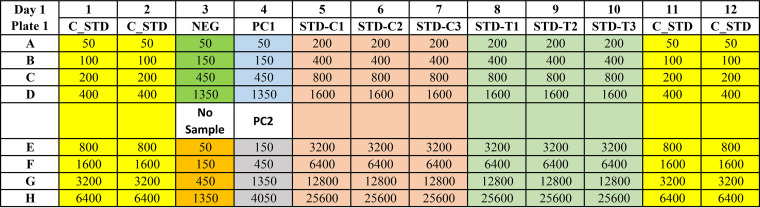
In October 2020, the National Cancer Institute (NCI) Serological Sciences Network (SeroNet) was established to study the immune response to COVID-19, and "to develop, validate, improve, and implement serological testing and associated technologies" (https://www.cancer.gov/research/key-initiatives/covid-19/coronavirus-research-initiatives/serological-sciences-network). SeroNet is comprised of 25 participating research institutions partnering with the Frederick National Laboratory for Cancer Research (FNLCR) and the SeroNet Coordinating Center. Since its inception, SeroNet has supported collaborative development and sharing of COVID-19 serological assay procedures and has set forth plans for assay harmonization. To facilitate collaboration and procedure sharing, a detailed survey was sent to collate comprehensive assay details and performance metrics on COVID-19 serological assays within SeroNet. In addition, FNLCR established a protocol to calibrate SeroNet serological assays to reference standards, such as the U.S. severe acute respiratory syndrome coronavirus 2 (SARS-CoV-2) serology standard reference material and first WHO international standard (IS) for anti-SARS-CoV-2 immunoglobulin (20/136), to facilitate harmonization of assay reporting units and cross-comparison of study data. SeroNet institutions reported development of a total of 27 enzyme-linked immunosorbent assay (ELISA) methods, 13 multiplex assays, and 9 neutralization assays and use of 12 different commercial serological methods. FNLCR developed a standardized protocol for SeroNet institutions to calibrate these diverse serological assays to reference standards. In conclusion, SeroNet institutions have established a diverse array of COVID-19 serological assays to study the immune response to SARS-CoV-2 and vaccines. Calibration of SeroNet serological assays to harmonize results reporting will facilitate future pooled data analyses and study cross-comparisons. IMPORTANCE SeroNet institutions have developed or implemented 61 diverse COVID-19 serological assays and are collaboratively working to harmonize these assays using reference materials to establish standardized reporting units. This will facilitate clinical interpretation of serology results and cross-comparison of research data.
Keywords: COVID-19; SeroNet; assay harmonization; serology.
Conflict of interest statement
The authors declare a conflict of interest.
Figures
Update of
-
The Serological Sciences Network (SeroNet) for COVID-19: Depth and Breadth of Serology Assays and Plans for Assay Harmonization.medRxiv [Preprint]. 2022 Mar 14:2022.02.27.22271399. doi: 10.1101/2022.02.27.22271399. medRxiv. 2022. Update in: mSphere. 2022 Aug 31;7(4):e0019322. doi: 10.1128/msphere.00193-22. PMID: 35262095 Free PMC article. Updated. Preprint.
References
-
- National Cancer Institute. 2022. NCI Serological Sciences Network for COVID-19 (SeroNet). https://www.cancer.gov/research/key-initiatives/covid-19/coronavirus-res.... Accessed 2 December 2021.
-
- Food and Drug Administration (FDA). In vitro diagnostics EUAs—serology and other adaptive immune response tests for SARS-CoV-2. https://www.fda.gov/medical-devices/coronavirus-disease-2019-covid-19-em.... Accessed 2 December 2021.
-
- Muecksch F, Wise H, Batchelor B, Squires M, Semple E, Richardson C, McGuire J, Clearly S, Furrie E, Greig N, Hay G, Templeton K, Lorenzi JCC, Hatziioannou T, Jenks S, Bieniasz PD. 2021. Longitudinal serological analysis and neutralizing antibody levels in coronavirus disease 2019 convalescent patients. J Infect Dis 223:389–398. doi: 10.1093/infdis/jiaa659. - DOI - PMC - PubMed
-
- Perez-Saez J, Zaballa M-E, Yerly S, Andrey DO, Meyer B, Eckerle I, Balavoine J-F, Chappuis F, Pittet D, Trono D, Kherad O, Vuilleumier N, Kaiser L, Guessous I, Stringhini S, Azman AS, Specchio-COVID19 Study Group . 2021. Persistence of anti-SARS-CoV-2 antibodies: immunoassay heterogeneity and implications for serosurveillance. Clin Microbiol Infect 27:1695.e7–e1695.e12. doi: 10.1016/j.cmi.2021.06.040. - DOI - PMC - PubMed
-
- Muecksch F, Wise H, Templeton K, Batchelor B, Squires M, McCance K, Jarvis L, Malloy K, Furrie E, Richardson C, MacGuire J, Godber I, Burns A, Mavin S, Zhang F, Schmidt F, Bieniasz P, Jenks S, Hatziioannou T. 2021. Longitudinal variation in SARS-CoV-2 antibody levels and emergence of viral variants: implications for the ability of serological assays to predict immunity. medRxiv doi: 10.1101/2021.07.02.21259939. - DOI - PMC - PubMed
Publication types
MeSH terms
Substances
Grants and funding
- U54 CA260591/CA/NCI NIH HHS/United States
- U54 CA260492/CA/NCI NIH HHS/United States
- U01 CA260541/CA/NCI NIH HHS/United States
- U01 CA260462/CA/NCI NIH HHS/United States
- U54 CA260563/CA/NCI NIH HHS/United States
- U01 CA260508/CA/NCI NIH HHS/United States
- U54 CA260582/CA/NCI NIH HHS/United States
- U01 CA260539/CA/NCI NIH HHS/United States
- 75N91019D00024/CA/NCI NIH HHS/United States
- U01 CA261276/CA/NCI NIH HHS/United States
- U01 CA260469/CA/NCI NIH HHS/United States
- U54 CA260543/CA/NCI NIH HHS/United States
- U01 CA260526/CA/NCI NIH HHS/United States
LinkOut - more resources
Full Text Sources
Medical
Miscellaneous