


Reducing Intersecting Stigmas in HIV Service Organizations: An Implementation Science Model
- PMID: 35703774
- PMCID: PMC10790311
- DOI: 10.1097/QAI.0000000000002982
Reducing Intersecting Stigmas in HIV Service Organizations: An Implementation Science Model
Abstract
Background: HIV-related and intersectional stigmas are key barriers for service delivery, but best practices are nascent for addressing them in high-resource and high-burden contexts such as New York City (NYC). The Stigma Reduction and Resilience (STAR) implementation science (IS) Mapping Project in 2020 identified untested stigma reduction efforts in HIV organizations, highlighting the need for an IS framework.
Setting: Organizations providing HIV prevention and/or care in NYC.
Methods: An interagency team determined that IS provides a structured approach for addressing identified gaps in stigma reduction efforts, but defining existing IS concepts and adapting IS frameworks were necessary to facilitate its use. The Implementation Research Logic Model was adapted to empower HIV organizations to use IS to implement stigma reduction.
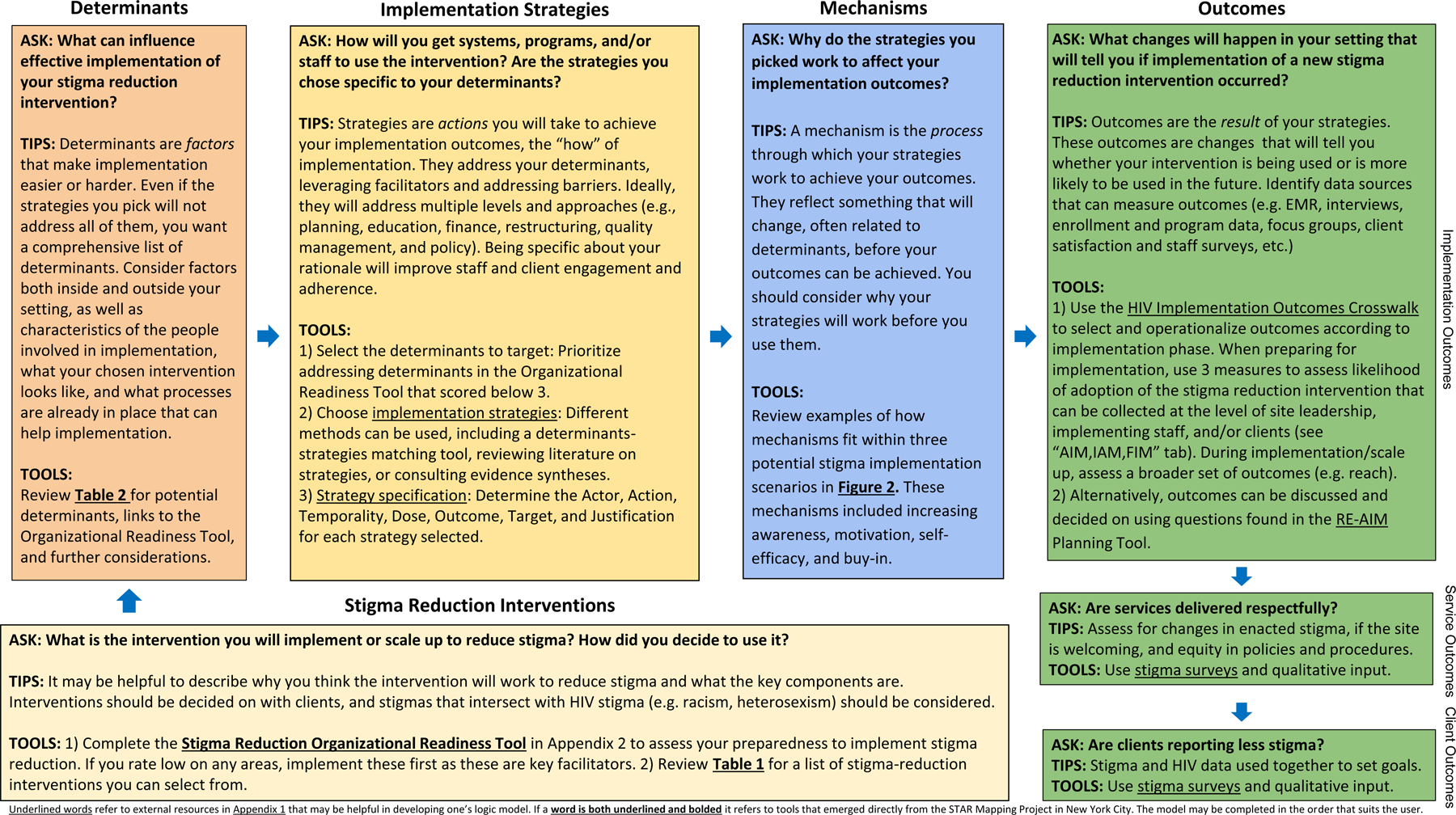
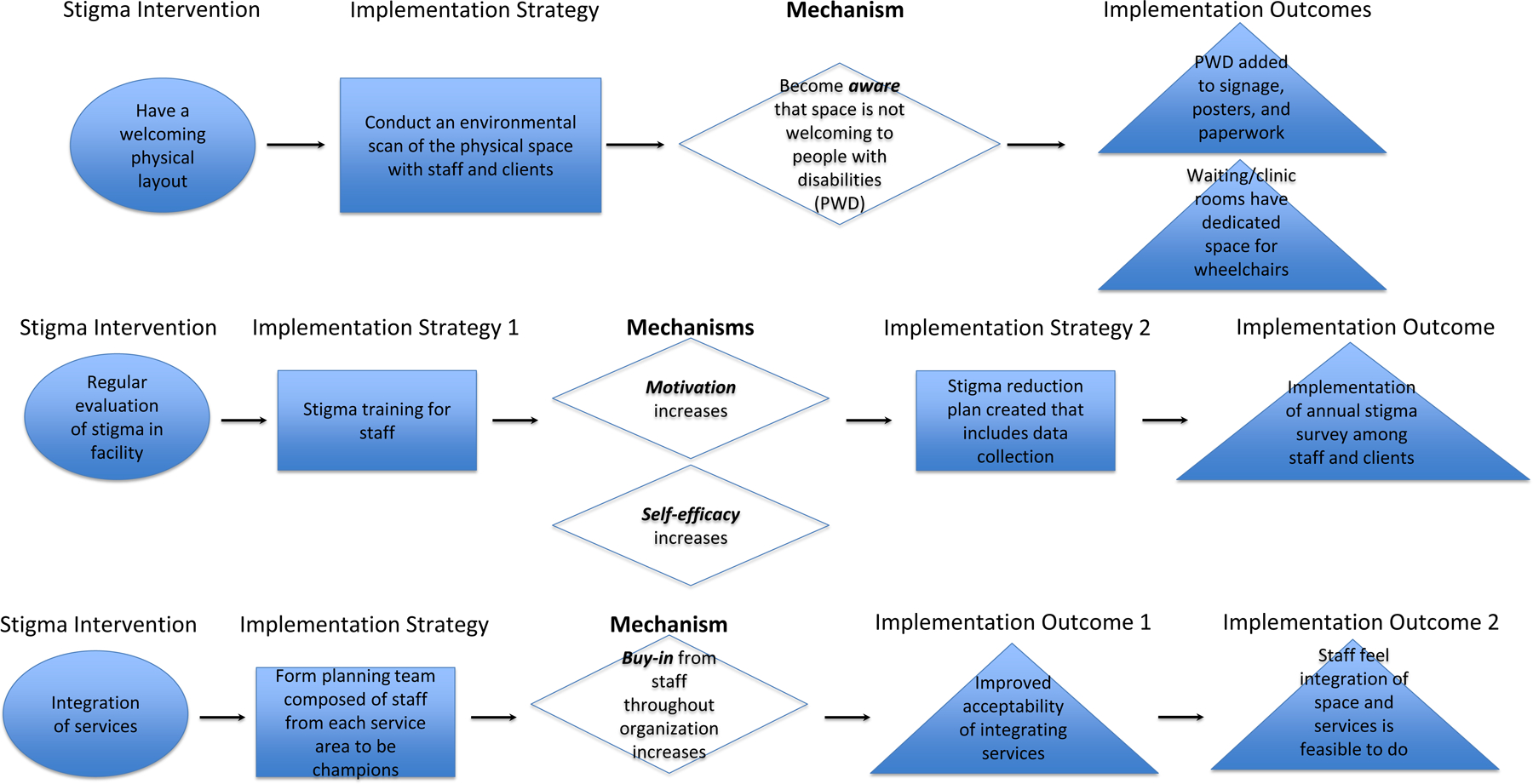
Results: Questions, definitions, and tips were developed to guide, strengthen, and simplify the application of IS within HIV organizations to improve the reduction of HIV and intersecting stigmas. The resulting Stigma Reduction Logic Model incorporates tools for implementers who synthesize each component of the logic model (intervention, determinants, implementation strategies, mechanisms, and outcomes), including a menu of options for selecting stigma reduction interventions and implementation determinants, a checklist to assess organizational readiness for stigma reduction, and an IS terminology guide applied for stigma reduction.
Conclusions: Stigma reduction initiatives and research can use this model to enable implementers, researchers, and HIV organization stakeholders to use the methodology of IS to build consensus for, systematically plan, implement, and evaluate stigma reduction activities relevant to the HIV epidemic. The next step is testing the model's utility.
Copyright © 2022 Wolters Kluwer Health, Inc. All rights reserved.
Conflict of interest statement
The authors have no conflicts of interest to disclose.
Figures

References
-
- The White House. National HIV/AIDS Strategy for the United States 2022–2025 [Internet] 2021. Available at: https://hivgov-prod-v3.s3.amazonaws.com/s3fs-public/NHAS-2022-2025.pdf. Accessed, December 6, 2021.
-
- Nyblade L, Mingkwan P, Stockton MA. Stigma reduction: an essential ingredient to ending AIDS by 2030. The Lancet HIV 2021;8: e106–e113. - PubMed
-
- National Institutes of Health Office of AIDS Research. HIV-Related Intersectional Stigma Research Advances and Opportunities Workshop [Internet] 2020. Available at: https://www.nimh.nih.gov/sites/default/files/documents/nih_oar_and_nimh_.... Accessed, December 6, 2021.
Publication types
MeSH terms
Grants and funding
LinkOut - more resources
Full Text Sources
Medical
