


Psychometric properties of the Arabic version of Connor-Davidson Resilience Scale in a sample of Lebanese women
- PMID: 35704645
- PMCID: PMC9200348
- DOI: 10.1371/journal.pone.0269700
Psychometric properties of the Arabic version of Connor-Davidson Resilience Scale in a sample of Lebanese women
Abstract
Purpose: Resilience is defined as the ability to face adversities with positive outcomes. Various scales have been utilized, including 25-item Connor-Davidson Resilience Scale (CD-RISC), to evaluate resilience among populations. Resilience research is scarce, particularly in Lebanon as no such scales have been validated. Thus, in the present work, we aimed to assess the psychometric properties of the Arabic version of CD-RISC.
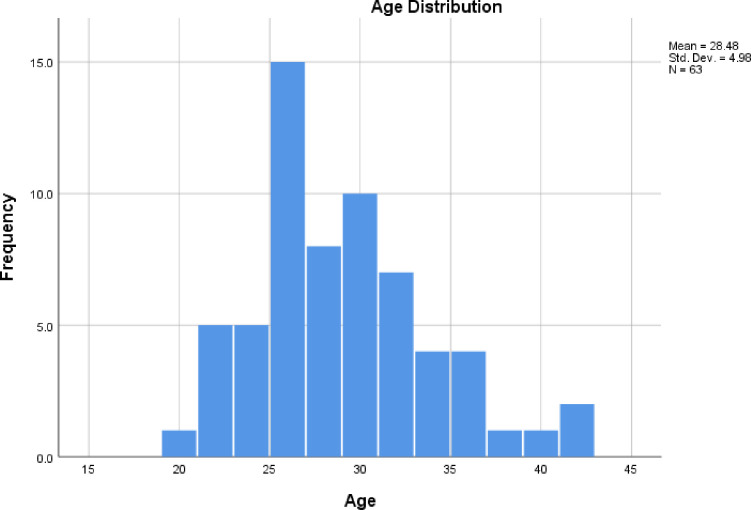
Patients and methods: The study was conducted at the Women's Health Center at the American University of Beirut Medical Center among Lebanese women presenting to the obstetrics and gynecology clinics. Internal validity of the Arabic CD-RISC was examined. Pearson's correlation coefficients between the scores of the Arabic version of CD-RISC and the other related constructs (Rosenberg Self-Esteem Scale, Dispositional Hope Scale, Life Orientation Test, and Positive and Negative Affect Schedule) were assessed to evaluate its divergent and convergent validity. We collected responses from a total of 63 Lebanese women.
Results: The studied scale displayed a high internal consistency. Adequate correlation coefficients were manifested by the significant positive moderate to strong and negative moderate correlations between the Arabic CD-RISC and the other related constructs.
Conclusion: This is the first study to validate the Arabic version of the CD-RISC in a sample of Lebanese women. The findings of this study provide evidence that the Arabic version of CD-RISC is a reliable and valid tool for the evaluation of resilience among Lebanese women.
Conflict of interest statement
The authors have declared that no competing interests exist.
Figures
References
-
- Charney DS. Psychobiological Mechanisms of Resilience and Vulnerability: Implications for Successful Adaptation to Extreme Stress. Am J Psychiatry [Internet]. 2004. Feb;161(2):195–216. Available from http://psychiatryonline.org/doi/abs/10.1176/appi.ajp.161.2.195 - DOI - PubMed
-
- Windle G, Bennett KM, Noyes J. A methodological review of resilience measurement scales. Health Qual Life Outcomes [Internet]. 2011;9(1):8. Available from http://hqlo.biomedcentral.com/articles/10.1186/1477-7525-9-8 - DOI - PMC - PubMed
-
- Connor KM, Davidson JRT. Development of a new resilience scale: The Connor-Davidson Resilience Scale (CD-RISC). Depress Anxiety [Internet]. 2003. Sep;18(2):76–82. Available from https://onlinelibrary.wiley.com/doi/10.1002/da.10113 - DOI - PubMed
-
- Aitcheson RJ, Abu-Bader SH, Howell MK, Khalil D, Elbedour S. Resilience in Palestinian adolescents living in Gaza. Psychol Trauma Theory, Res Pract Policy [Internet]. 2017. Jan;9(1):36–43. Available from http://doi.apa.org/getdoi.cfm?doi=10.1037/tra0000153 - PubMed
-
- Christiansen DM, Hansen M. Accounting for sex differences in PTSD: A multi-variable mediation model. Eur J Psychotraumatol [Internet]. 2015. Dec 19;6(1):26068. Available from https://www.tandfonline.com/doi/full/10.3402/ejpt.v6.26068 - DOI - PMC - PubMed
MeSH terms
LinkOut - more resources
Full Text Sources
