Infralow neurofeedback in the treatment of substance use disorders: a randomized controlled trial
- PMID: 35705204
- PMCID: PMC9343117
- DOI: 10.1503/jpn.210202
Infralow neurofeedback in the treatment of substance use disorders: a randomized controlled trial
Abstract
Background: Infralow neurofeedback (ILF-NF) was recently developed as a subtype of traditional, frequency-based neurofeedback that targets cerebral rhythmic activity below 0.5 Hz and improves brain self-regulation. The efficacy of ILF-NF in the treatment of substance use disorder has not yet been evaluated, but clinical evidence suggests that it may prevent relapse by improving functioning in various life domains. The current study aimed to fill this research gap and extend empirical evidence related to this issue.
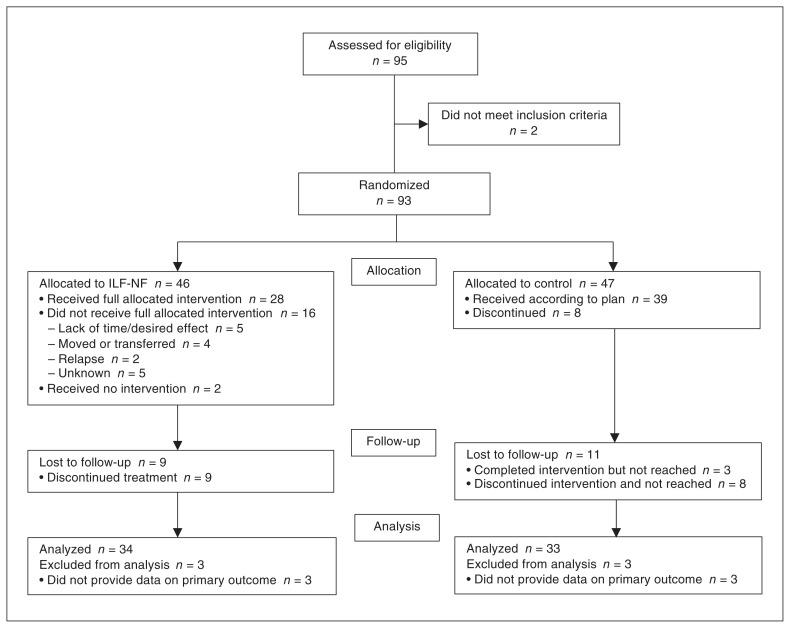
Methods: Ninety-three patients with substance use disorders at an outpatient unit in Norway were randomized to receive 20 sessions (30 minutes each) of ILF-NF training combined with treatment as usual (TAU), or TAU alone. The primary outcome was quality of life post-treatment as an overall measure of functioning. We analyzed between-group differences using Student t tests.
Results: We found no significant differences in quality of life between groups. We found similar nonsignificant results for most of the secondary outcome measures, including drug use, sleep, anxiety and depression. Compared to TAU, the ILF-NF + TAU group reported significantly lower restlessness scores post-treatment (mean difference -1.8, 95 % confidence interval -3.1 to -0.5; p = 0.006).Limitations: This study was limited by broad inclusion criteria and a lack of placebo control (sham neurofeedback treatment).
Conclusion: ILF-NF offered limited additional benefit when combined with TAU, except in the area of restlessness. Future studies could further investigate the relationship between ILF-NF, restlessness and substance use in targeted subpopulations to illuminate relapse mechanisms.
Clinical trial registration: ClinicalTrials.gov: NCT03356210.
© 2022 CMA Impact Inc. or its licensors.
Conflict of interest statement
Competing interests: None declared.
Figures
References
-
- Sitaram R, Ros T, Stoeckel L, et al. Closed-loop brain training: the science of neurofeedback. Nat Rev Neurosci 2017;18:86–100. - PubMed
-
- Burkett VS. Treatment effects related to EEG-biofeedback for crack cocaine dependency: changes in personality and attentional variables [dissertation]. Ann Arbor (MI): University of North Texas; 2005.
-
- Peniston EG, Kulkosky PJ. Alpha-theta brainwave training and beta-endorphin levels in alcoholics. Alcohol Clin Exp Res 1989;13: 271–9. - PubMed
-
- Trudeau DL. EEG biofeedback for addictive disorders — the state of the art in 2004. J Adult Dev 2005;12:139–46.
Publication types
MeSH terms
Associated data
LinkOut - more resources
Full Text Sources
Medical
Miscellaneous